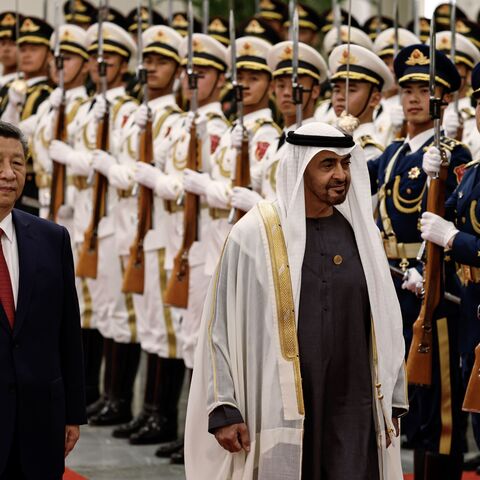

Analysis UAE’s OPEC exit rattles cartel as Gulf alliances shift OPEC's fourth-largest producer will leave the cartel on May 1, marking the most significant departure in the group’s history as the war changes Abu Dhabi's relationship priorities. By Samuel Wendel In Washington, DC, reporting on regional business and tech

Newsletter: Gulf With OPEC exit, is UAE breaking with Gulf oil consensus? Abu Dhabi’s decision to leave OPEC and OPEC+ marks the biggest shift in Gulf energy politics in years — and could reshape regional coordination after the Iran war. By Francesco Schiavi In Bologna, reporting on security, defense, economy, governance
Why UAE's decision to leave OPEC is major shift for cartel The UAE accounts for 12% of OPEC's output, but tensions had been simmering over intragroup rivalries and the country wanting to export more oil. United Arab Emirates
Newsletter: City Pulse Dubai UAE arts scene balances resilience with renewal By Rebecca Anne Proctor In Dubai, reporting on culture
Are Turkey, Saudi Arabia pressuring Jordan on terror blacklist? Jordan has been tasked with overseeing which groups fighting in Syria are designated as terrorist organizations, but its mission is complicated by alliances in the region. Saudi Arabia
Is Qatar Iran's door to the Gulf? The recent Iranian-Qatari rapprochement has created further controversy in the Middle East but some countries see it as a positive step in alleviating the ongoing conflict. Saudi Arabia
How to end the war in Yemen All involved in the war in Yemen, which has created a horrific humanitarian disaster, have paid a high price. A political solution is needed immediately. Saudi Arabia
Arrest of Iranian teachers tests Iran-UAE relations The arrest of Iranian teachers working in the UAE has prompted some Iranian officials to call for firmer measures against the UAE. United Arab Emirates
Jordanian palace silent on Russian intervention in Syria Some commentators argue that Jordan's lack of comment on Russia's involvement in Syria is related to the kingdom's acceptance of Moscow's position that Syrian president Bashar al-Assad be part of a postwar transitional phase. Legacy: Gulf
Gulf-funded think tank to make Capitol Hill debut The Arab Gulf States Institute in Washington promises a broader view of Gulf affairs. Saudi Arabia
Congress rethinks anti-Assad stance Senate Democrats are beginning to question regime-change goals amid Islamic State gains. United Arab Emirates
Why the Gulf isn't to blame for Syrian refugee crisis Oil-rich Gulf states are defending their record in assisting Syrian refugees as world opinion grows more hostile to their perceived indifference. Legacy: Gulf
Double victory for Palestine in FIFA qualifying match The qualifying soccer match between Palestine and the United Arab Emirates ended in a draw; both sides considered it a victory for Palestine for being able to host a home game on Palestinian territory. Legacy: Gulf
Yemen's African connection Amid the withholding of the details of the Emirati death toll in Yemen, African soldiers are set to step up their role in Operation Restoring Hope. Legacy: Gulf
What will US-Saudi summit mean for Iranian policy in the Middle East? In a meeting Sept. 4 with US President Barack Obama, Saudi King Salman bin Abdul-Aziz Al Saud was assured that the nuclear deal prevents Iran — whose influence in the region the kingdom is eager to counter — from acquiring a nuclear weapon. Saudi Arabia
Will King Salman’s visit to Washington reset US-Saudi relations? The joint statement released following King Salman's meeting at the White House with President Barack Obama Sept. 4 indicates that they discussed the region's most pressing issues including the Iran nuclear deal, the Syrian civil war, the fight against the Islamic State and the war in Yemen. Saudi Arabia