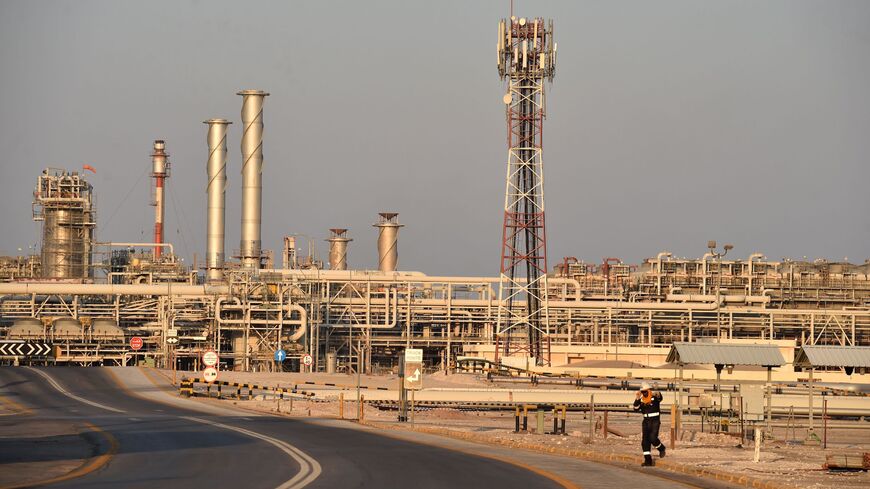







US ramps up emergency oil flows as prices swing on Iran strike pause US Energy Secretary Chis Wright announced Monday that the United States started releasing 1 million to 1.5 million barrels of oil per day last week from the Strategic Petroleum Reserve. Iran
Oil plunges 8% after Trump extends Iran ultimatum In a Truth Social post, US President Trump said that Washington and Tehran “have had, over the last two days, very good and productive conversations regarding a complete and total resolution of our hostilities in the Middle East.” Iran
Iran’s Hormuz choke hold leaves West divided as energy markets reel Between March 1 and March 19, there were only 114 crossings of the strait, according to analytics firm Kpler — 95% less than prewar traffic. Iran
Analysis Iran expands energy targets beyond Gulf as Red Sea and East Med come into play In retaliation for strikes on its energy sector, Tehran's campaign against regional oil and gas infrastructure has intensified and broadened to include Saudi Arabia's Yanbu port and an Israeli refinery in Haifa. By Samuel Wendel In Washington, DC, reporting on regional business and tech

Analysis How Iran's strike on Qatar gas field could impact LNG market for years By Samuel Wendel In Washington, DC, reporting on regional business and tech
Newsletter: Business & Tech Iran gas field strikes roil markets By Jack Dutton In Bristol, reporting on regional business, climate change, AI, tech
Abu Dhabi removes COVID-19-related capacity restrictions, masks remain The United Arab Emirates’ largest city also recently mandated the resumption of in-person classes for students, and is heading toward a return to the pre-coronavirus normal. United Arab Emirates
Israeli shekel at one-year low against dollar There have been significant changes to Israeli monetary policy recently, including the addition of the Chinese yuan to the country’s reserves. Israel
Turkish Central Bank revises inflation outlook The bank significantly raised its inflation projections, citing the effects of the war in Ukraine, but inflation was high before the war. Turkey
IMF: Oil producers better prepared for Ukraine-related economic downturn The International Monetary Fund’s report also highlighted currency depreciation in Egypt, economic effects of the war in Yemen and Jordan’s fledgling tourism sector. By Adam Lucente In New York City, reporting on regional news, militancy, climate change

Iraq grapples with rising food costs as a result of Ukraine war Ripple effects from the Russian invasion of Ukraine are driving the Iraqi government to allot additional funds to ensure the food supply is stable. Iraq
Italy's ENI to tap North African gas for Europe Europe’s race to reduce its energy dependence on Russia has put the spotlight on Algeria, Egypt and Libya, but their capacity to boost exports in the short term is limited and any significant increase would require large investments and stability. North Africa
Saudi Arabia, France pledge aid to Lebanon for food, health sectors Some countries have been reluctant to provide aid to crisis-stricken Lebanon without the government's implementation of economic reforms. Lebanon
Egypt wants shipping agencies to deal in pounds amid dollar flight After Egypt’s currency devaluation in March, the Egyptian government hopes to ease the strain on its banking system by mandating that international shipping agencies accept Egyptian pounds instead of US dollars as payment. Egypt
Explainer: UAE business delegation visits Kashmir, meets Indian PM The UAE and India have a strong economic relationship. The Kashmir visit could affect UAE-Pakistan ties. United Arab Emirates
Will sanctioned Russian oligarchs find haven in Egypt? Its current economic hardships may prompt Cairo to double down on investments with Russia. Egypt
US becomes Turkey's second biggest gas supplier, but for how long? Turkey's second biggest gas supplier over the past winter was the United States, but Ankara may have to turn back to its neighbors to ensure it has sufficient supplies. Turkey
Ankara’s interest liabilities balloon to dizzying heights The ratio of the Turkish government’s interest liabilities to its principal domestic debt has hit a staggering 117%, up from 60% last year. Turkey