



Bedouin honor IDF service, mourn fallen soldiers
Bedouin youths continue to demonstrate their commitment to Israel by enlisting, despite growing tensions with Jewish society as the demolition of Bedouin homes continues.
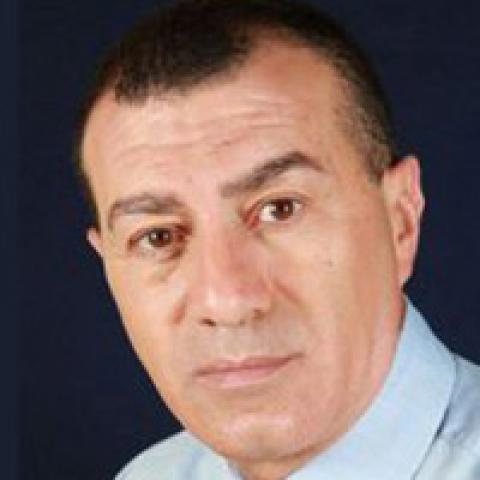

Amid the many April 22 Memorial Day ceremonies for Israel's fallen soldiers, there was one unofficial and unusual event in Ka'abiyye, a Bedouin village in the north of Israel. The initiative to hold a memorial procession there came from Muhammed Ka'abiyye, a resident who thinks that the fallen Bedouins who have proven their loyalty and love to Israel — their state — deserve a special memorial service as well.
Every year, a memorial service for the fallen Bedouins is held at a monument for a Bedouin fighter, located at HaMovil junction in the lower Galilee region. Yet, Ka'abiyye says that the young members of the community who enlisted with the Israel Defense Forces (IDF) as well as bereaved families feel that the State of Israel does too little to commemorate the contribution of the Bedouins who fell during Israel's wars.
When people talk about the legacy of the combatants from the Bedouin sector, they usually refer to the late Lt. Col. Amos Yarkoni, the highly venerated Bedouin tracker who devoted his life to the IDF, becoming a much-admired and inspiring figure. A member of the Bedouin al-Mazarib tribe from an area near the Jewish community of Nahalal, Yarkoni was born under the name Abd el-Majid Hidr. When he enlisted with the IDF in 1948 upon the establishment of the state, he changed his name. He set up an elite IDF tracker unit that later became known as the Shaked Desert Reconnaissance Battalion, which is deployed mainly along Israel's southern border. Even today, Bedouins serving in this unit study his legacy and decorated service. Yarkoni was awarded the Medal of Distinguished Service as well as the Medal of Courage.
A whole generation of Bedouin youths joined the IDF and followed in his footsteps. Over time, however, and especially in recent years, a deep rift has erupted between the State of Israel and the Bedouin population in the south, against the backdrop of the demolition of houses in unrecognized communities. The number of Bedouin recruits has dropped, leaving many in the Israeli public with the misguided impression that the Bedouins' loyalty to the state is questionable. But along the Gaza and Egypt borders, the Bedouin battalion continues to operate. Its soldiers all volunteer with the IDF despite the atmosphere in their communities and sometimes contrary to the mindset in Bedouin society that drafting by the IDF is inappropriate.


