



Why Saudi Arabia needs to trust its man on Iran
Considered an Iran expert in Saudi foreign policy circles, Minister Adel al-Turaifi has the background to help mend ties with Tehran; yet, he has so far been either unable or unwilling to resist pressure to take steps to achieve the exact opposite.

When King Abdullah died in January, Saudi Arabia’s global image was worrisome. Some analysts considered the kingdom responsible for the sudden rise of the Islamic State, Riyadh supported Abdel Fattah al-Sisi’s 2013 coup against then-President Mohammed Morsi’s government in Egypt, and the Saudi army had been used to contain the 2011 popular uprising in Bahrain — just to mention a few controversies.
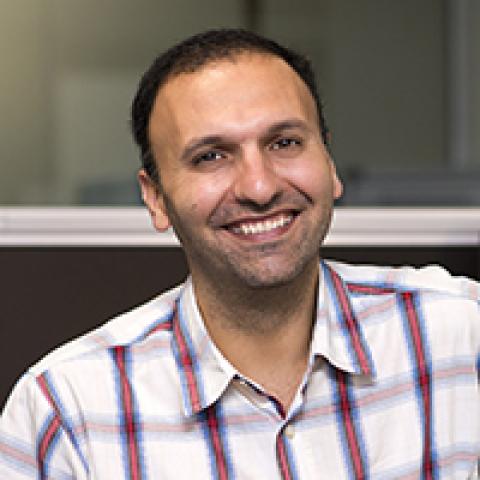
The country urgently needed to rebuild its image. When new King Salman bin Abdul-Aziz Al Saud reshuffled the Saudi Cabinet in January, appointing Adel al-Turaifi as minister of culture and information, the move was interpreted as a predictable response to the aforementioned circumstances and as a change in the kingdom's cultural policies. This was particularly the case as Turaifi was described as young, liberal and a technocrat journalist. Indeed, Turaifi started his journalism career writing for Saudi newspaper Al Watan from 2002 to 2005 and then for Al Riyadh. He became editor-in-chief of London-based Majallah magazine in 2010, and then held the same position at Al-Sharq Al-Awsat in 2013. In November 2014, he was appointed general manager of the Saudi-funded Al Arabiya news channel.
Turaifi was a smart choice for the Ministry of Culture and Information since he was experienced with both Arab and Western media. However, what made him unique, compared with other candidates, was his long media and academic experience related to Iran. Indeed, there is mounting evidence that Turaifi is an important figure in shaping Saudi policy toward Iran.
His interest in Iran dates back to the 2000s, when as an Al Riyadh columnist, he wrote several pieces focusing on Iranian domestic politics. Moreover, he has been responsible for almost all Saudi-financed Persian media outlets that have been launched in the past five years. He set up the Persian website of Majallah in 2010, and when he moved on to Al-Sharq Al-Awsat, he took along his Persian team and started a Persian version of the media outlet. Since his appointment as minister, he has continued to focus on Persian-language media. For instance, he began a 24/7 TV channel in Persian specifically for the annual hajj season. On Dec. 10, he started the Persian website Al Ekhbariyya. A new, Saudi-financed, Persian-language satellite TV station is slated to be launched soon.


