Will Iraq's Sunnis get own political-religious authority?
Some Sunni groups are seeking to establish a unified religious leadership, setting Sunnis up to play a stronger role in the upcoming elections.
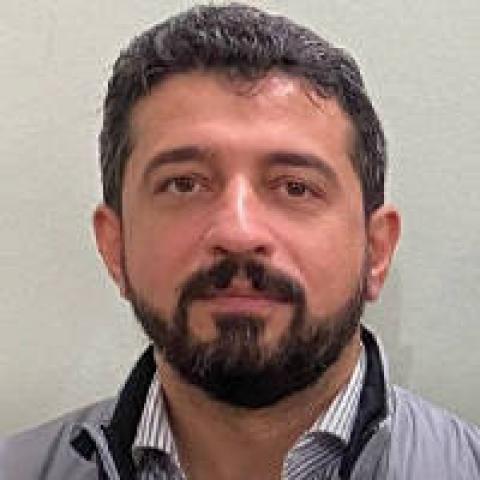

The visit of prominent Sunni cleric and Islamic preacher Ahmad al-Kubaisi to Iraq after a 15-year hiatus has sparked great controversy among Iraqi Sunnis. Kubaisi has called for the establishment of a unified Sunni marja (the highest level religious authority, somewhat akin to the Shiite one) to serve communities on both religious and political matters.
"The Kurds, Shiites, Turkmens, Jews, Christians and Yazidis all have religious authorities," Kubaisi said Feb. 1 in Baghdad in the presence of the head of the Sunni Endowment in Iraq, Abdul Latif al-Humim.
Kubaisi criticized the absence of a top Sunni leader and proposed the appointment of Humim as Sunni marja. "Sunnis have now an opportunity to be led by a commander. We have finally found a man in whom we can put our trust. A man who could unify us from Mosul to Basra under one community. This man is Abdul Latif al-Humim," Kubaisi said.
Kubaisi's statement sparked fury among Sunni political parties and figures who considered his call a political attempt to support Sunni political parties that are affiliated with Humim.