



UAE to fast-track construction of second oil pipeline, bypassing Hormuz: What to know
ADNOC, the UAE's state-owned oil company, has been ordered to prioritize completion of the pipeline to double oil exports through the Gulf Oman.

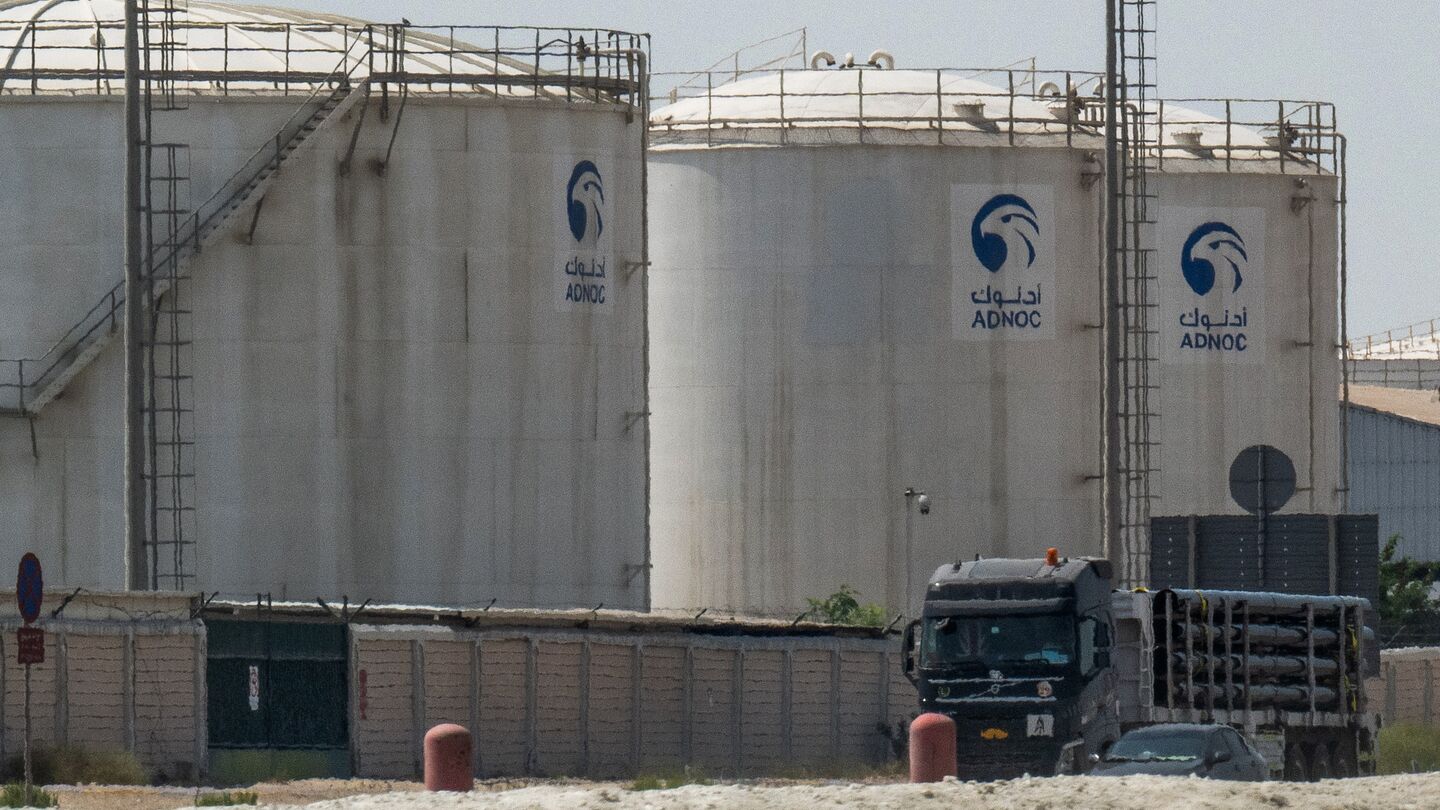
The United Arab Emirates on Friday announced that it will accelerate construction of a new oil pipeline to double crude export capacity through its Fujairah port, bypassing the Strait of Hormuz, as tensions around the key waterway remain high.
What happened: Abu Dhabi Crown Prince Sheikh Khaled bin Mohamed bin Zayed instructed the state-owned Abu Dhabi National Oil Company (ADNOC) to fast-track the project, the West-East Pipeline, during an executive meeting of the company’s board of directors held in the Emirati capital on Friday, the Abu Dhabi government media office said in a statement.
According to the statement, Sheikh Khaled, who also chairs the Abu Dhabi Executive Council, was updated on the progress of the project, which the statement said will double ADNOC’s export capacity through the port of Fujairah, located on the UAE’s eastern shore, on the Gulf of Oman.
The statement said construction of the pipeline was underway, though it did not specify when works began or the projected cost of the project. It added that the pipeline will become operational in 2027.
Why it matters: The new pipeline will link UAE export hubs in the west to Fujairah, becoming the second corridor to transport crude oil to the key port there for shipment through the Gulf of Oman.
The existing Habshan-Fujairah pipeline can carry up to 1.8 million barrels per day, according to the International Energy Agency. Construction of this pipeline — which runs 235 miles from Habshan, an oil- and gas field in southwestern Abu Dhabi, to Fujairah — began in 2008. It started operating in 2012.
After the joint US-Israeli attack against Iran on Feb. 28, the UAE has relied on the Habshan-Fujairah network to bypass the Strait of Hormuz, where commercial traffic has been severely disrupted by Iran’s de facto closure of the waterway in response to US-Israeli strikes and a US naval blockade of Iranian ports and vessels in the region.
By rerouting crude exports through Fujairah, the UAE was able to avoid relying solely on its ports along the Persian Gulf, thus mitigating its losses despite the turmoil in global oil markets.
According to a Reuters analysis published last month, the UAE’s estimated oil export earnings dropped by more than $174 million year-on-year in March.
On Tuesday, UAE Minister of Industry and ADNOC CEO Sultan bin Ahmed Al Jaber said the closure of the Strait of Hormuz has led to a shortage of 1 billion barrels of oil at the global level.
“The world is already one billion barrels short because of the closure of Hormuz,” he wrote on X. “That is the arithmetic of extortion. Every day the Strait is held hostage, the costs go up . . . for families, farms, factories and economies around the world.”
Know more: In light of the global energy crisis, the UAE left OPEC, the Organization of the Petroleum Exporting Countries, earlier this month, ending its nearly six-decade membership in the cartel.
WAM, the UAE’s official news agency, reported last month that the decision “reflects the UAE’s long-term strategic and economic vision and evolving energy profile, including accelerated investment in domestic energy production.”
The UAE’s exit from OPEC is expected to deal a major blow to the global cartel, which supplies around half the world's oil, with the UAE accounting for roughly 11% of OPEC output in 2025 and about 7% of OPEC+ production.
This one's on us.
The story doesn't end here.
Our correspondents are already on the next chapter. Read everything they file, from $2/week.
See Offers