



Tyre, Lebanon’s ‘Queen of the Seas,’ devastated by Israeli bombing: What to know
A series of Israeli strikes near ancient ruins in the Phoenician port city has raised concerns about potential damage to historical landmarks.


BEIRUT — Israeli bombings in the southern Lebanese city of Tyre on Thursday have prompted a wave of condemnation by officials amid concerns over the fate of historic landmarks and monuments that abound in the ancient Phoenician port city historically known as the “Queen of the Seas.”
Israel launched the intense wave of airstrikes one day after its military declared all areas south of the Zahrani River — about 25 miles from the border with Israel and including Tyre — an active combat zone. Claiming to be targeting Hezbollah infrastructure inside the city, Israel called on residents to evacuate.
A series of Israeli strikes near ancient ruins in the Phoenician port city of Tyre has raised concerns about potential damage to historical landmarks, @beatricefarhat reports.https://t.co/lyexzlRoYO pic.twitter.com/L3XiZ6tmT4
— AL-MONITOR (@AlMonitor) May 29, 2026
The attacks began at dawn and continued throughout the day, killing and injuring several people, and causing widespread destruction, according to local media.
At least three buildings in one neighborhood, al-Athar (which translates as "archaeological site"), were struck, with videos showing billows of smoke rising above ancient ruins, sparking concerns about potential damage to the historic area.
🇱🇧An 'Israeli' airstrike has targeted the Al-Athar neighborhood in the coastal city of Tyre, Lebanon. Footage captures the moment a massive explosion sent a colossal fireball and thick plumes of black smoke into the air, causing extensive damage to nearby residential buildings… pic.twitter.com/4iZZC5yrZK
— Roya News English (@RoyaNewsEnglish) May 28, 2026
Official outrage
Lebanese officials were quick to denounce the strikes in Tyre, saying that the government had reached out to international partners to help safeguard the country’s cultural heritage.
Prime Minister Nawaf Salam posted to X on Thursday, “Nothing can justify the ongoing assaults on regions of Tyre and Nabatieh and the destruction of their historical landmarks.”
Tyre - a 5,000-year-old Phoenician city-kingdom and home to UNESCO World Heritage sites - is facing systematic destruction under relentless Israeli airstrikes. pic.twitter.com/k89xYVIfDX
— Green Southerners الجنوبيون الخضر (@GreenSoutherns) May 28, 2026
He added that the attacks had reinforced Lebanon’s commitment to an “immediate ceasefire” and “full Israeli withdrawal from our country.”
Salam further stressed that the Lebanese government is actively mobilizing Arab and international support to achieve these goals. “This is our national duty and our unwavering right, on which we will not compromise under any circumstances,” he wrote.
Similarly, Foreign Minister Youssef Raggi said on Thursday that he was following with “deep pain and profound concern the ongoing Israeli attacks on the ancient city of Tyre, which have struck its historic old neighborhoods, churches, mosques, and cultural landmarks that have stood resilient for thousands of years.”
Writing on X, Raggi also said, “I have begun a series of intensive diplomatic contacts to demand an immediate halt to these attacks and to raise the voice in defense of a civilizational heritage that should matter not only to Lebanon, but to the conscience of the entire world.”
Decrying the attacks, including near the 12th-century Beaufort Castle in the southern city of Nabatieh, Culture Minister Ghassan Salameh stressed, “A large number of these sites enjoy enhanced protection from UNESCO, making it necessary to protect them from any Israeli air or artillery attack.”
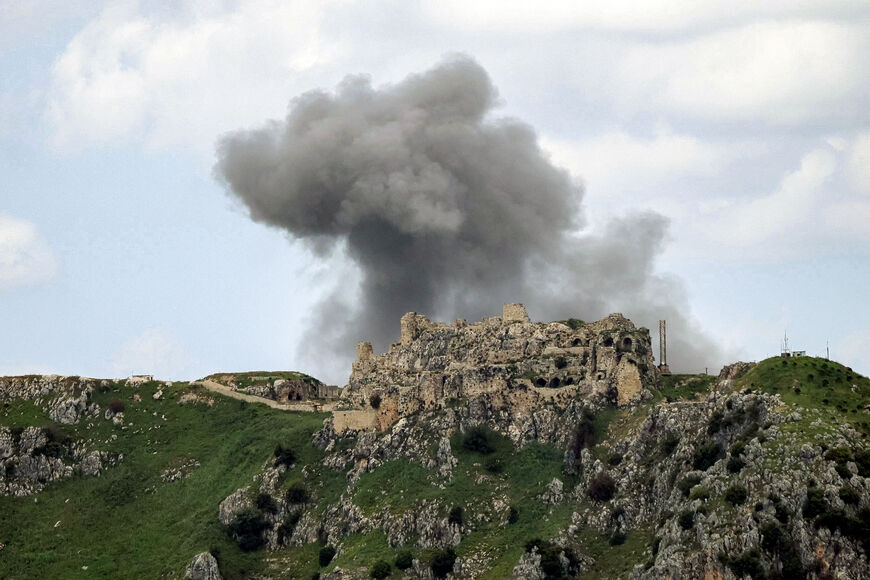
Perched on a strategic hilltop in the Arnoun area overlooking south Lebanon, the castle once served as a key military stronghold for crusaders and later for the Ottomans. Today, it stands as one of the country's best-preserved medieval fortresses.
History under threat
Tyre, Lebanon’s fourth-largest city, lies some 12 miles north of the Israeli border. Israel repeatedly struck targets there from October 2023 to November 2024, during the military conflict with Hezbollah that spilled over from the Israeli-Hamas war in Gaza. Strikes resumed on March 2 as hostilities with the Shiite militant group escalated again in the wake of the US-Israeli war on Iran, launched Feb. 28.
On April 13, an Israeli strike hit and damaged the shrine of the Prophet Shamoun al-Safa, in the village of Shamaa, in the Tyre district. The shrine, adjacent to the Shamaa Castle, built by the crusaders in 1116, is a religious landmark for both Muslims and Christians.
Earlier, on March 6, an Israeli strike damaged the entrance of the UNESCO-listed al-Bass archaeological site. Salameh condemned the attack at the time, saying, “There is no military or security presence in the sites, and such an argument cannot be used to bomb or harm them.”
The al-Bass site includes a necropolis dating back some 3,000 years, at least. In ancient times, the necropolis served as the main entrance to Tyre. It features the remains of a wide Roman-Byzantine avenue with a triumphal arch dated to the 2nd century. The site also includes an aqueduct and a 2nd-century hippodrome, considered one of the largest in the Roman world.
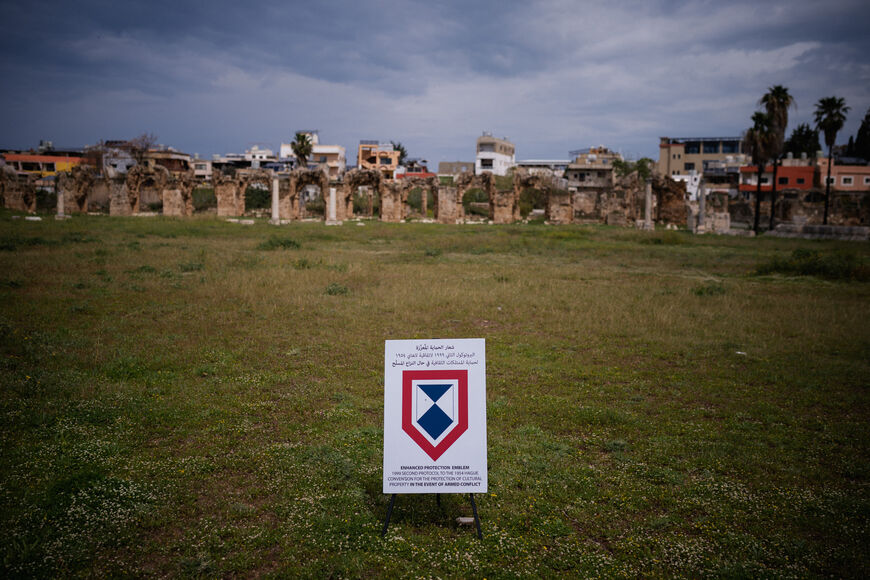
Tyre is one of the oldest continuously inhabited cities and, consequently, home to numerous archaeological sites. In 1984, UNESCO added the entirety of the city to its list of World Heritage Sites.
The city is believed to have been founded in 2750 BCE. Between the 9th and 6th centuries BCE, it served as a major Phoenician maritime hub, from which trading colonies were established across the Mediterranean, including Carthage, in North Africa. Historians believe the famed Tyrian purple dye, a luxury pigment associated with royalty in the ancient world, was first produced there.
Over time, the city fell under the control of successive civilizations and empires — namely, the Persians, Greeks, Romans, Byzantines, Arabs, Crusaders, and Ottomans — all of which left their mark on the city's rich cultural and historical heritage.
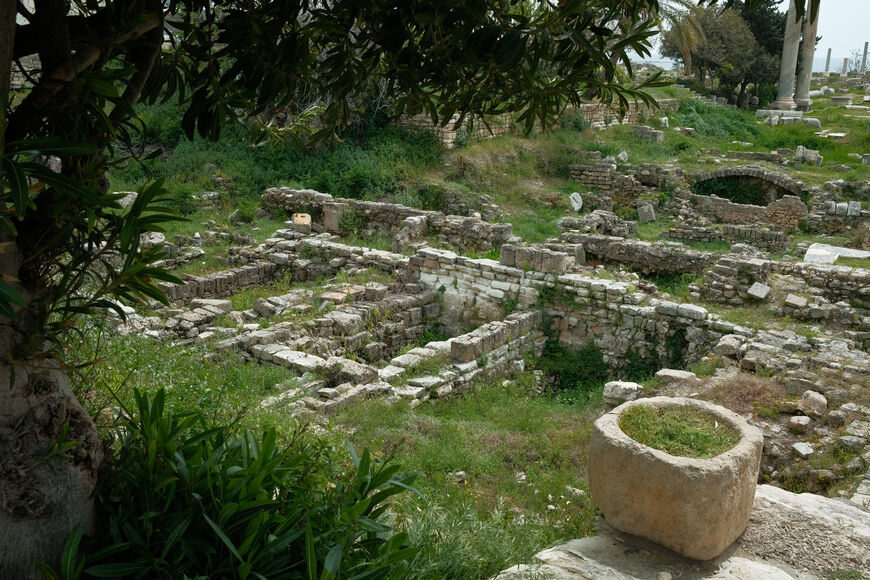
Tyre is mentioned in the New Testament as a place that Jesus visited and where he healed a possessed girl.
Today, the city is known for its turquoise beaches and nature reserves hosting various species of plants and animals, including the endangered loggerhead and green sea turtle.
In November 2024 in response to repeated Israeli attacks near Lebanese heritage sites, UNESCO’s Committee for the Protection of Cultural Property placed 34 of them, including the World Heritage sites in Tyre, under “provisional enhanced protection,” granting them the highest level of immunity against military attacks.
“Non-compliance with these clauses would constitute serious violations of the 1954 Hague Convention and would constitute potential grounds for prosecution,” UNESCO said at the time.
This April, the UN organization added another 39 Lebanese sites to its International List of Cultural Property under Enhanced Protection.
This one's on us.
The story doesn't end here.
Our correspondents are already on the next chapter. Read everything they file, from $2/week.
See Offers