Rubio hosts Ethiopia’s FM amid push to boost security ties: What to know
In response to heightening regional volatility, Ethiopia is prioritizing a strategic partnership with the Washington to secure its geopolitical standing.


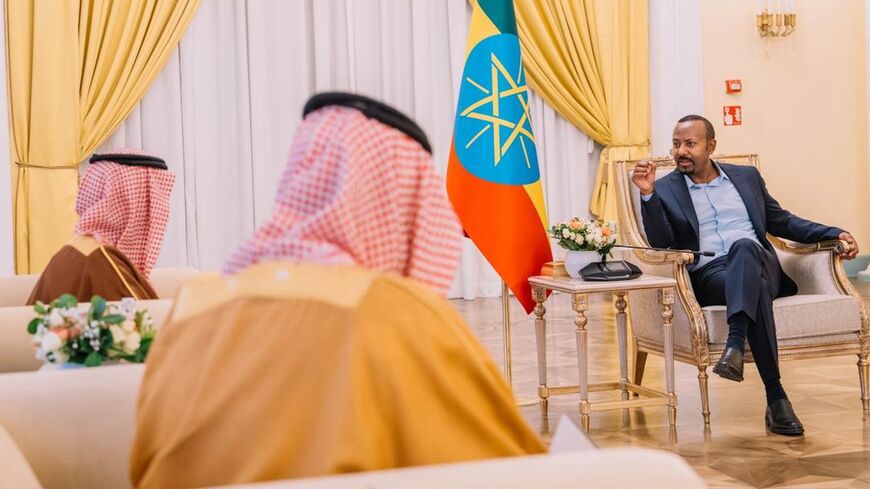
WASHINGTON — US Secretary of State Marco Rubio hosted Ethiopia’s foreign minister in Washington on Monday, as Addis Ababa moves to reinforce its position in an increasingly volatile Horn of Africa by strengthening ties with the Trump administration.
State Department spokesperson Tommy Pigott said that during the meeting, Rubio and Ethiopian Foreign Minister Gedion Timothewos Hessebon “underscored Ethiopia’s important role in promoting the resolution and de-escalation of conflict across East Africa,” adding that the two sides also discussed “the US-Ethiopia security partnership and the significant steps taken to advance commercial opportunities between our nations.”
Met with Ethiopian Foreign Minister @GHessebon today to discuss expanding our security partnership and increasing commercial opportunities between our two nations. pic.twitter.com/kiPcfLzd3u
— Secretary Marco Rubio (@SecRubio) May 11, 2026
While in Washington, Timothewos also met with Allison Hooker, under secretary for political affairs at the State Department. During their meeting, per Ethiopia’s Foreign Ministry, the two signed the “Bilateral Structured Dialogue (BSD) Framework,” which is aimed at “strengthening relations between the two countries, while expanding opportunities for cooperation on bilateral, regional, and other issues.”
Why now?
The foreign minister’s visit was made in “response to the rumors that Washington was normalizing relations with Eritrea,” says Cameron Hudson, an independent Africa analyst and former US intelligence official.
In late April, The Wall Street Journal reported that the Trump administration was exploring lifting sanctions on Eritrea, particularly as the US war with Iran and threats from Yemen’s Houthis have heightened the strategic importance of Red Sea shipping routes.
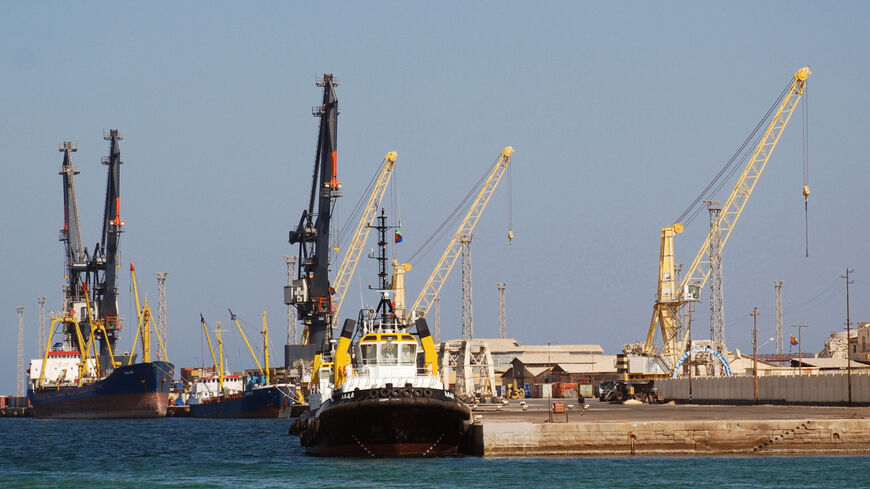
Eritrea controls around 750 miles of Red Sea coastline, including the strategic port of Assab. Assab was central to Ethiopia’s economy before Eritrea’s independence in 1991 left Ethiopia without direct access to the sea. Ethiopian Prime Minister Abiy Ahmed has argued that landlocked Ethiopia has a right to sea access, a position widely interpreted in Eritrea as implying potential claims over Assab.
Under President Joe Biden, the United States sanctioned Eritrea's ruling party, along with military and senior officials, over their role in the Tigray war, although relations were heavily strained before the sanctions. In May, Reuters reported that the United States was preparing to lift those sanctions, citing an internal State Department document that said Washington would rescind the executive order “on or around May 4.” That move has not yet taken place.
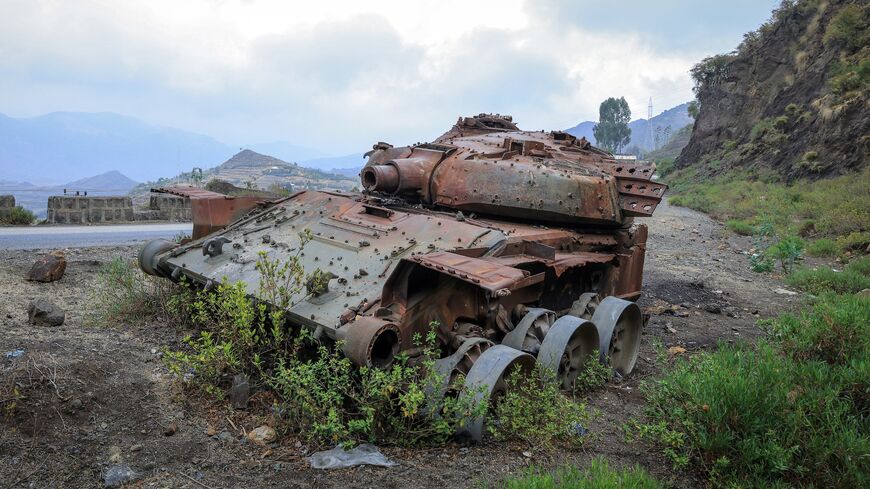
Relations between Ethiopia and Eritrea have sharply deteriorated in the first half of 2026. Although a landmark 2018 peace deal formally ended two decades of hostility between the two countries, ties frayed following the 2020-2022 Tigray war, during which Eritrean forces fought alongside Ethiopian federal troops.
In February, Ethiopia formally accused Eritrea of military aggression and backing armed groups inside its territory, alleging Eritrean forces occupied sections of the shared border and supplied weapons to militants. Eritrea dismissed the accusations as “false and fabricated.”
Nile dispute
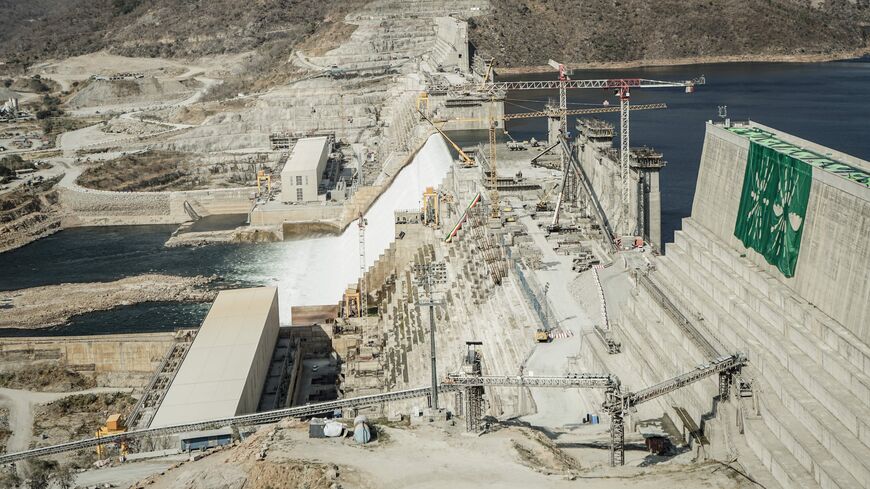
Regional competition over Red Sea access has also intersected with the long-running dispute between Ethiopia and Egypt over the Grand Ethiopian Renaissance Dam (GERD). Cairo argues the dam threatens downstream Nile water flows. Egypt relies on the Nile for more than 90% of its water.
In December 2025, UAE-based outlet The National reported that Egypt had signed a deal to upgrade Assab port, including expanding berths for warships.
In January, President Donald Trump published a letter to Egyptian President Abdel Fattah al-Sisi offering to restart US mediation efforts between Egypt and Ethiopia over Nile water-sharing disputes. Resolving tensions surrounding the GERD, Trump wrote, “is at the very top of my agenda.” Despite Trump’s push, there has been little in the way of progress.
Sisi, Hudson said, “wants Trump to be moderating or mediating this dispute that they have and Ethiopia has not wanted that.” When Trump released the letter, “the Egyptians jumped on it. … The Ethiopians never responded publicly to what Trump said.”
Against that backdrop, Hudson said Addis Ababa is seeking to shape Washington’s regional approach before US policy hardens against Ethiopian interests.
“If Ethiopia doesn't engage, it's going to be on the receiving end of a set of policies from Washington that it doesn't like,” Hudson said.
During his visit to Washington, Timothewos met with State Department senior adviser for Arab and African Affairs Massad Boulos. Following the meeting, Boulos said in a statement that they had “constructive conversations” about the GERD as well as Red Sea security. Boulos added that they also discussed “international efforts to facilitate a humanitarian truce and achieve durable peace in Sudan.”
Sudan spillover
The meeting also comes as tensions between Ethiopia and Sudan have escalated in recent weeks, with Sudanese officials accusing Ethiopia of involvement in drone strikes on its territory over the past two months. Sudan’s government has alleged that Rapid Support Forces drones — which Sudan claims are supplied by the UAE — were launched from northern Ethiopia’s Bahir Dar Airport.
Ethiopia has rejected the allegations, instead accusing Sudan’s army of backing the Tigray People’s Liberation Front, the main political and paramilitary group in northern Ethiopia’s Tigray region.
On Friday, Rubio told reporters that the United States is pushing for a humanitarian ceasefire in Sudan. He also pointed to the involvement of external actors in the conflict, without giving specific examples. “Obviously, Sudan has become, in some way, sort of a proxy engagement between multiple countries that are behind some of the elements that are fighting,” Rubio said. “There are other countries that are not directly involved but have allowed their national territories to be used as a way to ship weaponry,” he added.
Washington may now hold increased leverage over one alleged external actor: Ethiopia. But Hudson cautioned that US officials have so far been reluctant to impose meaningful costs on countries accused of fueling the war.
“I think the number one theme of US policy in Sudan is trying to encourage outside actors to suspend their support to any of the belligerents,” Hudson said. But, he added, the United States hasn't “been taking real hard action to dissuade them from playing a role.”
Still, there were tentative signs over the weekend that tensions between Addis Ababa and Khartoum could ease. On Saturday, on the sidelines of Djibouti President Ismail Omar Guelleh’s inauguration, Abiy Ahmed met with Sudanese Transitional Sovereignty Council deputy chairman Malik Agar. The TSC is Sudan’s highest governing body and serves as the collective head of state in Sudan.