Why Iran’s regime didn't break: The hidden networks behind its survival
Informal structures like religious networks, tribal groups and patronage ties have allowed Iran's state to weather prolonged strain and war.
What Iran went through in the 12 months before February 2026 is best understood as a sequence of shocks that, taken together, would ordinarily be expected to break a state, but the system has continued to function, upheld by a web of social and economic networks that help redistribute pressure.
In June 2025, a 12-day war with Israel and the United States left Iran’s senior Revolutionary Guard command decimated. At the end of that year, the country experienced the largest uprising since the revolution itself. Protests spread across all 31 provinces. The US-based Human Rights Activists News Agency (HRANA) reported that more than 6,000 protesters were killed in the crackdown that followed, with thousands of additional cases under review; the Iranian government’s official figure stood at 3,117.
On Feb. 28, 2026, a third shock reached the level of the state’s highest leadership. Supreme Leader Ayatollah Ali Khamenei was killed, along with members of his family, in circumstances that the Islamic Republic’s own media would frame in the language of martyrdom. Senior commanders were killed, including Ali Larijani, one of the most consequential figures in postrevolutionary politics. Hundreds of security installations were struck.
Absorbing shocks
A successor to Khamenei was designated within 10 days of his death, and public services continued to function under severe strain. In the squares of Tehran, Isfahan, Mashhad and dozens of provincial cities, crowds gathered in pro-government demonstrations that reportedly grew larger over the 40 days that followed. Interpretations of the crowds were polarized, framed in the media either as genuine solidarity or as state-orchestrated spectacle, though some observers argued there was a nuanced middle ground. Their geographic breadth was difficult to dismiss and extended well beyond the capital.
Six months earlier, between the June war and the January uprising, Iran had reorganized its command structure. A February report by The New York Times described a series of internal directives issued by Khamenei aimed at ensuring continuity of governance. These included the designation of several layers of succession for military and government posts under his authority and instructions for senior officials to identify several replacements for their roles. The architecture of governance had been deliberately made to withstand leadership loss.
But succession planning captures only part of the picture. In Iran’s case, the stability of the political order also depends on a set of social structures that sit alongside formal institutions. These are rooted in provincial social life and include local religious networks, family and tribal arrangements, patronage relationships, and business communities that mediate between the state and everyday governance. They do not operate outside the state or replace formal institutions. Instead, they shape how authority is distributed and exercised in practice, including under conditions of stress.
A political system without a ruling party
A useful starting point for understanding Iran’s political system is the absence of a functioning ruling party. The Islamic Republican Party, the organizational backbone of the early postrevolutionary state, was dissolved in 1987 on Supreme Leader Ayatollah Ruhollah Khomeini’s orders, and it was never replaced in any meaningful form. Iran today has more than 200 registered nominal political parties, but they do not operate as effective political organizations. In practice, these parties are fictions, monitored by the Interior Ministry as instruments of surveillance rather than being vehicles for organizing political life.
Even so, electoral politics continues to produce large numbers of candidates. In the 2026 city council elections, roughly 273,000 people registered to stand across nearly 1,500 cities and 48,000 villages, according to Iran's semi-official Tasnim News Agency, despite the absence of party structures to recruit, train or coordinate these candidates. Parliamentary reelection rates have averaged just 32% over four decades, meaning roughly two-thirds of incumbents leave office each cycle, with local councils turning over even more frequently. In some provinces, fewer than one in 10 council members retain their seats.
In a different institutional context, these patterns would be indicative of political instability, but in Iran’s case, they coexist with a relatively continuous system of governance. One way to understand this is that political order is not concentrated in officeholders themselves but in the networks that generate and circulate them, which tend to persist even as individual politicians and senior figures change.
Informal power structures
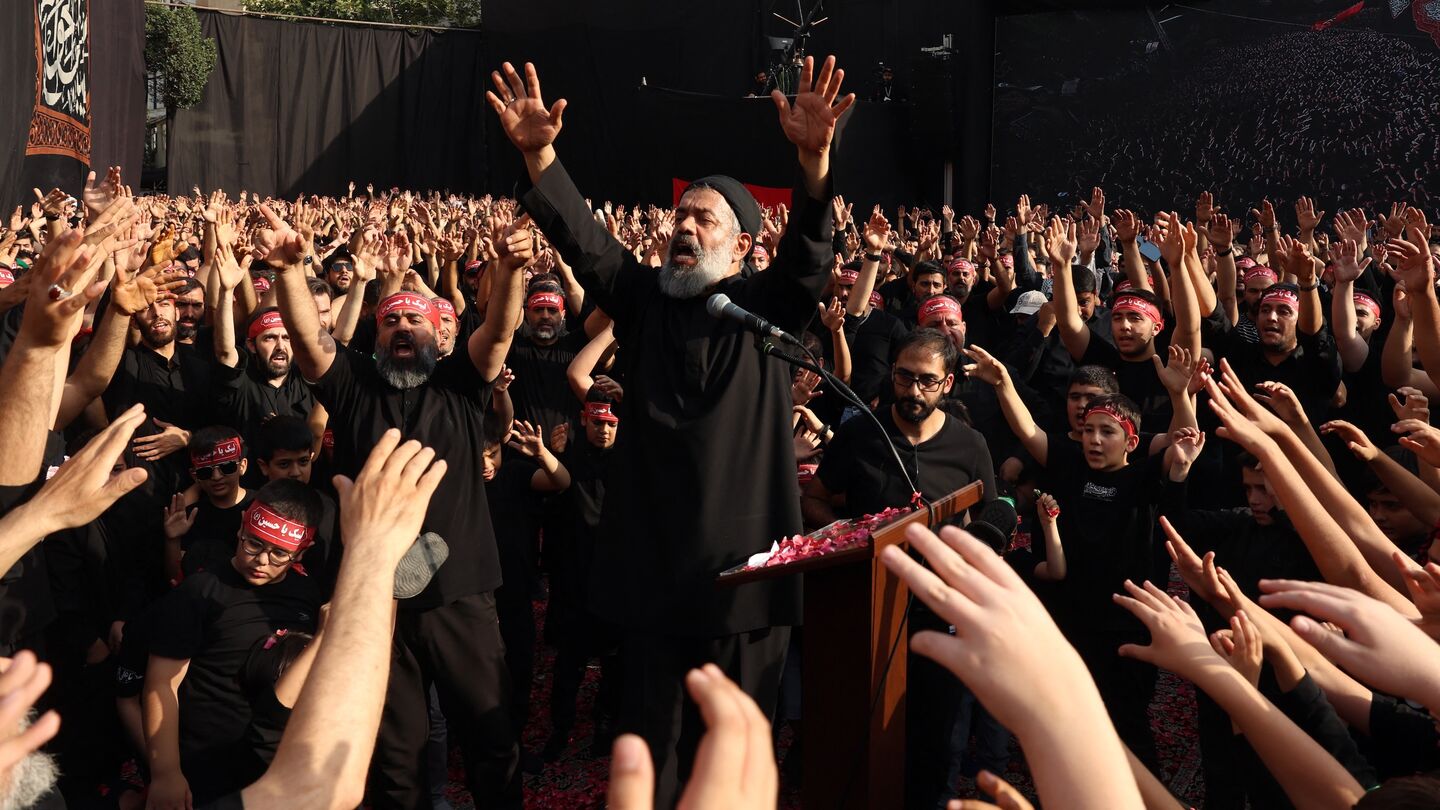
Local religious networks, particularly neighborhood commemoration associations known as heyats, are among the most important and the least understood social networks. These community groups, organized around the Shia observance of Muharram, predate the Islamic Republic and carry forms of legitimacy that do not depend on the state.
Over time, the postrevolutionary order inserted itself into these networks. This engagement became more structured after the unrest in 2009, as the IRGC expanded efforts to organize and promote maddahan, who lead these associations, building on earlier initiatives such as the Maddah Basij Organization, which was established in 2008. By 2013, the network had reportedly trained around 20,000 maddahan across Iran. As attendance at Friday prayer services — a formal state institution — has declined in major cities and services' role as sites of social and political mobilization has diminished, these informal religious networks have picked up the slack.
According to Iran’s own registration system, there were at least 60,000 maddahan and 90,000 religious heyats across the country by 2022. In the days following Khamenei’s death, mourning ceremonies, Quranic recitations and processions were organized across main squares, mosques and religious sites throughout the country, coordinated primarily through the existing heyat and maddah networks. Videos circulating in the period immediately after the announcement of Mojtaba Khamenei’s designation as the new supreme leader showed maddahan broadcasting the news from mosques and at public gatherings before formal state announcements had reached many localities.
In provinces like Khuzestan, Sistan-Baluchestan, Kurdistan and West Azerbaijan, family and tribal networks play a major role in social structure. Tribal leaders and family elders are not, for the most part, ideologically committed to the Islamic Republic, but they act as brokers between their communities and the state. They handle issues such as infrastructure, dispute resolution and voter mobilization, and retain that role so long as the state continues to recognize and work through them.
Business and bazaar networks form another layer. Commercial guilds and bazaar associations — most notably the great bazaars of Tehran, Isfahan and Tabriz, whose organized intervention was decisive in the 1979 revolution — have long connected economic interests with political authority, and their place in the postrevolutionary system has been shaped through access to licenses, credit and contracts. These relationships are more transactional and therefore more sensitive to economic pressure, including sanctions and broader disruption. Even so, they remain closely tied to local governance, where disengaging from the system carries practical costs regardless of private views.
Reassessing Iran’s political resilience
Eliminating a supreme leader is possible, but dismantling thousands of neighborhood religious groups, tribal councils, patronage relationships and bazaar associations is not. These networks predate Iran’s governance structure, and their social authority is maintained outside of it. Economic pressure can be similarly uneven. Sanctions fall hardest on ordinary Iranians and on the business networks most exposed to global markets. But the networks that carry a heavy load in sustaining political order, religious associations, family structures and tribal loyalties are more insulated.
The erosion that is actually visible in Iran is happening not through external pressure but largely from within: the decline of collective religious practice, the widening gap between social expectations and state practice, and the growing distance between official narratives and lived experience. This sort of erosion is slower than an airstrike, but it is also more threatening because it operates where the system’s real foundations lie.