



Palestinian citizens in Israel expect to get 15 seats in Knesset
Israel's Palestinian citizens are expecting to expand their number of seats in the next Israeli Knesset due in part to their united position in the Arab Joint List.
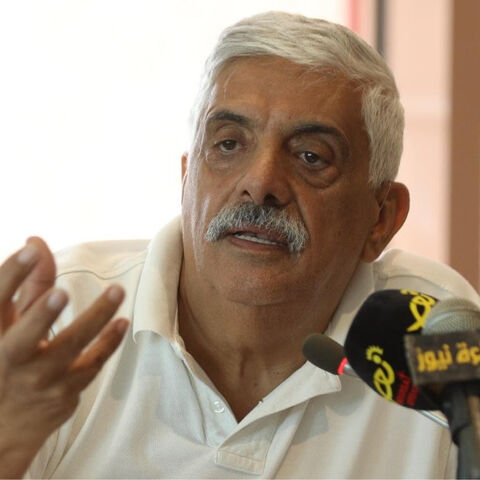

Palestinian citizens in Israel expect to see an increase in their number of Knesset seats in the third election cycle in less than one year in Israel. Days before the window is set to close for submitting election lists, due Jan. 17, polls show it is possible the Joint List — a unified slate of predominantly Arab parties — could garner as many as 15 members in the March 2 elections, a whopping 50% improvement over the results of the April 2019 elections when the Joint List was split and only able to reach 10 seats. When Arabs united in the September 2019 elections, they gained 13 seats.
Botrus Mansour, a Nazareth-based lawyer and an astute observer of Arab voting trends in Israel, told Al-Monitor the Joint List will improve because of its stability, lack of internal squabble this time around and proven ability to influence politics in Israel. He said, “For years, Palestinian citizens of Israel felt their representatives in the Knesset had no influence. But when Ayman Odeh, head of the Joint List, recommended to President Reuven Rivlin that Knesset member Benny Gantz become prime minister, this drove home to many that Arabs can, in fact, have influence.” Mansour’s comment reflects the fact that previously, Arab members of the Knesset had not nominated anyone for prime minister.
Ziad Omari, a well-to-do businessman and the new owner of Radio Nas, a licensed Arabic language radio station broadcasting out of Nazareth, told Al-Monitor there are many reasons why people are more hopeful regarding the upcoming elections. “Arabs are more hopeful that as a result of the newly found power, Arab Knesset members can be part of the effort to finally remove the longest-serving prime minister of Israel and his right-wing partners,” Omari said.
Omari noted that Arab legislatures in Israel could very well benefit from some of the new alignments among Zionist parties. “The unity between the left-wing Meretz Party and the Labor Party will most likely free many citizens to vote for the Joint Arab List,” he said.


