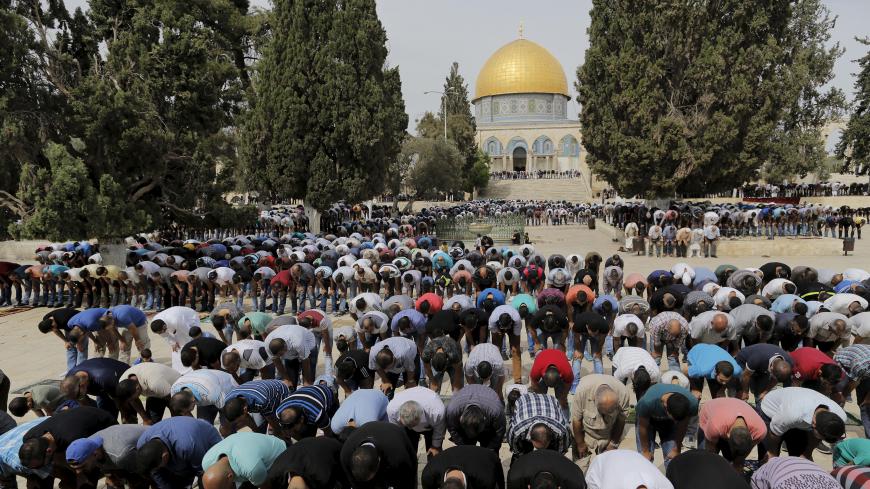
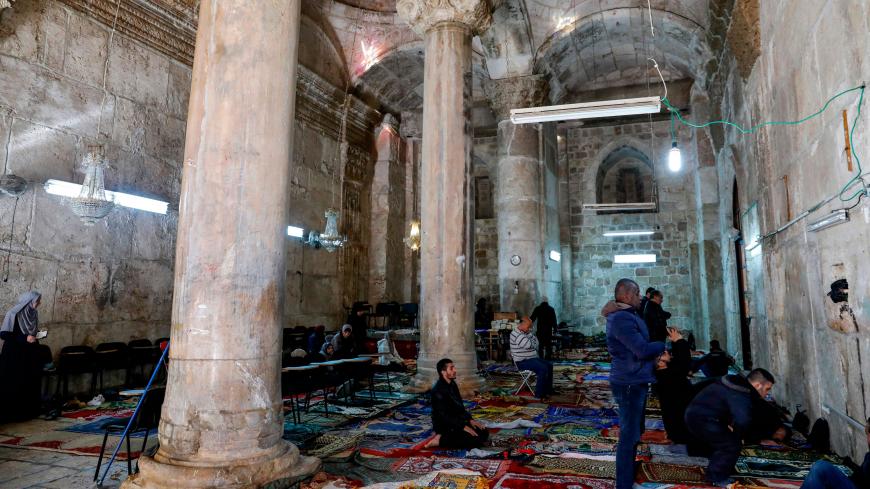
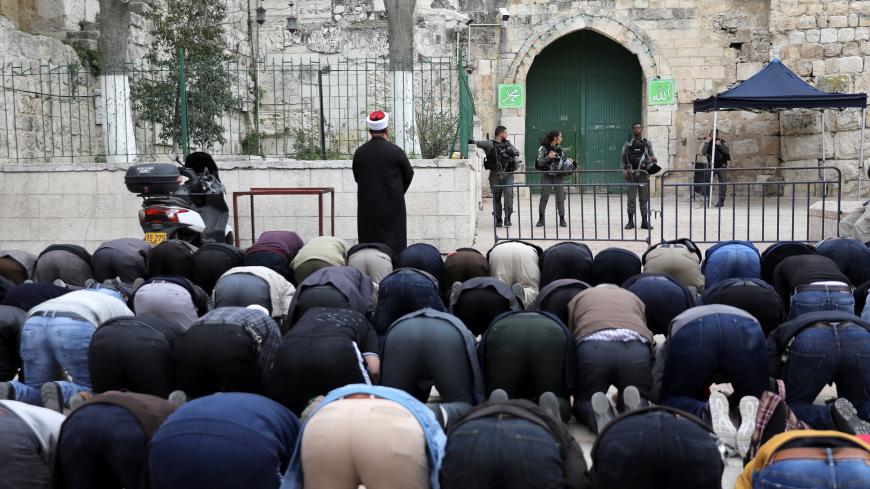
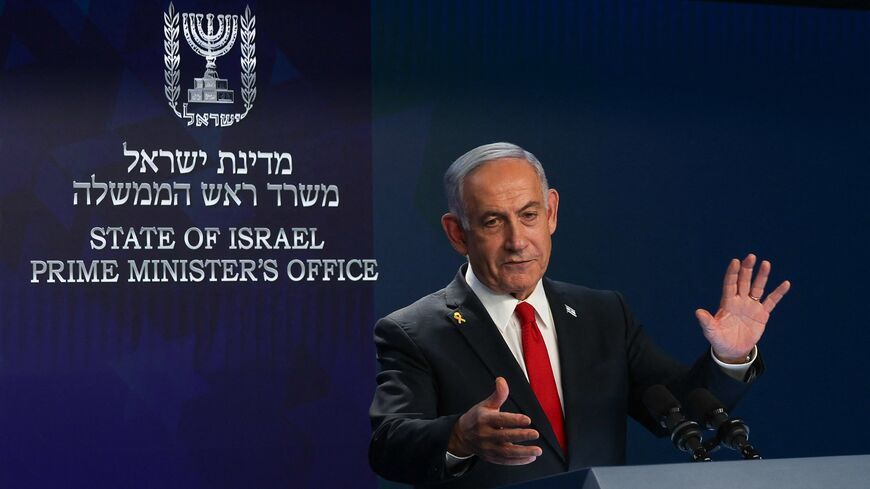
The government of Israel scored another victory in its struggle against Palestinian Muslims on March 17 when the Jerusalem Magistrate’s court issued a temporary closure order against the contested site known as Bab al-Rahma (Gate of Mercy) on the Temple Mount compound. It is now up to Public Security Minister Gilad Erdan to instruct police to reseal the site the court shut down in 2003. Given the sensitive nature of the area, revered by both Muslims and Jews, this hot potato will likely end up on the desk of Prime Minister Benjamin Netanyahu. A decision to enforce the court order could ignite flames in Jerusalem and the West Bank and spark a crisis in relations with Jordan. However, a stay of the order and acceptance of the Muslim decision last month to reopen the site and use it as a mosque would play into the hands of the political right vying with Netanyahu’s Likud for every vote in the April 9 elections. Chair of the Muslim Waqf in Jerusalem Sheikh Abdelazeem Salhab on Feb. 18 warned, “The mosque is a red line.” He added, “No Muslim would give up a single grain of its sand.” Salhab also said the Waqf, the custodian of the site, planned to renovate the structure and reopen it as a mosque and as offices. Following the latest court order, the Jordanian Foreign Ministry announced that it does not recognize the authority of an Israeli court over East Jerusalem, including Al-Aqsa Mosque compound, which it views as territory unlawfully occupied by Israel since 1967.
On the other side, the New Right party announced March 6, “Allowing the Waqf to revamp the Gate of Mercy site is a capitulation to terrorist thuggery.” The party urged Netanyahu “not to surrender to terrorism." “Laws are enforced with an iron fist not by giving in to a gang of hooligans that identifies weakness and abuses it,” said the party. The last time Netanyahu decided to flex his muscles on the Temple Mount, giving in to similar political pressure in July 2017 and going along with police recommendations to place metal detectors at the gates of the compound, violent protests erupted in East Jerusalem and the West Bank.
In a March 7 article on the Ynet website, lead researcher of the left-wing Ir Amim nonprofit Aviv Tatarsky recalled that at the time, police assured those opposed to the metal detectors that “the Palestinians will simply have to get used to them.” No sentence refutes more clearly the accepted assumption that as an alternative to ending its occupation and conflict with the Palestinians, Israel had opted to manage the conflict. In fact, the precise definition of Israel’s policy is “fanning the conflict,” and nowhere does this policy fuel the flames higher than on the Temple Mount.
The Jerusalem syndrome is not confined to the walled Old City. The right-wing government aims to bury the 1993 Oslo Accord with the Palestinians and use it as a tool to dig the grave of the two-state solution — a solution not feasible in any way absent a change in the current legal status of East Jerusalem.
AL-MONITOR All-Access gives you unlimited access to all our journalism, the full Daily Briefing, exclusive interviews, premium newsletters, and live events — for less than $2/week.