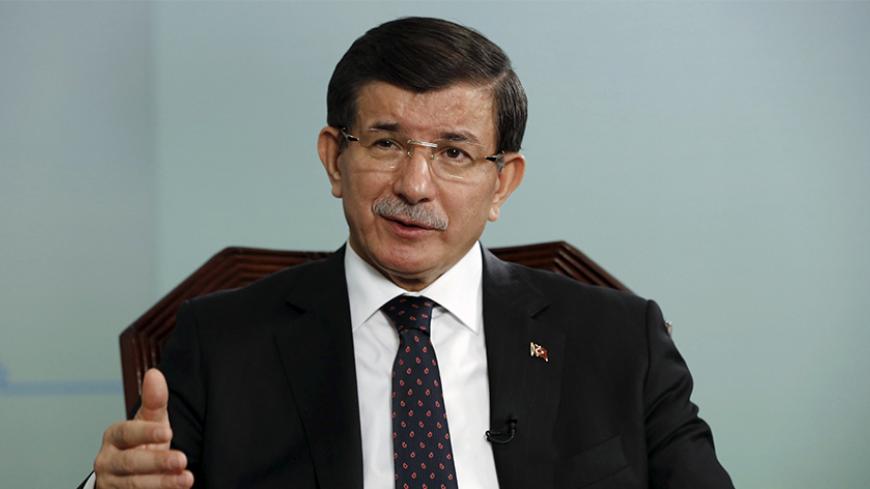
Turkish President Recep Tayyip Erdogan has long insisted that the Kurdish Democratic Union Party (PYD) and the People's Protection Units (YPG) are terror organizations that are more dangerous than the Islamic State (IS). If one day he sees YPG flags in the corridors of the European Parliament, Erdogan will swear never to return to Brussels. Remember 2009, when he silenced Israeli President Shimon Peres with his now infamous upbraiding, announcing, “I do not think I will be coming back to Davos after this.”
Northern Syria’s PYD and YPG are steadily expanding their legitimacy in Europe. The YPG flags on the doors and walls of the European Parliament are but a small indicator that Ankara’s protests have made no impact.
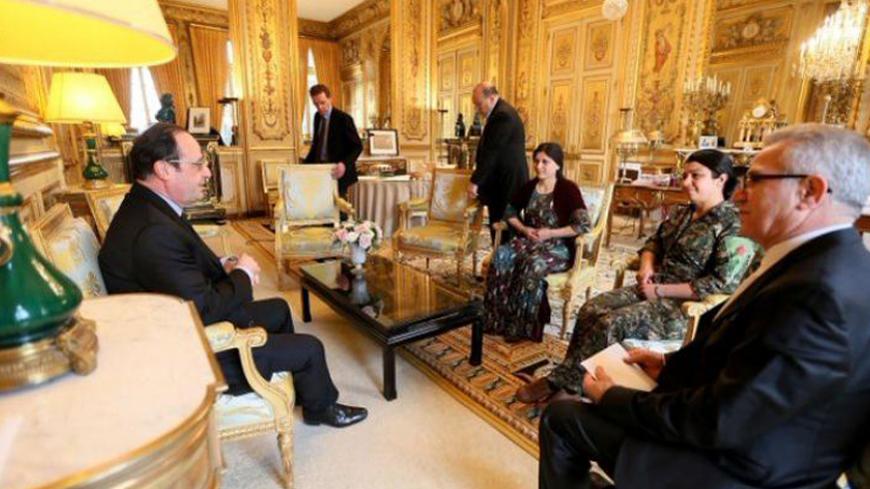
The political and military actors of Syrian Kurdistan, known as Rojava, have succeeded in opening representative offices in various corners of Europe despite stern warnings from Ankara. A turning point came for the Kurds on Feb. 8, 2015, when French President Francois Hollande hosted a meeting with Asya Abdullah, the co-chair of the PYD, and Nesrin Abdullah, the commander of YPG’s female branch, the Women’s Protection Units (YPJ).
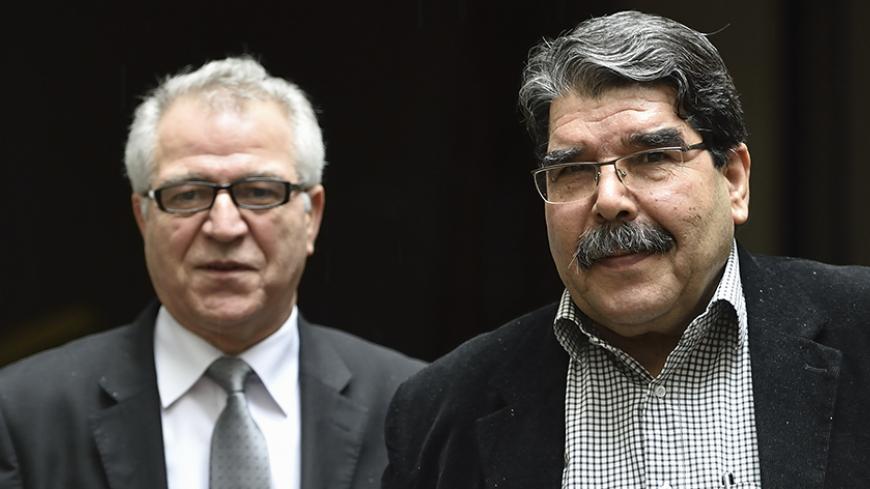
The Syrian Kurds, who are treated warmly both by the Russians and the West, opened their Moscow office not in the name of the PYD, but that of the Rojava administration on Feb. 10. They are diplomatically active in Brussels, which houses NATO, the European Commission and European Parliament. They have already opened offices in Prague and Stockholm. Copenhagen is next.
AL-MONITOR All-Access gives you unlimited access to all our journalism, the full Daily Briefing, exclusive interviews, premium newsletters, and live events — for less than $2/week.