



Is Erdogan closing Hamas' Istanbul office?
Israel has demanded that Turkey expel Hamas activist Salah Al-Arouri from Istanbul as a condition for normalizing bilateral relations.
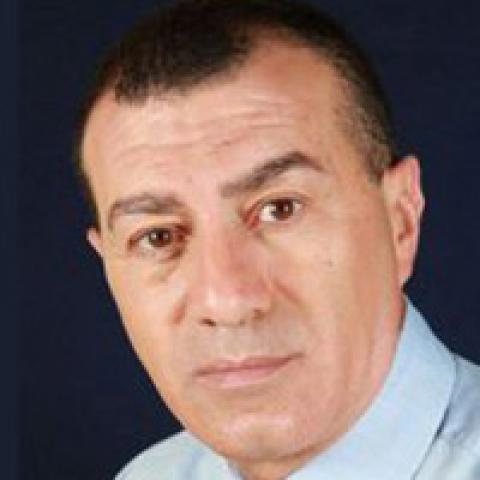

Two days after it was reported that Israel and Turkey had reached a series of understandings ultimately leading to their reconciliation, the head of Hamas’ political bureau, Khaled Meshaal, met with Turkish President Recep Tayyip Erdogan in Istanbul.
According to Turkish media reports, on Dec. 19, the two men discussed “developments in the Middle East.” As far as Hamas was concerned, this meant Turkey’s decision to reconcile with Israel and the eventual price Hamas will have to pay for it. For example, one of the Israeli conditions was that Turkey expel senior Hamas official Salah al-Arouri. In December 2014, Al-Monitor reported that Arouri had established his own “bureau” in Istanbul and that it operated quite independently from the rest of the movement. This had been a source of trouble for Hamas’ multiheaded leadership on more than one occasion.
Arouri had been expelled from Israel in April 2010, at the height of negotiations for the release of kidnapped soldier Gilad Shalit. He asked to be sent to the Gaza Strip, but Israel preferred to banish him from all Palestinian territory under the assumption that his presence in Gaza would pose a threat to Israel. By the time the Hamas prisoners were finally released in 2011 in the deal, Arouri was already in Istanbul, busy establishing a bureau there. It was Arouri who took in the most serious prisoners released by Israel in the Shalit deal, the ones that no other country would take.
These Hamas activists, who arrived in Istanbul with Erdogan’s consent, significantly strengthened Arouri in the internal struggles that have plagued Hamas since Israel assassinated Sheikh Ahmed Yassin in 2004. The Arouri bureau became yet another power base jockeying for position within the movement. It has been a major headache for the movement’s leadership in Qatar (Meshaal) and Gaza (Ismail Haniyeh).


