Turkey's AKP looks to the future

Erdogan wants and will likely see a loyal young generation of leaders take over his Justice and Development Party (AKP).

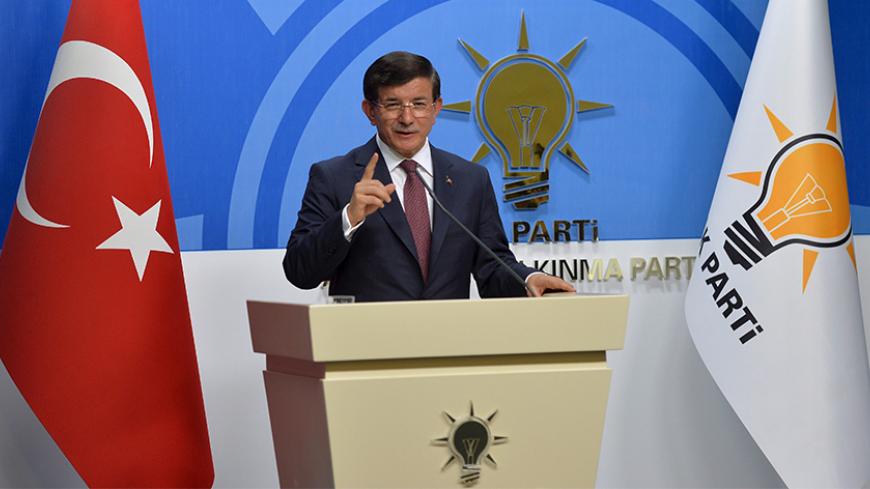
al-monitor Supporters of Turkey's Prime Minister Recep Tayyip Erdogan (not pictured) cheer as he addresses the members of parliament from his ruling Justice and Development Party in Ankara, June 18, 2013. Photo by REUTERS.
Mustafa Akyol

Mustafa Akyol

@AkyolinEnglish

Topics covered

turkish politics, turkey, recep tayyip erdogan, prime minister, justice and development party, ahmet davutoglu, abdullah gul, akp

Aug 13, 2014

On Aug. 10, Turkey’s successful and ambitious Prime Minister Recep Tayyip Erdogan was elected president with 51.8% of the vote. His victory surprised no one, but it did raise new questions about his Justice and Development Party (AKP) that has ruled Turkey single-handedly since 2002.

As the Turkish Constitution defines the presidency as a nonpartisan post, Erdogan will be officially dissociated from the AKP on Aug. 28, the day he takes the oath of office. This means that while the persona of Erdogan will still loom large, the AKP will need a new leader who will also be Turkey’s new prime minister. Who that person will be and what that will mean for Turkey are the next big questions.

In the minds of many, the most likely candidate for the leadership of the AKP after Erdogan was Abdullah Gul, who has served as president since 2007. Gul, with Erdogan, has been one of the two main pillars of the AKP, and was the party’s first prime minister briefly in 2002. Recent polls show that Gul is still very popular in the AKP’s base and in Turkish society in general.

That is probably why Gul declared on Aug. 11, the day after Erdogan’s election, “I will return to my party.” But, alas, just 30 minutes later, the AKP central committee, convened under the chairmanship of Erdogan, declared the date of the next party congress, when the new party leader will be elected: Aug. 27, just a day before the end of Gul’s term. This means that since Gul will still be the president on Aug. 27, he will not be eligible to run for the AKP leadership.

With this maneuver, Gul has been removed from the picture, at least for the time being. The obvious reason is that Erdogan wants an obedient prime minister who will not dare to disagree with him, unlike Gul, whose disagreements with Erdogan have been a recurrent theme in Turkish politics, especially in the past two years. For example, Gul disagreed with Erdogan’s hawkish take on the Gezi Park protests; he opposed the Twitter ban that Erdogan imposed last March; he silently opposed Erdogan’s reckless support for the Syrian opposition, arguing for more caution; and he opted for more diplomatic language in foreign policy, such as that toward the military regime in Egypt. Gul is also known for his polite, respectful, smiling attitude, in contrast to Erdogan’s often defiant and aggressive political rhetoric.

These differences have made Gul a source of hope for some Turkish liberals and Western observers, but that is precisely why Gul has been increasingly disliked and disregarded by the hard-core Erdogan supporters. As Etyen Mahcupyan, a pro-Erdogan commentator, recently wrote, these Erdogan loyalists believe that Gul will be an “inadequate” fighter in the battles that they think should be waged — such as the one against Turkey's so-called “parallel state.” (One can also perhaps add the battles against the “interest-rate lobby” and all other enemies within the government.) Gul seems simply too moderate for the distrusting and combative mood that dominates the AKP.

Why, then, should Gul be considered a factor in the AKP’s future? The answer is that many of the AKP’s veterans actually admire Gul and hope to restore the moderation that he represents. It is well known that key ministers such as Bulent Arinc, Ali Babacan, Mehmet Simsek and former Justice Minister Sadullah Ergin are keen to have Gul as the new leader of the party and are lobbying for him.

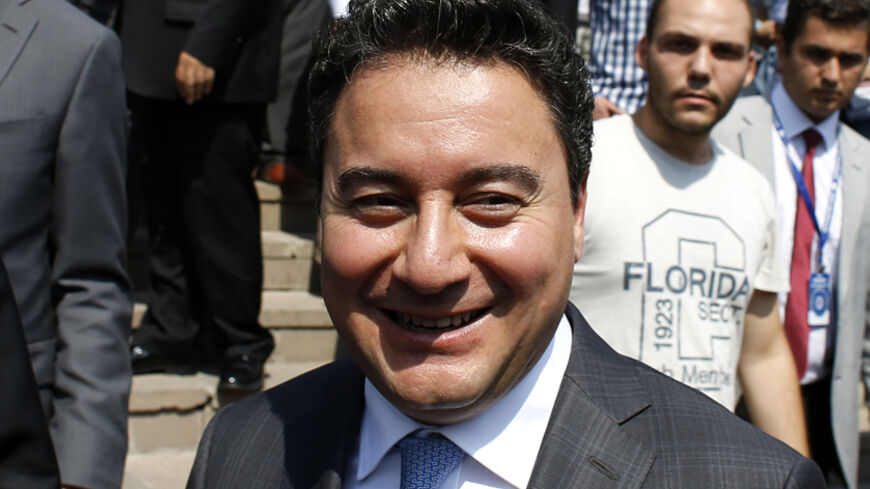
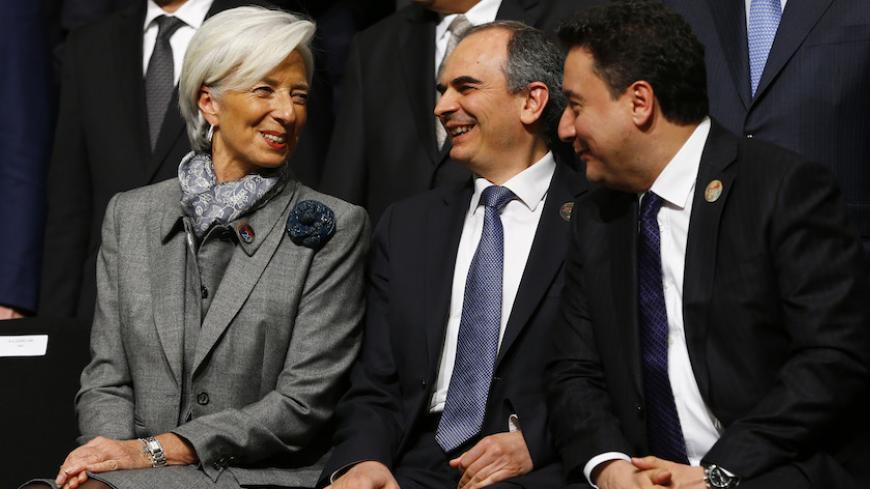
Deputy Prime Minister Babacan, who has successfully managed the Turkish economy since 2002, is particularly interesting. His is a name that foreign investors trust, and it is no wonder he has called for caution, moderation and stability during the political upheavals of the past two years. He has also worked well with the head of the central bank, Erdem Basci, who has resisted Erdogan’s calls to lower interest rates.

But now, there is a growing line within the AKP that sees its longtime policy of integration with the global economy as servitude to the “interest-rate lobby” and the imperialist “neoliberal order.” Represented by figures such as AKP vice chair Numan Kurtulmus and columnist-turned-Erdogan-adviser Yigit Bulut, this new ideological line calls for a “fully independent Turkey.” As Turkish political and economic analyst Cenk Sidar noted, the tension is now between the “rational and globally compatible line of Babacan and Simsek, and the populist, isolationist line represented by Bulut and Kurtulmus.”

A recent attack by Bulut on Babacan was one sign of this tension. On Aug. 6, Babacan said on TV that a state bank was considering buying Bank Asya, an Islamic bank that is affiliated with the movement of Fethullah Gulen, in an apparent attempt to save the bank from collapsing. But then, Bulut declared on another TV station, “There is no such plan.” He also accused “speculators” of prompting a sudden increase in Bank Asya shares. This was interpreted in the Turkish press as a veiled accusation of Babacan of being “parallel,” i.e., affiliated with Gulen. (Using Occam’s razor, the more reasonable explanation would be that as a rational manager of the economy, Babacan is trying to save Bank Asya, which has been a government target since the beginning of the AKP-Gulen war, for the overall well-being of the economy.)

Where Erdogan stands on these disputes is hard to tell, as he often seems to manage and sometimes calm them behind the scenes. But it is clear that the rhetoric Erdogan uses in domestic politics is the nationalist and conspiratorial line that figures such as Bulut popularize through the media. That must be one reason why moderates such as Babacan appear frustrated and hope to have Gul as the new leader and prime minister.

Yet, this hope will not be fulfilled — at least for a while. On Aug. 27, the AKP will elect (in effect, Erdogan will nominate) the new prime minister, and it will not be Gul. The strongest candidate is Foreign Minister Ahmet Davutoglu, who shares Erdogan’s vision and has proven his loyalty. Meanwhile, most of the key moderates — such as Arinc, Babacan and Ergin — will have to resign in 2015 because of the AKP’s self-imposed three-term limit. In that case, the AKP will be dominated by the “young generation” that Erdogan often praises — young, ideologically motivated and totally loyal to Erdogan.

Continue reading this article by registering at no cost and get unlimited access to:
  • Al-Monitor Archives
  • The Week in Review
  • Exclusive Events
  • Invitation-only Briefings

More from  Turkey

al-monitor
Understanding Turkey's vision of medical schools for small Syrian town
Fehim Tastekin | | Feb 12, 2021
al-monitor
Turkey to purchase fourth drilling ship to expand energy projects
Diego Cupolo | Oil and gas | Feb 10, 2021
al-monitor
What’s next for Turkey in Libya after election of new interim leaders?
Fehim Tastekin | Libya conflict | Feb 11, 2021
al-monitor
Turkish official hints at possible S-400 missile compromise with US
Diego Cupolo | Defense/Security cooperation | Feb 9, 2021