



How Argentina-Spain World Cup final became debate over Israel, Palestine
Governments and fans alike have turned teams and players into symbols of political division.



WASHINGTON/NEW YORK — As Argentina and Spain prepare to meet in Sunday’s World Cup final, the contest for soccer’s biggest prize is also being cast by some fans as a proxy battle over Israel and Palestine.
That framing has less to do with the teams themselves than with the politics surrounding them.
Argentina’s run has been celebrated by some pro-Israel voices who point to Argentine President Javier Milei’s close ties with Israel, while Spain has attracted support from some pro-Palestinian voices because of Madrid’s recognition of Palestine and criticism of Israel’s military campaign in Gaza.
Argentina’s political backdrop
Milei, a right-wing libertarian, is a staunch supporter of Israel and has visited the country multiple times since taking office in 2023. During a June 2025 visit, he announced plans to relocate Argentina’s embassy to Jerusalem. Milei, who has an Italian Catholic background, has said he is interested in converting to Judaism after he leaves office, believing that observing the Jewish Sabbath would conflict with his presidential duties.
Speaking on a podcast earlier this month, Israeli Prime Minister Benjamin Netanyahu said, “I look for Argentina in the World Cup,” adding, “Milei is a great friend of Israel.”
Israeli National Security Minister Itamar Ben-Gvir celebrated Argentina's semifinal victory on Wednesday, writing in Spanish on X, "Honor to whom deserves honor, and now with faith toward the final!"
Israeli Foreign Minister Gideon Saar met his Argentine counterpart, Pablo Quirno, in Washington on Wednesday to discuss ties between Israel and Latin America. "And yes, we also raised a glass to Argentina’s impressive victory in the World Cup semifinal," Saar wrote on X after the meeting.
Argentina is home to the largest Jewish community in Latin America, with about 170,000 Jews living there.
The country has an even larger Arab community, with up to 3 million Argentines claiming Lebanese descent alone.
Public opinion of Israel in the Latin American country diverges from official government policy. In Argentina, 55% of people have an unfavorable view of Israel, compared with 21% who have a favorable view.
Criticism of Argentina’s national team hasn’t just stemmed from Buenos Aires’ relationship with Israel. The team and its supporters have faced scrutiny over racism. In 2024, the team faced backlash after a video showed players, including midfielder Enzo Fernandez, singing a racist chant targeting French players of African heritage after Argentina’s Copa America victory. Fernandez later apologized for the chant. The incident revived criticism of a chant previously heard among some Argentina supporters before the 2022 World Cup final against France.
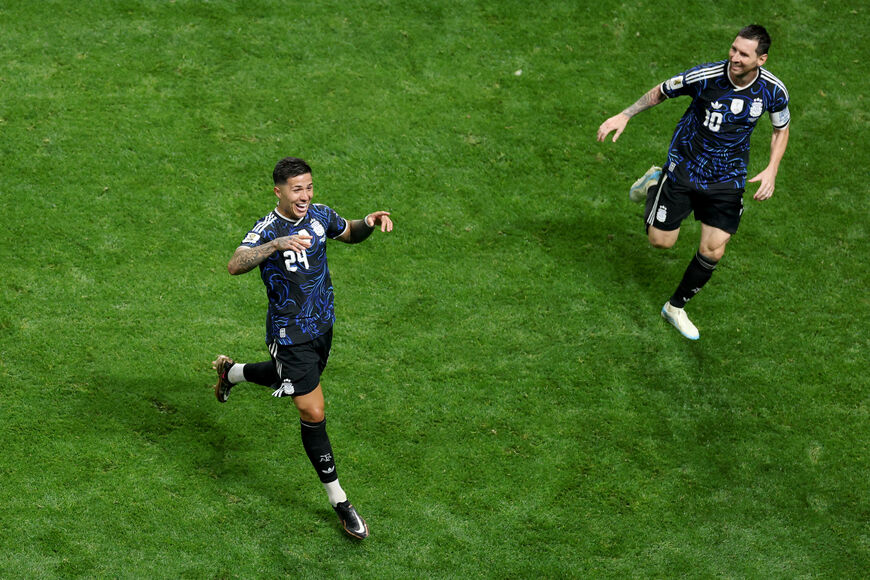
Argentine supporters have faced accusations of racist behavior from fans of other national teams, including Cape Verdean and Egyptian supporters, during this year's tournament.
Messi, Maradona and political symbolism
Argentine superstar Lionel Messi’s image has undergone a reversal among some soccer fans. At the 2022 World Cup in Qatar, Messi’s pursuit of his first World Cup title became one of soccer’s defining narratives. His triumph with Argentina completed the final piece of a career already considered among the greatest in the history of the sport.
Messi’s 2022 World Cup narrative captivated millions. That same love story has since soured for some audiences.
Photos have recently circulated on regional social media of Messi visiting the Western Wall, one of Judaism’s holiest sites in Jerusalem’s Old City. The images date back to 2013, when Messi visited Israel and the occupied West Bank with Barcelona as part of a club-organized “peace tour.” During the trip, the Spanish club organized training clinics for Israeli and Palestinian children. The team also met with Palestinian President Mahmoud Abbas and Israeli Prime Minister Benjamin Netanyahu.
Throughout his career, Messi has cultivated a largely apolitical public image, rarely commenting on politics. But critics have pointed to his commercial ties with Israel. In 2020, Messi became a brand ambassador for Israeli tech company OrCam, which develops devices for people with visual impairments. He also previously served as a global ambassador for Tel Aviv-based tech company Sirin Labs.
In 2018, the Argentine squad canceled an exhibition match with Israel after political pressure. Then-striker Gonzalo Higuain said that they had “done the right thing” in an interview with ESPN following the cancellation. A year later, the Argentine team, including Messi, faced Uruguay in Tel Aviv, despite calls by the Boycott, Divestment and Sanctions movement for Messi not to attend.
Others have contrasted Messi’s relative political silence with late Argentine soccer legend Diego Maradona’s outspoken support for Palestine. Maradona frequently used his global platform to express support for Palestinians.
During the 2018 World Cup, he met with Abbas. At the time, the soccer superstar said, “In my heart, I am Palestinian.”
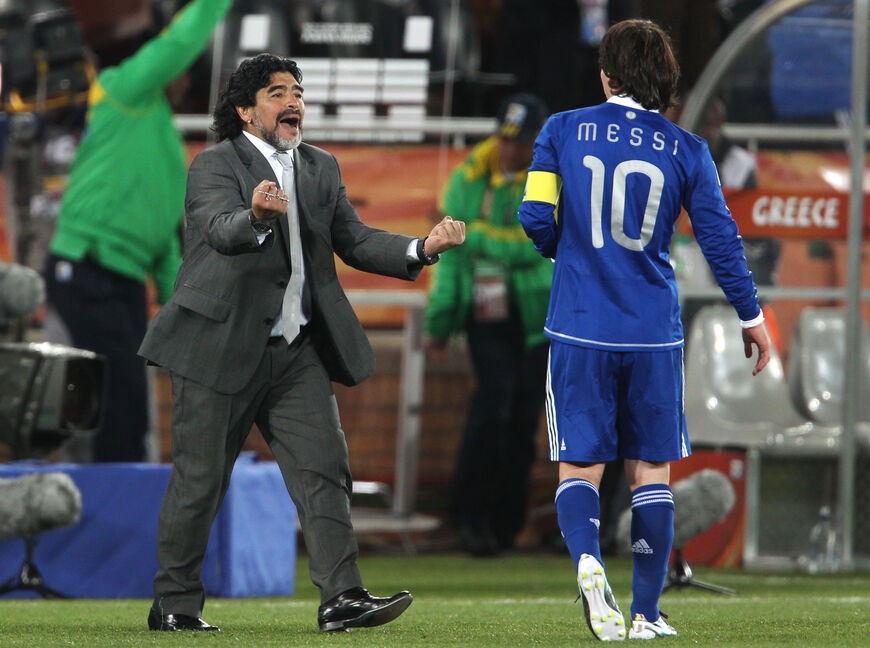
Messi has a strong following in the Middle East and North Africa, despite his contacts with Israel. Lebanese media aired footage of locals in the Hezbollah stronghold of Dahiyeh celebrating Argentina’s win on Wednesday.
In 2022, Messi became a tourism ambassador for Saudi Arabia. He spurned an opportunity to join rival Cristiano Ronaldo in the Saudi Pro League the following year, instead signing with Inter Miami.
Spain’s progressive politics
Spain has become a focal point for many pro-Palestinian supporters because of the foreign policy of left-wing Prime Minister Pedro Sanchez’s government. Sanchez has been one of Europe’s strongest critics of Israel’s military campaign in Gaza. In 2024, his government joined Ireland and Norway in formally recognizing a Palestinian state.
Madrid also sharply criticized US and Israeli strikes on Iran earlier this year.
Iranian officials have praised Madrid’s position on both the Israel-Palestine conflict and its criticism of US and Israeli strikes on Iran. In March, Iranian President Masoud Pezeshkian wrote on X, commending Spain’s opposition to the strikes, saying Spain’s stance “shows that ethics and awakened consciences still exist in the West.”
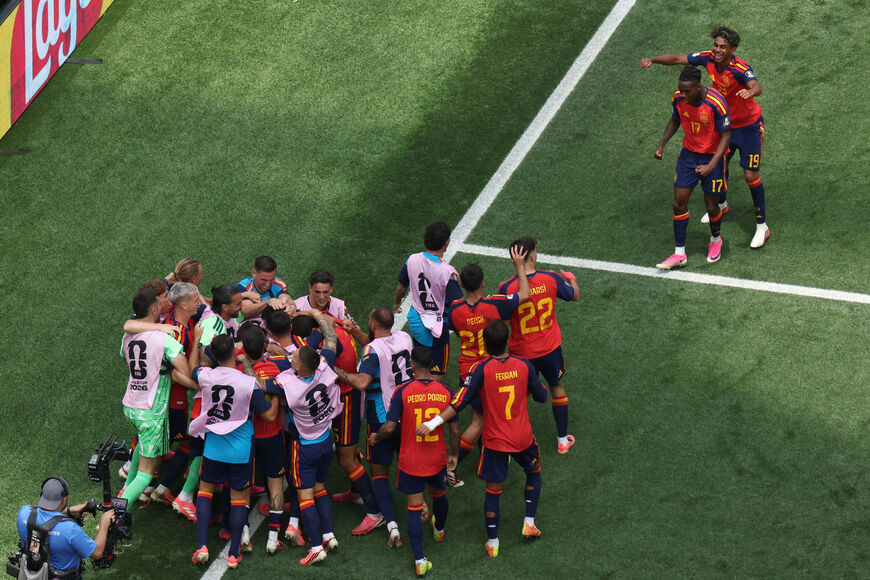
That sentiment appears to have translated into support for the Spanish national team. After Spain defeated France in the semifinal on Tuesday, Iran’s embassy in Kenya posted on X, congratulating the team and saying Spain will “never be forgotten for standing on the right side of history.”
Young Spanish star Lamine Yamal waved a Palestinian flag during Barcelona’s La Liga title celebrations in 2026, which triggered criticism from Israeli officials — including Israeli Defense Minister Israel Katz — and praise from Palestinian supporters.
The Palestinian mission to the United Nations posted the photo in support of the Spanish squad on Tuesday.
Viva España 🇪🇸 https://t.co/B2RX3wWked pic.twitter.com/d1U4qdUvIW
— State of Palestine (@Palestine_UN) July 14, 2026
Yamal received backing from Prime Minister Sanchez, who said the Spanish star “has merely expressed the solidarity with Palestine that millions of Spaniards feel." The 19-year-old has not publicly commented on the issue.
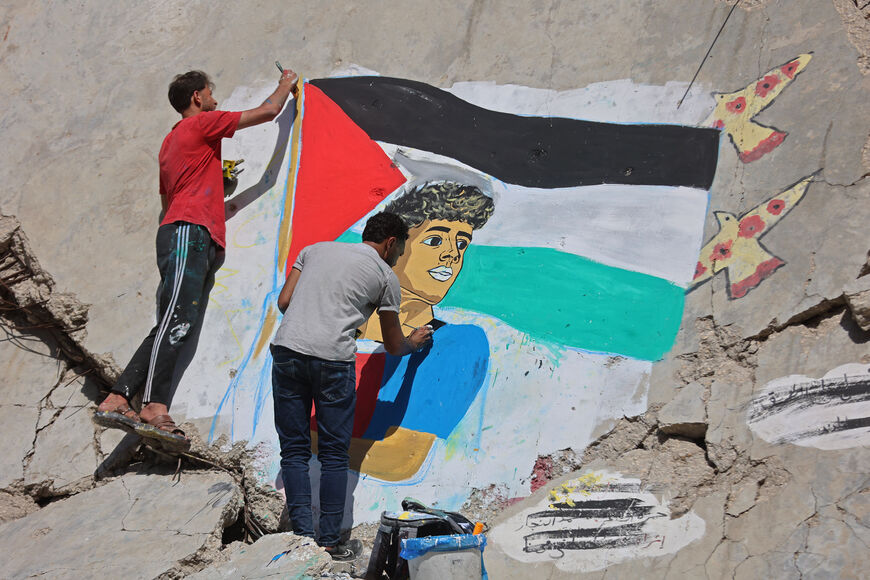
Palestinian artists created a mural of Yamal on the ruins of a destroyed building in Gaza City's Al-Shati refugee camp after he waved the flag.
Spain’s role in discourse surrounding the final represents just one aspect of the country’s political landscape. The country continues to grapple with internal debates over identity, immigration and race.
In a column published in Spanish outlet El Debate ahead of the Spain-France semifinal on Tuesday, former conservative Spanish Prime Minister Mariano Rajoy said that the French national team “does not have any French players,” referring to the African heritage of much of the French squad.
During a World Cup friendly in Barcelona, a section of Spanish fans directed an Islamophobic chant at the visiting Egyptian national team. Yamal, who has Moroccan heritage and is Muslim, condemned the chants as “ignorant and racist.”
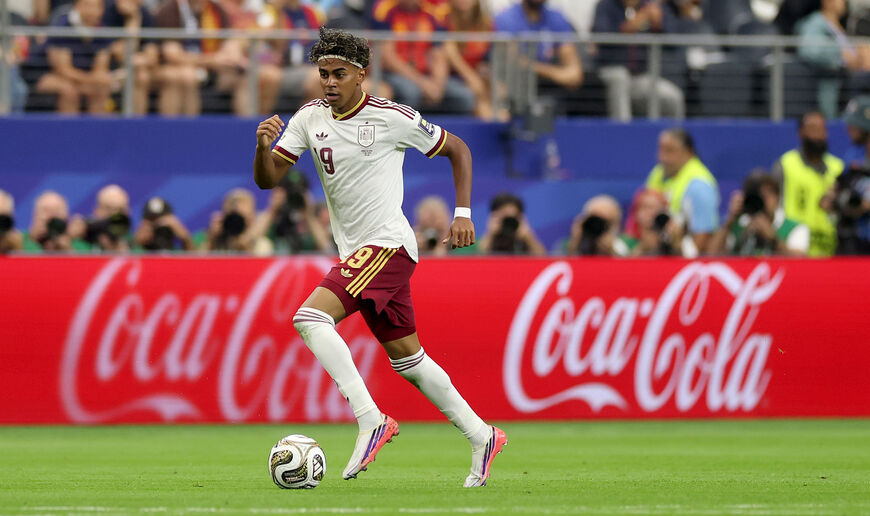
The leader of Spain’s far-right Vox party, Santiago Abascal, wrote on X, condemning those who criticized the chants, saying that “people are tearing their hair out over a chant that isn’t even an insult, just a display of identity.” He added, “They expect Spaniards to silently and obediently put up with the Islamist invasion and the mafia government.”
Spain is scheduled to cohost the next World Cup along with Morocco and Portugal.
This one's on us.
The story doesn't end here.
Our correspondents are already on the next chapter. Read everything they file, from $2/week.
See Offers