US firm HKN Energy takes over 7 oil fields from Syria's Kurds
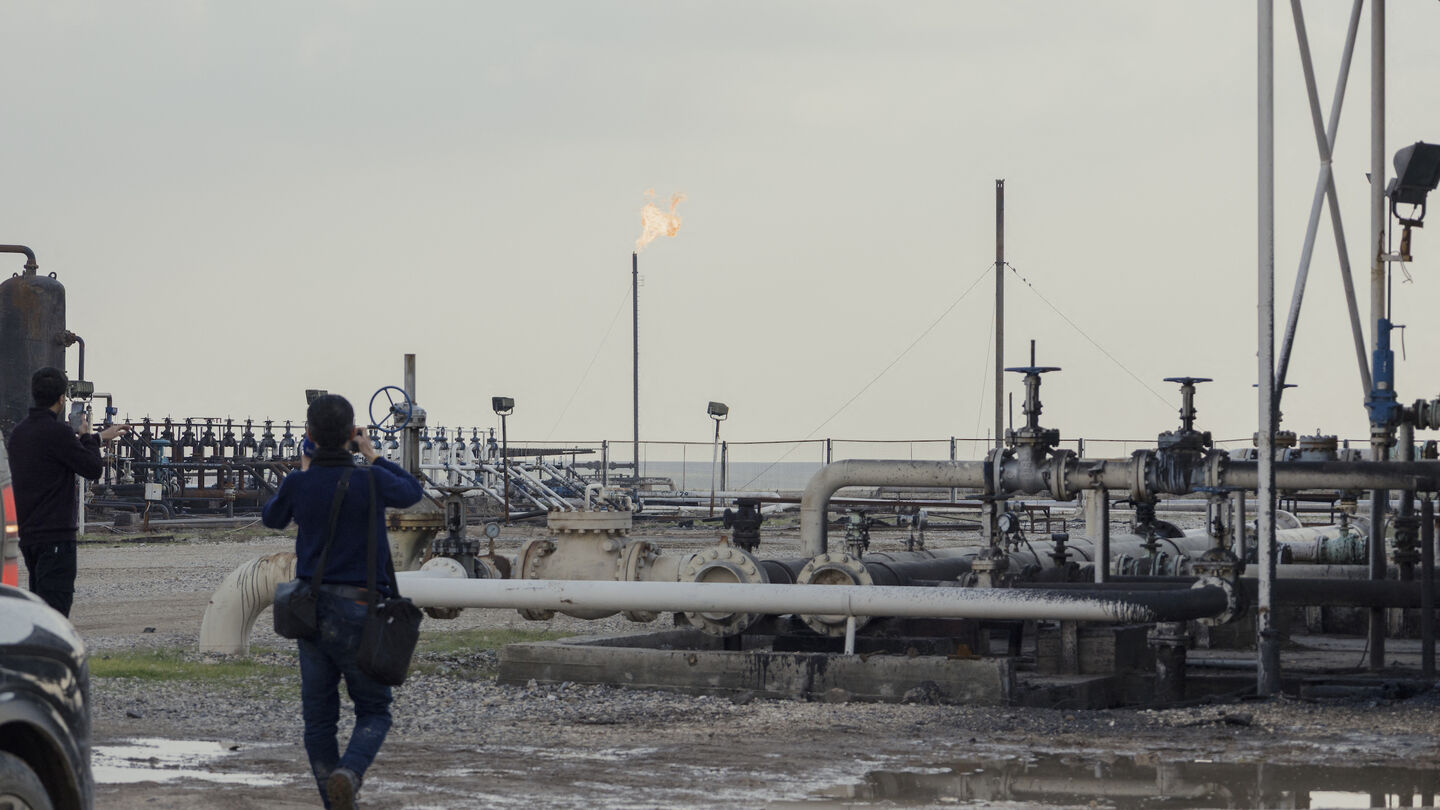
HKN Energy has begun operating seven oil fields under a 25-year agreement with Damascus, marking the first major production-sharing deal between Syria's new government and an international oil company.
A Texas-based oil and gas company, HKN Energy, formally took over production at seven oil fields in Kurdish-administered northeastern Syria on Sunday, a top executive has confirmed.
The executive, who spoke exclusively to Al-Monitor on condition of anonymity, provided extensive details of the 25-year agreement that was concluded in April between HKN Energy and Syria’s state-run Syrian Petroleum Company. It is the first international oil company to have signed a production-sharing agreement with Syria’s new government, led by President Ahmed al-Sharaa.
The oil will be trucked to refineries and export terminals in Baniyas on Syria’s Mediterranean coast, another person familiar with the details of the agreement said.
HKN is partnered with Qatar’s UCC Holding but will be the sole operator. UCC Holding signed a memorandum of understanding with the Syrian government in February together with US major Chevron to evaluate oil and gas exploration in Syrian waters.
HKN was founded in 2007 and is majority owned by Ross Perot Jr., the son of the eponymous former presidential candidate who ran as an independent in 1992.
The production-sharing deal covers oil fields that were run until now by the Jazira Oil Company, or JOC, a subsidiary of the SPC. It was taken over by the Kurds when the Assad regime pulled out of the Kurdish-majority northeast in 2012 to fight a Sunni insurgency in the remainder of the country.
The fields are Sazaba, Alyan, Layla, Karatchok, Rmeilan, Hamza and Sweidah.
In a recent interview with Al-Monitor, Mazlum Kobane, the senior-most figure in the Kurdish-led administration, acknowledged that the oil fields in the Rmeilan region that skirts the Turkish and Iraqi borders were the property of the Syrian state. The SPC controls two more fields in the Kurdish-run region, Khurbet and Oudeh. The UK firm Gulfsands used to operate the Youssefieh and eastern Khurbet fields until the start of the civil war in 2011. It is lobbying Damascus to get them back.
'Disinformation' campaign
Contrary to "disinformation" being circulated on social media, JOC is not a party to the contract, the executive who briefed Al-Monitor said. Rather, it will work as a service provider. “Any agreements for domestic consumption and refining allocation are between the JOC and the SPC. They have reached an agreement, but we aren't part of that," the executive said.
Furthermore, HKN will not take a 32% share of the proceeds as is being claimed. Under the terms of the contract, any oil extracted on top of the current estimated baseline production will go to HKN. "The contract requires the baseline to be established over the first 60 days," the executive said. The initial baseline agreed upon was 50,000 barrels per day.
The real figure is likely closer to 80,000 barrels per day.
The details of the agreement between the Kurds and Damascus have yet to be disclosed. The person familiar with the deal said no written agreement had been reached between the JOC and the SPC. "Nothing has been put in writing," the person said.
Al-Monitor was unable to reach JOC and SPC officials for comment. One Kurdish source with close ties to the Kurdish-led administration said the SPC had agreed to give the JOC a 10% stake in its own share of production from the seven fields.
The executive declined to comment on the claim.
"The first priority for HKN is to address the produced oil/water that is disposed of in the environment and to implement international standards that will eliminate this environmental pollution, which HKN began addressing on their first day of operations," the executive explained, calling it a "huge win for the Kurds."
Typically, water produced from the oil wells during extraction in northeast Syria is dumped on the ground, polluting rivers and agricultural land. The water is mixed with oil, transforming it into a deadly black sludge that blights the landscape and is thought to contribute to the alarming rise in cancer and other diseases.
In most oil operations, the water is either treated or re-injected into the well.
Once the pollution issue is fully addressed, production at the fields is expected to rise to an average of 200,000 barrels per day.
Some 6,000 JOC employees will be on HKN’s payroll for a transitional period of three months. “Syria is going to get more than 75% of the economic value of this project,” the executive said.
HKN did not announce the deal in April out of concern that its fields might be targeted by Iran-backed Shiite militias in neighboring Iraq. The company’s fields in Iraqi Kurdistan have been hit twice by the militias since the start of the Iran war in February, part of a broader Iranian-backed campaign targeting US bases and US-linked oil companies. SPC CEO Youssef Qiblawy was first to announce the news during an Atlantic Council energy forum on June 9 in Washington.
Shifting fortunes
The Kurds’ lesser role in the scheme is a further manifestation of their shifting fortunes since the fall of the Assad regime in December 2024. Until then, Kobane and his Syrian Democratic Forces were the top allies of successive US administrations in the fight against the Islamic State.
Around 2,000 US forces deployed in the Kurdish zone provided a critical security shield against Assad and the Turkish military.
Al-Monitor was first to report on a deal struck in July 2020 between the Kurdish-led administration and an obscure Delaware-based oil company called Delta Crescent to develop the fields that HKN is now operating. The deal collapsed amid pressure from Ankara. Turkey was fiercely opposed to any form of cooperation with the SDF because of its close links to the outlawed Kurdistan Workers Party, which was fighting an armed insurgency against the Turkish army at the time.
The fall of the Assad regime in 2024 proved a watershed moment as Western governments, led by the United States, embraced Syria’s new leader, Sharaa. Last year, HKN met with Syrian officials in Damascus to explore the possibility of taking over production at the Rmeilan fields and, according to sources familiar with the exchanges, were told by their Syrian interlocutors that they would need to meet with the Kurdish-led administration as well. They duly met with Kobane and the commander-in-chief of the Women’s Protection Units, Rohelat Afrin. A three-party deal was potentially in play. However, all that changed in January this year.
The Pentagon did not intervene as Sharaa’s forces mounted a major offensive against the SDF, seizing more than 80% of the territories that it controlled. These included the eastern part of the majority-Arab Deir Ezzor province, which is home to major oil and gas fields. The US only intervened — diplomatically — after Sharaa’s forces made a play for the Kurdish-majority areas. A ceasefire agreement that laid out new terms for the SDF to be folded into the Syrian army was signed at the end of January. For Kurds worldwide, it was seen as a crushing defeat and the end of their hopes of achieving federal status like their brothers in Iraq. By May, the Pentagon had withdrawn all its forces from Syria — a final act of betrayal, as the Kurds saw things.
A big question mark hangs over the future of JOC, whose operations were shrouded in secrecy. Will it be folded into the government like other state structures the Kurds inherited from the Assad regime? Oil was the biggest source of income for their autonomous administration. “How will civil servants' salaries get paid in Qamishli and Kobani if the money is no longer coming in,” the second person briefing Al-Monitor asked. In any case, no foreign energy company can operate in Syria without going through Damascus first.
Side benefits
The new Americans and other Westerners in Syrian Kurdistan are the oil men who have taken up residence at Qamishli’s newly opened shiny Palace hotel. They are building a base camp near the oil wells. The HKN executive said the company will introduce numerous social responsibility projects to help local communities and empower women in particular. Its operations in Iraqi Kurdistan give it an edge, he said.