



As Sudan war drags on, US-Iran conflict compounds humanitarian crisis in Darfur
Save the Children US President and CEO Janti Soeripto said delivering aid in Sudan remains extremely difficult, with supply trucks often delayed for weeks or months even after entering the country.
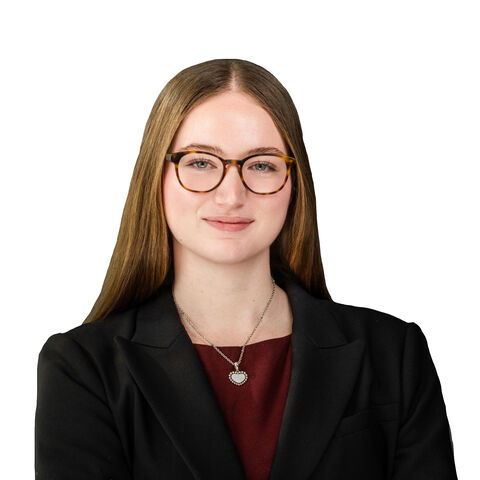

Aid agencies in Sudan are struggling to meet overwhelming demand amid disrupted supply routes and funding bottlenecks, said Save the Children US CEO and President Janti Soeripto following a visit to Darfur.
Sudan’s war has entered its fourth year amid a deepening humanitarian crisis. In April, the United Nations estimated that 34 million Sudanese people require humanitarian assistance, 21 million lack access to health services and around 4 million are acutely malnourished.
Soeripto sat down with Al-Monitor in Washington, shortly after her trip across West, Central and North Darfur.
The conversation has been edited for clarity and length.
Al-Monitor: You just returned from a trip to Darfur, one of the hardest hit areas of the war in Sudan. What do you want people to understand about what you saw there?
Soeripto: I've been at this now for 14 years in total, with Save the Children, this was the hardest trip logistically and physically. It took me literally four days to get from JFK to our first school.
This trip was canceled twice because we needed to find a route in via Chad. The first time I wanted to go, it wasn't safe. You have to be constantly agile.
To get stuff done there, to get supplies in from the outside, to get enough staff rotations in to help with specific surge requirements, is really hard. It's remote. A lot of the roads are destroyed. There are still drone attacks on a fairly regular basis.
And 95% of our own staff is displaced. So they lost their homes, whether in Khartoum or in Darfur or in Kordofan. Of the 400 staff we have in Sudan — 115 in Darfur — many folks have lost everything. So they are staying with families, and some are even staying in the internally displaced persons camp.
Al-Monitor: What does getting aid into hard-hit areas look like right now?
Soeripto: When I was there, two trucks arrived with very much needed medical supplies for the rainy season, which is now coming. Those trucks this time around took only 10 days. They were coming through Port Sudan, so essentially they were released. That was an absolute record.
Previous trucks have taken two or three months, because sometimes the trucks need to stop at a certain place and hunker down for two days because it's not safe to cross. Or they need to change trucks and shift the whole load. So it is not straightforward even if you have your supplies — even if you have them in the country.
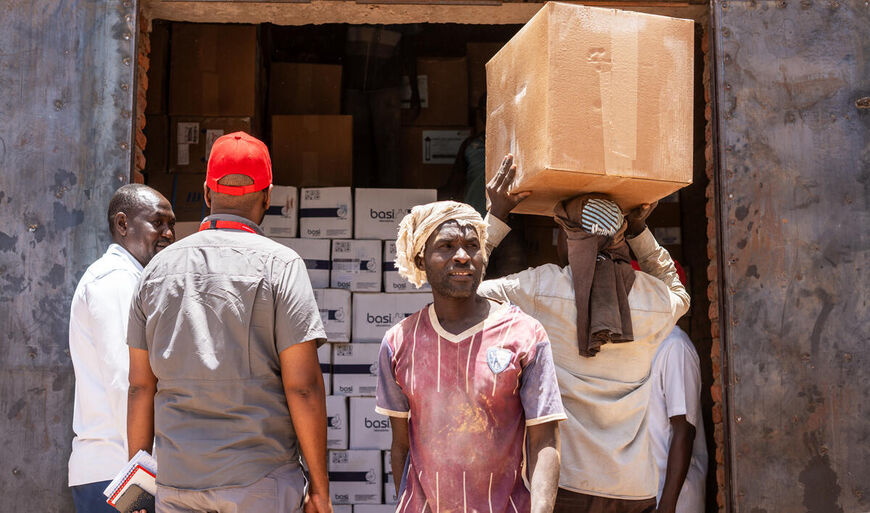
And of course the war in the Middle East doesn't help, because transport costs have gone up. We still have stuff stuck in Dubai that we couldn't get out through the normal routes. If fertilizer really doesn't get released, we're going to see the impact come harvest time, because we're going to miss the window, and that exacerbates food insecurity levels.
OCHA has identified 18 localities in northern Darfur as the most in need. Of those 18, we have a presence in three — and we are one of the largest operators there. So that tells you something about how many communities are underserved, completely underserved.
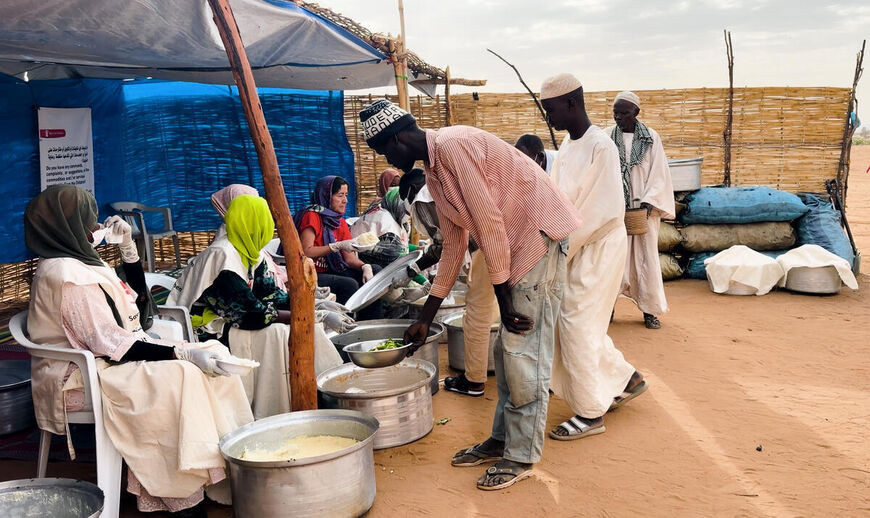
We've served, with the community kitchens, 24,000 people in Tawila every day with good meals, and yet still more people are coming. So every day, there's always a group that there's nothing left for. The community kitchens — which are displaced serving other families — try to scale it up, but you can only do so much.
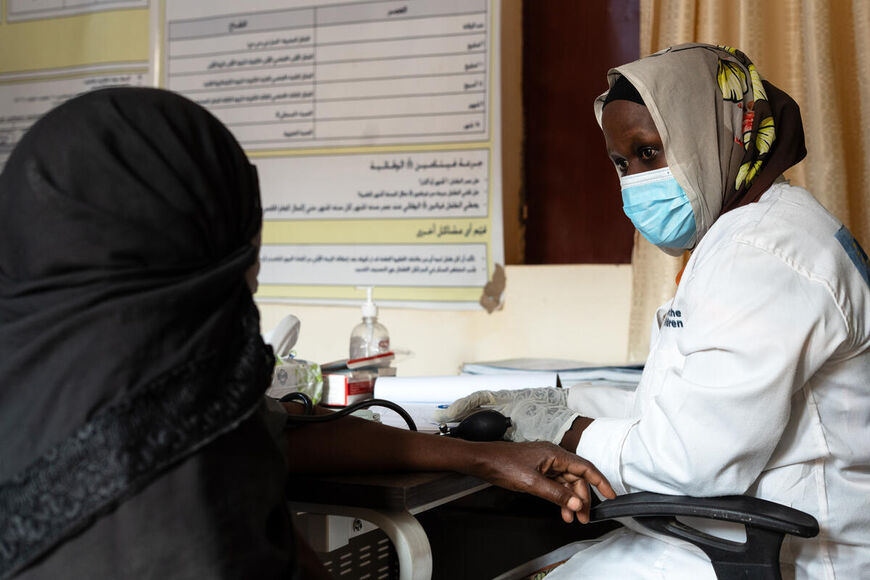
We run 40 health clinics. We have a big footprint there compared to most organizations, but we are not even scratching the surface of what the needs are.
Al-Monitor: What are you hearing from families and children in Darfur about their experiences of the war and in camps for internally displaced persons?
Soeripto: The trauma is unbelievable. It is really off the scale.
One of our staff was displaced from El-Fasher and had to walk 60 kilometers [37 miles] to Tawila. She was walking with her 16-year-old daughter. They walked at night. They couldn't sleep. They couldn't stop for fear of abuse or violence. She has scars on her face because she fought to keep her daughter safe, physically.
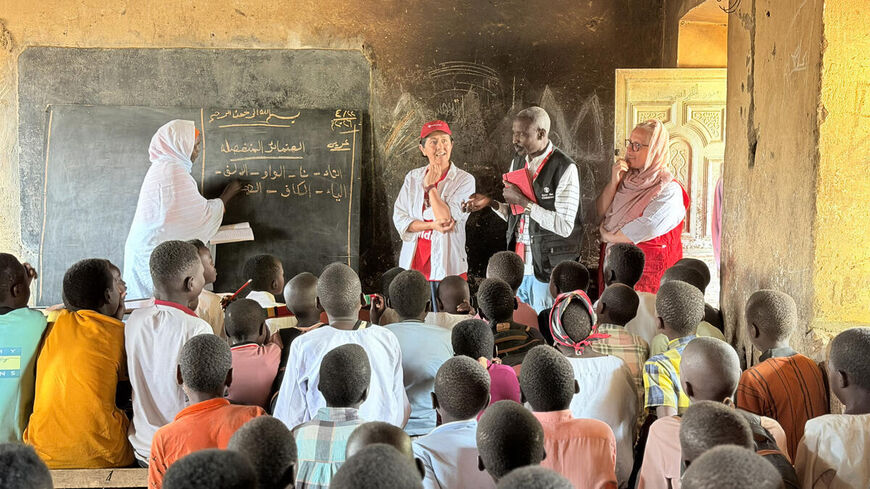
When I got to one classroom, there were about 20 kids — middle school, ages 8 to 10. And these children, they tell you: ‘I lost my parents and my siblings in El-Fasher. I'm just here with my uncle and my older brother.’ And then they start to cry. It is unbelievable levels of trauma.
For women [dealing with sexual violence], nobody is tracking these cases. Nobody's even recording them. There's no accountability for abuse at all. UNFPA [the United Nations Population Fund] isn't there to track the cases.
I asked everybody. Do we know how many cases of rape, sexual violence? No — nobody has a number.
Al-Monitor: What does coordination with local communities look like on the ground right now?
Soeripto: There's a lot of real engagement from the locals. People always think people of Darfur must be completely powerless. They're not at all. They've been through a lot of crises; they're incredibly resilient and they come up with their own solutions.
We had this amazing conversation with the Peace and Reconciliation Committee, which is essentially made up of tribes and nomadic people across religions and across political affiliations. They are a committee of mostly elders. There were some young people there as well, women and men. They have 15 local groups that keep their eyes and ears on the ground.
They said to us: ‘One of the most important things is that we fix this bridge on this one road.’ If the rainy season comes in and the bridge isn't working, the rivers will flood and make that road completely unusable, and then we have a big problem. And they said: ‘Well, we have gotten 50% of all the resources, and we'll have the labor and we'll fix it. Can you help us with that?’ It was $30,000, which we then pledged.
We can have conferences about how development and humanitarian assistance need to change, but sometimes it's really simple. Fix the bridge so that aid and supplies and also commercial trade can flow.
We need to continue to fix water systems and make sure that people can eat with local ingredients. This is not rocket science.
Clean water is a real issue. With the rainy season comes different issues; you will see a spike in malaria, possibly diarrhea and cholera. We're trucking it [clean water] in. It is ridiculous. It always kills me when we do that. And we need to do it to keep people alive. But we could drill a bore hole here. There is water in the ground. It would be a much more cost-efficient way to do it. But some of the funding sources that we have do not allow us to do it.
Ultimately, in the long run, it's cheaper to build a borehole, but sometimes humanitarian funds are only there to do temporary work. So you can build a temporary classroom, but not rehabilitate the school. You can do water trucking, but you cannot do a bore hole. This is a protracted crisis. It will take years.
Al-Monitor: How are funding shortages and recent aid cuts affecting your ability to operate?
Soeripto: We had to adjust. We lost about 30% of our funding globally. We closed a lot of programs. We lost about 80% or 85% of our running programs through USAID awards.
We still have a number that are still running, but most of them are ending this year. And we're talking life-saving programs. We're talking stabilization centers or schools for kids in a crisis in displacement camps.
Where we could, we have found alternative sources, sometimes by rerouting or adding a private funding source that we had managed to find. We have seen private donors step up.
And of course, we cut costs massively. We let three and a half thousand staff go worldwide, across 45 countries. We've left two or three countries because it was just not viable to do it without government funding.
Will we ultimately build it back through private sources? Yes, that is our intention. Absolutely.
I also found that the American public is still as generous and as compassionate as they were; that hasn't changed. They believe in the cause. I think it's uncontentious to say that children should survive beyond the age of 5 and should be in school and should be safe and should be fed. I don't think anybody would say that's a bad thing. So it's on us to make that case strongly.
Al-Monitor: Is there anything that gives you hope in what you’ve seen on this trip?
Soeripto: Actions give hope. And I've seen a lot of action there. One of our colleagues — who essentially set up this whole Darfur infrastructure and response in the way that it is now — he himself was hiding for 58 days in one of the towns when the whole crisis broke out. He had to get his family to safety, he got out after 58 days and got them to Egypt over many weeks in the middle of active conflict. He got them out to Egypt, then turned around and came back to run the response. He's been working for us for almost 20 years now.
Those people give you hope. The Peace and Reconciliation Committee gives you hope. The community kitchens give you hope. Those kids in those classrooms, when you saw them do their lessons, they were as energetic and as rowdy and noisy as any kid. So that is what we're there for.
Al-Monitor: What would it take to meaningfully improve conditions and humanitarian access in Sudan?
Soeripto: If you step back broadly, what is the problem? The problem is, there’s a lack of attention.
What the people of Sudan need is peace. But let's start with a ceasefire even. That is nowhere near on the cards at the moment, because that needs a lot of attention. It needs dedicated work from the parties to the conflict first and foremost, but also from the international community, which is still, in some cases, arming groups or not being helpful.
There is some level of engagement from the US government on this; it is on the radar. But it does take a lot of rolling up the sleeves, mediation processes — it could probably take years.
That level of diplomatic attention with teeth is really needed, and it needs to be collective. It can't just be done by only the US government. It needs to be a collective, aligned approach.
This one's on us.
The story doesn't end here.
Our correspondents are already on the next chapter. Read everything they file, from $2/week.
See Offers