



In Turkey, is Bilal Erdogan preparing to replace his father?
Analysts say Turkish President Recep Tayyip Erdogan’s son is more likely to seek a leadership position in his party before a presidential bid as surveys point to weak popular support.
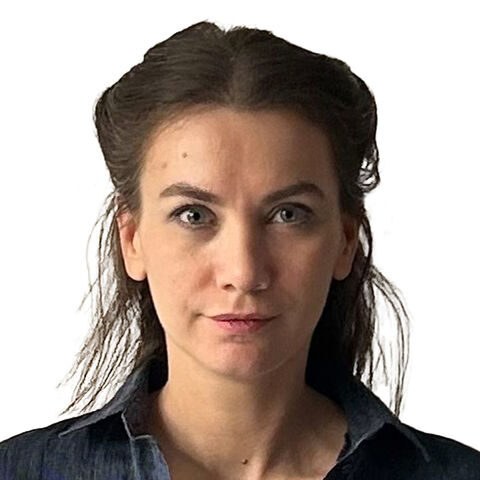

ANKARA — Turkish President Recep Tayyip Erdogan’s youngest son, Bilal, has begun appearing in public opinion polls, fueling speculation in Ankara that he is entering politics with an eye toward eventually succeeding his father.
Analysts say his most likely first step would be to assume a leadership role within the ruling Justice and Development Party (AKP).
Bilal Erdogan, 44, has expanded his public profile with more frequent appearances on Turkey’s pro-government media outlets in recent months. His heightened visibility has been accompanied by a flurry of news reports discussing him as a potential successor to his father.
The president's son, who received his bachelor’s degree in public administration from Harvard University in 2004, has so far not become formally involved in party politics, instead building his profile through pro-government civil society networks. He currently serves on the High Advisory Board of TUGVA, a pro-government youth foundation focused on education and leadership training that has faced criticism over alleged favoritism in public appointments, and chairs a conservative education group with deep roots in Turkey’s Islamist movement.
Path to power
Bilal’s entry into politics is under active consideration within the ranks of the ruling AKP, Bloomberg reported this month, citing people familiar with the deliberations. He is also receiving informal political leadership training, the outlet said, though it did not say where he might be receiving it.
Bilal, however, has publicly denied harboring political ambitions.
“I have no political ambition,” he told Russia’s TASS news agency in April. Speaking to the "Atheer" podcast in January, he reiterated that he had no goal of pursuing the presidency or a political career.
According to experts, Bilal replacing his father as party chairman is far more plausible than a direct presidential bid, noting that taking control of the AKP would allow him to consolidate internal power, build legitimacy and test his political footing.
“I think if he does intend to enter politics, Mr. Bilal Erdogan would first pursue activities aimed at party leadership,” Metin Ozkan, an associate professor of political science at Ankara Haci Bayram Veli University, told Al-Monitor.
“There is a great deal of deference toward Mr. Bilal Erdogan within the Justice and Development Party,” Ozkan said. He added that Bilal Erdogan is unlikely to publicly assert any political ambitions unless President Erdogan openly endorses him, a move that would significantly boost his momentum.
Bilal, a graduate of Turkey’s Islamic Imam Hatip schools, is known as a conservative and traditionalist. He is also widely credited with helping revive traditional Turkish archery. His growing public visibility — including appearances on official trips to Malaysia, Indonesia, Pakistan, Kuwait, Qatar and Oman — has reinforced perceptions that he may be positioning himself for a future political role.
According to Nurettin Kalkan, a political scientist and director of the Ankara-based Angora Research company, Bilal would likely run to become a lawmaker for the AKP during Turkey’s parliamentary and presidential elections, which are not scheduled until 2028 but could be held earlier.
“Without Erdogan’s presence, Bilal Erdogan would not find favor among Justice and Development Party voters,” Kalkan told Al-Monitor.
“The most plausible scenario would involve Erdogan securing another term as president while handing party leadership to his son,” he said.
According to Kalkan, such a transition would give Bilal key institutional advantages, minimizing internal dissent within the AKP while his father remains in power and ensuring the security bureaucracy aligns behind him, since its senior officials would still be appointed by the president.
Pro-opposition Halk TV commentator Ismail Saymaz said last month that Bilal Erdogan’s influence within the ruling AKP and across government institutions, including the state broadcaster TRT and the state-run Anadolu Agency, is growing. He added that the younger Erdogan has increasingly become an informal conduit for those seeking direct access to his father.
Lacking grassroots support
Since the transition to executive rule in 2018, which concentrated decision-making in a single office, the president has consolidated authority over party structures, state institutions and the security bureaucracy, making AKP leadership a central mechanism for coordinating governance and managing internal party dynamics.
But while these calculations center on consolidating control within the party and state apparatus, polling suggests translating that leverage into popular support may be far more difficult.
When Ankara-based Saros Arastirma polled 7,912 respondents between Jan. 15 and Jan. 22, the results suggested that Bilal would struggle to inherit his father’s political base if he were to assume the AKP leadership.
Asked whether they would vote for the party if the younger Erdogan took the helm after his father, 87.5% of all respondents across political lines said they would “definitely not” vote for him, while just 12.5% said they would “definitely” back the AKP under his leadership. Even among self-identified AKP voters, more than 53% said they would “definitely not,” according to the polling firm’s published results.
This one's on us.
The story doesn't end here.
Our correspondents are already on the next chapter. Read everything they file, from $2/week.
See Offers