



‘Save the Post’: Washington Post journalists urge Bezos to protect foreign desk
The Post maintains one of the most extensive overseas reporting networks among US newspapers, including Middle East bureaus in Istanbul, Cairo and Dubai.


The Washington Post is facing potential reductions in its newsroom staff, with staffing cuts expected to affect multiple desks, including foreign and sports coverage.
What happened: Members of the Post’s foreign staff, concerned that the section could be heavily affected, sent a letter on Sunday to the paper’s owner, Amazon co-founder Jeff Bezos, who has owned the paper since 2013. The letter described itself as “a collective plea for you to preserve our newspaper's global coverage, which we fear will be greatly weakened in coming cuts.” The letter was first reported by the New York Times.
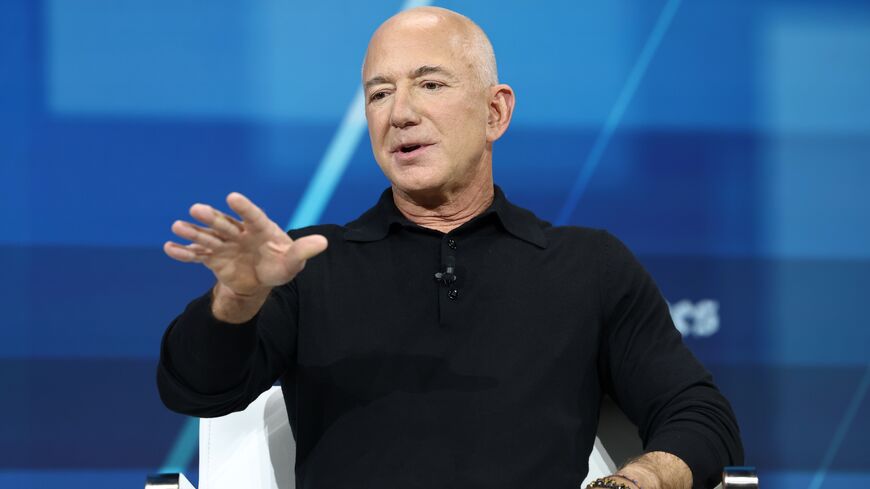
Jeff Bezos, founder and executive chairman of Amazon and owner of the Washington Post, speaks during the New York Times annual DealBook Summit at Jazz at Lincoln Center on Dec. 4, 2024, in New York City. (Michael M. Santiago/Getty Images)
The Post has experienced other workforce adjustments in recent years. The newspaper offered rounds of buyouts in 2023 and 2025, and in 2023 eliminated 240 jobs, primarily through voluntary buyouts. While the newsroom has largely been shielded from forced layoffs, many journalists accepted buyouts or left for other opportunities.
Former Post media reporter and current freelancer Paul Farhi reported that the upcoming staffing cuts could affect up to 300 people, from newsroom staff to those with business and other non-newsroom positions. According to Farhi, the paper’s sports and foreign desks are expected to be hit most heavily.
Background: As of August 2025, the Post’s newsroom was reported to have roughly 800 staffers in total. Though no official count of its sports staff has been released, there is speculation that the entire sports desk could be eliminated.
In a press release from June announcing Peter Finn as the paper’s international editor, the Post said that there are more than 60 reporters, editors and other journalists in Washington and in 23 locations around the world.
The Washington Post remains one of the few US newspapers with an extensive overseas reporting operation. It maintains bureaus in Baghdad, Beijing, Cairo, Dubai, Istanbul, Jerusalem, Moscow and other major cities. Its foreign correspondents have played a central role in the paper's coverage of overseas conflicts, including the wars in Gaza and Ukraine.
Post reporters were among a limited number of Western journalists able to publish sustained reporting from Gaza following the Oct. 7, 2023, Hamas attack and Israel’s subsequent military campaign. Israel largely barred foreign journalists from entering Gaza independently, allowing only rare escorted visits. Much of the Post’s Gaza reporting relied on Palestinian journalists working inside the enclave, along with visual investigations, satellite imagery and remote reporting, resulting in firsthand accounts, investigations into civilian casualties and analyses of Israeli military operations. The paper's foreign reporting has similarly stood out in Ukraine, where correspondents have maintained on-the ground coverage since Russia's full-scale invasion in 2022, reporting from Kyiv and other locations despite security risks.
Current and former Washington Post journalists, including foreign correspondents and sports reporters, have taken to X to reflect on their time at the paper, using the hashtag #SaveThePost.
Claire Parker, the Post’s Cairo bureau chief, posted a photo of herself among people in Jenin in the occupied West Bank after an Israeli raid in 2023. She wrote, “It is these behind-the-scenes, on-the-ground moments, and the stories and color that emerge from them, that bring life and texture to the Washington Post's coverage of the world.”
Jenin, West Bank, Nov. 2023, aftermath of an Israeli raid.
— Claire Parker (@cparker_reports) January 26, 2026
It is these behind-the-scenes, on-the-ground moments, and the stories and color that emerge from them, that bring life and texture to the @washingtonpost’s coverage of the world. @JeffBezos, #SaveThePost pic.twitter.com/feCsAdPxZ5
Louisa Loveluck, a London-based correspondent and former Baghdad bureau chief wrote on X on Monday that "clear-eyed reporting from the ground serves the public good. To cut off that engine of brave, committed colleagues would be devastating."
Loveday Morris, the Post's Berlin bureau chief, noted on X that many of Post's local contractors "will be left in incredibly vulnerable positions if they lose their jobs."
Our local contractors walk through fire with us and without them our work would be impossible. Many of them will be left in incredibly vulnerable positions if they lose their jobs. https://t.co/NxIUxFrT45
— Loveday Morris (@LovedayM) January 26, 2026
The Washington Post Newspaper Guild, the labor union representing Post journalists and other newsroom staff, also issued a statement opposing the cuts. The guild said it “vehemently opposes any more cuts to the staff of The Washington Post. … Continuing to eliminate scores of workers who make this storied institution what it is only stands to weaken the newspaper.”
As of now, the Post has not released official details regarding the timing and scope of the cuts or specific desks that will be affected. Al-Monitor has reached out to the Post for comment.
Know more: The Washington Post has been through other big changes over the past year. In March, Axios reported that the newspaper's executive editor, Matt Murray, announced a broad newsroom reorganization. The plan divided the national desk into two sections covering national reporting and politics and government coverage. It also created a new department integrating business, technology, health, science and climate reporting.
The Post also faced significant backlash after owner Jeff Bezos in February 2025 announced changes to the paper’s opinion section, directing it to defend “personal liberties and free markets” and saying that “viewpoints opposing those pillars will be left to be published by others.” Some former staff and critics argued that the moves undermined editorial independence and the breadth of viewpoints traditionally featured by the paper. Some readers canceled digital subscriptions in response to the changes, with NPR reporting at the time that 75,000 people had cancelled digital subscriptions in the days after the announcement.
This one's on us.
The story doesn't end here.
Our correspondents are already on the next chapter. Read everything they file, from $2/week.
See Offers