



Will new union chief give Egypt more control over press?
Abdel Mohsen Salama, who is affiliated with the regime of Egyptian President Abdel Fattah al-Sisi, was recently elected head of the Journalists' Union, raising questions about the state's future role in the media.
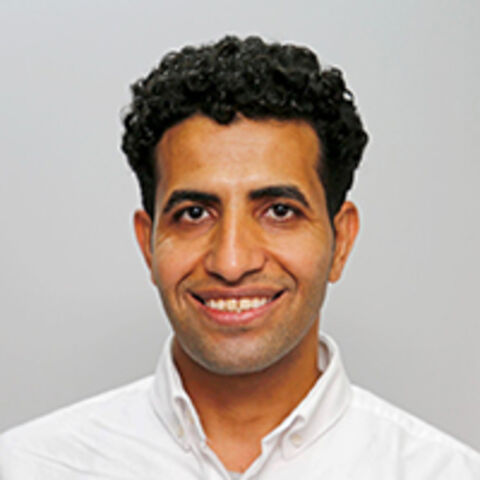

CAIRO — Egypt's media is often in the news itself as it has faced one government crackdown after another over the years. The idea of a free press in Egypt is often seen as a paradox. The recently elected president of the Egyptian Journalists' Union, who is affiliated with the regime, now faces the thorny task of uniting the syndicate's divided electorate.
On March 17, Abdel Mohsen Salama, managing editor of state-run Al-Ahram news group, was elected head of the union, defeating incumbent Yahya Qalash, who strongly defends an independent union and free press. The election results sparked controversy about how much control the regime might have over the union.
The union board includes 12 members and the president. Every two years, elections are held and six members, along with the president, are elected. The remaining members will be elected in 2019.
State-run Al-Ahram has the most votes, with about 1,700, out of the 5,596 votes of all state-run papers; this was a decisive factor leading to Salama’s victory. There are five other major state-run news organizations: the Middle East News Agency, Rose al-Yusuf, al-Akhbar, al-Gomhouria and Dar al-Hilal. Private papers are estimated to have 2,710 votes, and partisan papers 473.


