



The long road to labeling settlement products
In a discussion with Al-Monitor, Charles Shamas, a Palestinian entrepreneur involved in exporting Palestinian products to Europe, traced the path to the European Union guidelines for labeling settlement products.
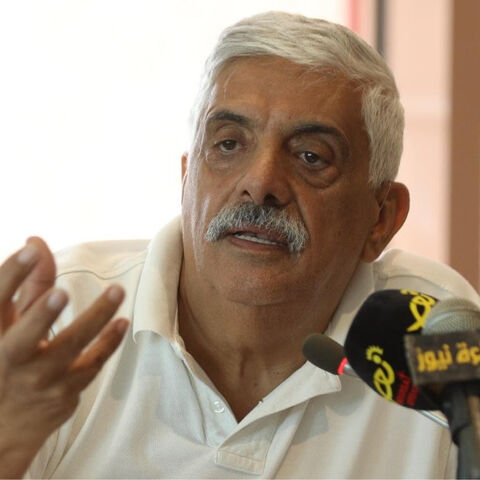

The European Commission's Nov. 11 “interpretive notice” clarifying “the application of existing [European] Union legislation on indication of origin of products to products originating in Israeli-occupied territories” was not arrived at quickly or easily. In fact, it dates back to the mid-1980s.
In 1986, an issue emerged involving the legalities of how a Palestinian manufacturer in Ramallah could export its products to the European Economic Community (EEC), the EU's predecessor. In 1995, the question arose as to why EU customs officials were failing to collect duties on Israeli settlement products because the settlements were not considered part of Israel, which had a preferential trade agreement with the EU. In 2012, discussion revolved around whether EU law permitted EU-funded support to activities and operations in settlements. The product labeling issue emerged as one of how the origin of items produced in Israeli settlements should be accurately identified — as all products must be under EU law — so as not to mislead European consumers.
Years of quiet and persistent action and advocacy dating back to 1984 paved the way for today's notice. Around that time, some Palestinians had begun thinking about the value of exports. Among them was Charles Shamas, a lingerie manufacturer in Ramallah who approached the EEC about exporting his products to Europe. Now a senior partner with the Ramallah-based Mattin Group, Shamas spoke at length with Al-Monitor about the progression leading to the current labeling guidelines.
Shamas told the Europeans that he wanted to know how Palestinian producers in the West Bank and Gaza Strip could participate in the system of preferential trade that the EEC was constructing around the Mediterranean basin. Since the EEC did not consider the occupied Palestinian territories to be part of the State of Israel, Shamas also needed to know how the origin of his lingerie should be declared and labeled in accordance with EEC provisions. His questions were answered in 1986, when the EEC Council of Ministers adopted a regulation authorizing the Arab Chambers of Commerce in Gaza and the West Bank, including East Jerusalem, to certify export products originating in the occupied Palestinian territories.


