



Turkey’s New 'Sunni Islam' Taboo
The 10-month suspended prison sentence of pianist Fazil Say on grounds of his (re)tweets is the signal for an introduction of a new taboo called “Sunni Islam” in Turkey, writes Kadri Gursel.
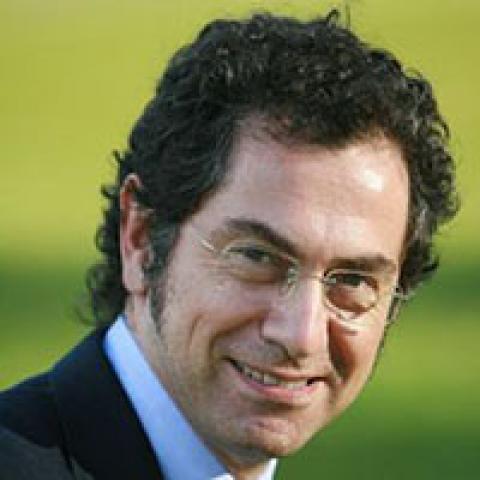

No doubt that the decision of a Turkish court passing a 10-month suspended prison term on world famous Turkish pianist Fazil Say for “insulting religion and as such committing an act conducive to disrupting the public peace” with his tweets and retweets a year ago is a heavy blow to freedom of expression in Turkey.
But if we confine our reaction only to heavy damage inflicted on “freedom of expression” and by extension to democracy, we will be missing out on the political and ideological context of the court’s opinion and the objective behind it.
The court’s opinion on Fazil Say is directly related to the process of regime change in Turkey. The Justice and Development Party (AKP), which is the new alliance of the conservative bourgeoisie and neo-Islamist political class, has won the struggle for power against the secularist, military and bureaucratic tutelage forces who see themselves as guardians of the former Kemalist Republic, and has also consolidated its control of the judiciary. Prime Minister Recep Tayyip Erdogan's AKP is now using the extensive power it has accumulated with the support of the Sunni conservative public segment to impose its political culture on the entire population. And they are doing that with an authoritarian approach.
The authoritarian political culture of former Turkey had its peculiar taboos reinforced by judicial rulings and judgments passed. “Turkism” and “Ataturk” were totally made untouchable by judicial opinions. Soldiers were feared. There was practically a ban on speaking about the Kurdish issue and the Armenian genocide. None of this prevails anymore.


