



Why Netanyahu downplays historic trade agreement with South Korea
Israel’s most nationalist government ever pledges to annex the occupied territories, and then approves a historic trade pact with South Korea that boycotts the settlements.
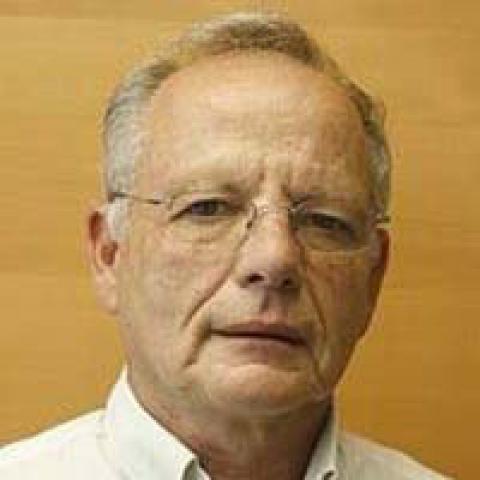

“Historic agreement” was how Israel’s Ministry of Economy and Industry described the free trade agreement just concluded with South Korea, Israel’s first such pact with an Asian state. The photo of the Aug. 21 announcement ceremony shows Economy and Industry Minister Eli Cohen — recently “imported” from the Kulanu party in a trade deal with the ruling Likud — alongside South Korean Minister of Trade Yoo Myung-hee. The ministry said the agreement with the world’s 11th largest economy would increase Israeli exports and encourage investments and growth. Cohen described it as “a celebration for free market adherents,” and his ministry believes the deal will generate similar agreements with other Asian countries, chief among them China (if Big Brother US President Donald Trump gives his blessing).
Prime Minister Benjamin Netanyahu was noticeably absent from the festive event. Why did “Mr. Economy” cancel his participation at the last minute? After all, ties with the burgeoning Asian economy are Netanyahu’s trump card vis-a-vis the European Union (EU) — the same union Netanyahu reviles over its refusal to accept Israel’s occupation of Palestinian territories and its insistence to ignore the Israeli settlement enterprise. Netanyahu has depicted stronger ties with Asian economies as Israel’s "economic Iron Dome" against the threat of EU sanctions. Why, then, did gift-loving Netanyahu absent himself when South Korea handed over presents worth thousands of shekels in discounts to Israeli buyers of the Hyundai and Kia brands clogging the nation’s highways? How can one explain the timing, just weeks ahead of the Sept. 17 elections in which every vote could determine his fate?
The answer to this riddle — or the “devil” in the details, one might say — lies in the small print of the agreement signed by Israel’s most nationalistic government ever, which includes two radical right-wing ministers — Rafi Peretz and Bezalel Smotrich. By keeping silent on the deal with South Korea, these two far-right ministers lent a hand to the division of Jerusalem into east and west — into its predominantly Palestinian eastern sector and its predominantly Jewish west. They lend a hand to the exclusion of the Golan Heights settlement town of Katzrin and of the Ma’ale Adumim settlement town adjacent to Israel’s capital. Had Netanyahu posed for a photo alongside the minister from Seoul, a leftist journalist might have asked him how his pledge to annex parts of the West Bank or his June 2017 declaration that the settlement town of Ariel would always be a part of Israel fit in with the exclusion of these areas from the new free trade agreement. A speech on this “historic” occasion would have added Netanyahu’s name to those of his predecessors Ariel Sharon and Ehud Olmert who signed a free trade agreement with the EU, which required the Jewish state to specifically label products manufactured or grown by Israelis in the territories captured in 1967. That includes East Jerusalem, which, as Netanyahu repeatedly states, has been joined with the west into a “unified whole,” and "Trump Heights," the isolated Golan Heights spot named after the US president.
Surprisingly, leaders of the settlers, as well as their political patrons, kept mum on this exclusion. Chair of the Judea and Samaria Settlement Council Hananel Dorani went so far as to announce that he was “glad to hear that the position of the State of Israel, as expressed in the discussions with South Korea, clarifies explicitly that it rejects any territorial distinctions within Israel’s territory.” Dorani added, “This is an important statement of principle representing the fact that Judea, Samaria, the Jordan Valley and the Golan Heights are an inseparable part of the State of Israel.”


