



Israelis prefer a unity government, without the ultra-Orthodox
A recent survey revealed that most Israeli voters prefer a national unity government of the Likud and Blue and White and without the ultra-Orthodox and religious coercion.
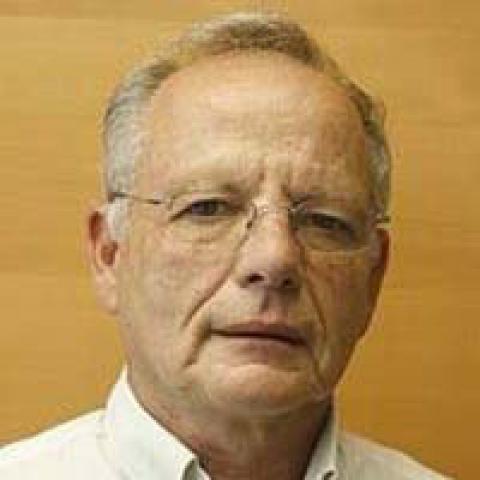

The issues facing Israelis heading for the polls on Sept. 17 will be no different from those that instructed their choice at the ballot box on April 9. Barring any surprises, the two major political blocs — one consisting of the right wing, religious and ultra-Orthodox parties, the other comprised of the center-left and Arab parties — will once again be tied.
In a best-case scenario, depending on one’s politics, a tie will allow Prime Minister Benjamin Netanyahu to form a barely stable government. Meanwhile, Yisrael Beitenu Chair Avigdor Liberman announced on June 15 that he intends to push for a unity government of the two major political parties and rivals — Likud and Blue and White — led by a Knesset member from the party that gets the most votes. Put another way, Liberman has set his sights on a government without the ultra-Orthodox parties and thus without religious coercion.
It is safe to assume that the fundamental guidelines of such a government will not advance resolution of the Israeli-Palestinian conflict and will not even include agreement on evacuating unauthorized settlement outposts in the West Bank. Sadly, only a negligible minority of the Jewish electorate and its elected officials, those who define themselves as “left wing,” care about such issues.
An impressive 74% of the Jewish public wants a Likud and Blue and White government that will promote religious freedom and military conscription for all. This is the most salient finding of a survey commissioned by Hiddush, a nongovernmental organization devoted to the advancement of religious freedom and equality. The survey, conducted by the Smith Institute and published June 12, shows that 61% of those who voted Likud in the recent elections and 100% of Blue and White voters prefer that Israel’s next government not include the two ultra-Orthodox parties, Shas and Yahadut HaTorah. The same goes for 93% of secular Yisrael Beitenu voters and 96% of the secular center-right Kulanu voters.


