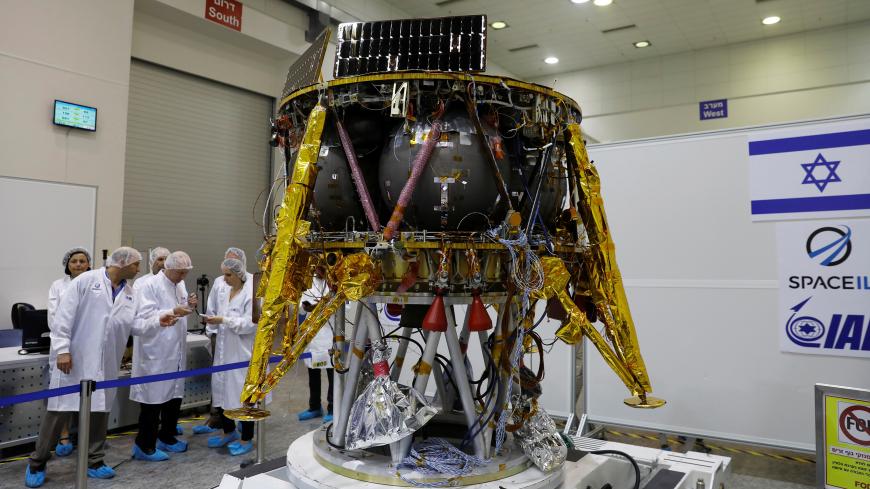
Israel lags far behind enlightened, developed nations in terms of its human rights record as an occupying power. On the other hand, its scientific and technological creativity is outstanding and praiseworthy. On April 15, Tel Aviv University announced that its scientists were the first in the world to print a 3D human heart using human cells. Professor Tal Dvir and his team had overcome obstacles to creating individually adapted human organs, a development that could eventually do away with the need for organ donations. Earlier this year, Israel made space history by becoming the seventh country to successfully launch a spacecraft to the moon. Although the long journey ended in a crash landing on April 11, it reflected the impressive technological skills of this tiny Middle Eastern state.
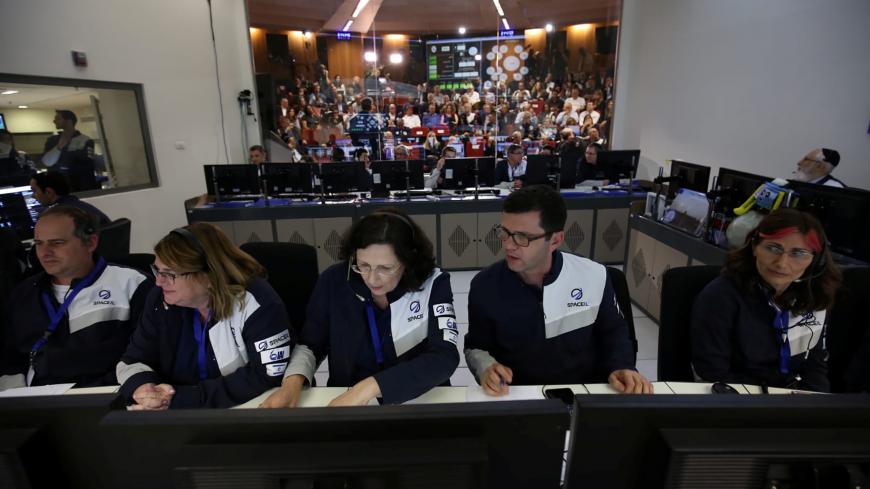
Two days after the Knesset elections, newly reelected Prime Minister Benjamin Netanyahu and his wife Sara entered the control room of Israel Aerospace Industries to watch the moon landing of the Beresheet spacecraft. The ministries of Science and Education had together allocated 9.5 million shekels ($2.64 million) of the total project budget of 350 million shekels ($97 million), with more to come. Netanyahu declared to the dozens of reporters and photographers covering the anticipated landing that he was “seriously considering” investment in the space program. After the crash of Beresheet, the prime minister consoled the disappointed project leaders with a promise that an intact Israeli spacecraft would land on the moon within three years. “This is also a sign for Israel’s boys and girls — where there is a will, there is an unlimited way,” he said.
Far from the spotlight and with a modest government annual budget of 7 million shekels ($1.95 million), 700 Israeli high school students (yes, 700, no mistake) flew to Detroit, Michigan, this month for an international robotics championship sponsored by FIRST (For Inspiration and Recognition of Science and Technology), an international youth organization fostering scientific and technological skills. The Israeli delegation, numbering 20 teams, is the fifth in size among the 30 national participating delegations, larger than the Chinese, Indian, Japanese, French, British, German, Dutch, Swedish, Swiss, Australian and Brazilian delegations.
The Israeli contingent includes Jewish and Arab youths, religious and secular, champions from Tel Aviv and from the Negev Desert town of Yeruham, and from the Arab Galilee village of Yafiya. It all began in 2005, when former air force commander Avihu Ben-Nun met with American Segway inventor and FIRST founder, Dean Kamen, and accepted his proposal to open a branch of the organization in Israel. Some 12,000 children aged 5 to 18 took part in robotics activities this year in 70 schools throughout the country — 1,100 teams in all on four difficulty levels.
AL-MONITOR All-Access gives you unlimited access to all our journalism, the full Daily Briefing, exclusive interviews, premium newsletters, and live events — for less than $2/week.