



'The Guest' gets cold shoulder from Egyptian Islamic scholars
Egyptian religious scholars want “The Guest,” an award-winning film, banned.
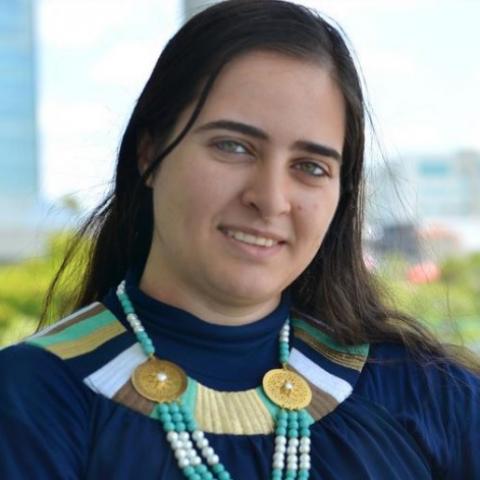

Guess who's coming to dinner. In the award-winning Egyptian movie “El-Daif” (The Guest), a daughter’s handsome suitor turns out to be her father’s worst nightmare, unfolding a conflict between radical Islam and Cartesian thinking on the Egyptian silver screen. Many Egyptians, however, might not get to watch the surprising ending of the psychological thriller if the Cairo Court of Urgent Cases decides on Feb. 23 that the movie should be banned for misrepresenting Islam.
The case was brought by the attorney Samir Sabri on Jan. 28 after a chorus of religious figures complained that the film promoted “inaccurate Islamic information” and misquoted the Quran. A group of Muslim scholars, or sheikhs, watched the movie together at a movie theater in Cairo in mid-January and afterward declared that some of the Quranic verses were misquoted and words mispronounced in ways that altered their meaning.
Sheikh Ramadan Abd el-Moez, a TV host and a sheikh, was among the group of clerics who watched the movie. “If we are going to make a movie that [speaks of] Islam, we should seek help from [Islamic scholars],” he told Al-Monitor. “We are not against the arts, but we want everything to be moderate. We want neither extremism nor laxity.”
“The Guest,” written by Ibrahim Eissa, a journalist, and directed by Hady el-Bagoury, centers around the conflict between the father, Yehia el-Tigani (played by Khaled El-Sawy), and the suitor, Osama (played by Ahmad Malek). Their long-winded dialogues focus on religion and its role in society and address typically taboo subjects, such as the hijab, inter-faith marriages and women’s role. Ultimately, the plot takes on the credibility of sheikhs and political Islam, which then drags in Tigani’s Christian wife, Mimi (played by Shereen Reda), and his daughter, Farida (played by Jamila Awad).


