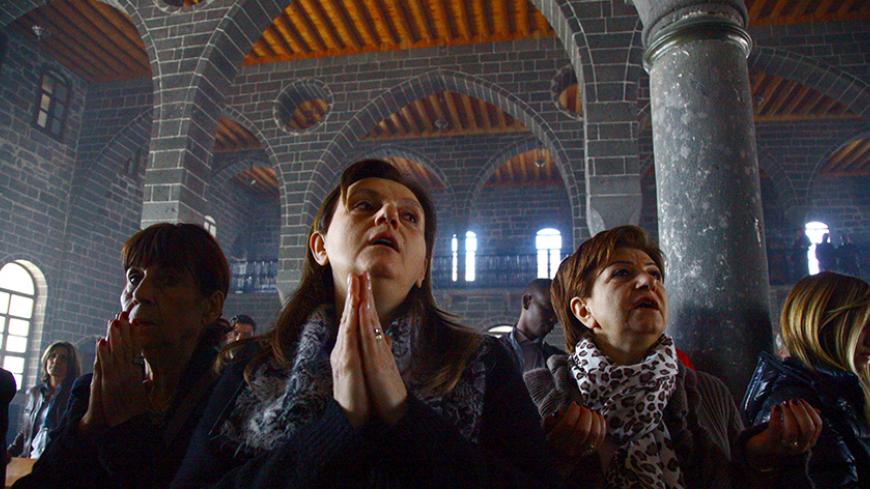
DIYARBAKIR, Turkey — In the 1950s, the Turkish state returned the centuries-old Surp Giragos Armenian Church in Diyarbakir to the city’s Armenian community, after having used it as a warehouse for years. Armenian writer Migirdic Margosyan, a native of Diyarbakir, describes how ironsmiths, carpenters, painters and goldsmiths from the city’s “Infidel Quarter” joined hands to “revive that wreck” and reopen it quickly to worship, keen to preserve “the legacy of their ancestors.”
Little could the volunteers have known then that the ordeal involving the largest Armenian church in the Middle East was far from over. By the early 1980s, Surp Giragos was a church without a congregation as Diyarbakir’s Armenians dwindled away. Abandoned to its fate, the church fell into decay. When a new restoration began in 2008, only its walls were standing, with the windows broken, the roof collapsed and the interiors filled with soil.
During the three-year restoration, every corner of the church was meticulously repaired. An expert craftsman — one of only three left in Turkey — was brought to Diyarbakir and worked for half a year to renovate and complete the seven altars. The overhaul was crowned with a new church bell, brought from Russia. As services resumed, the church became a meeting point for Armenians — natives of Diyarbakir but now scattered across the world — and an attraction for tourists visiting the city.
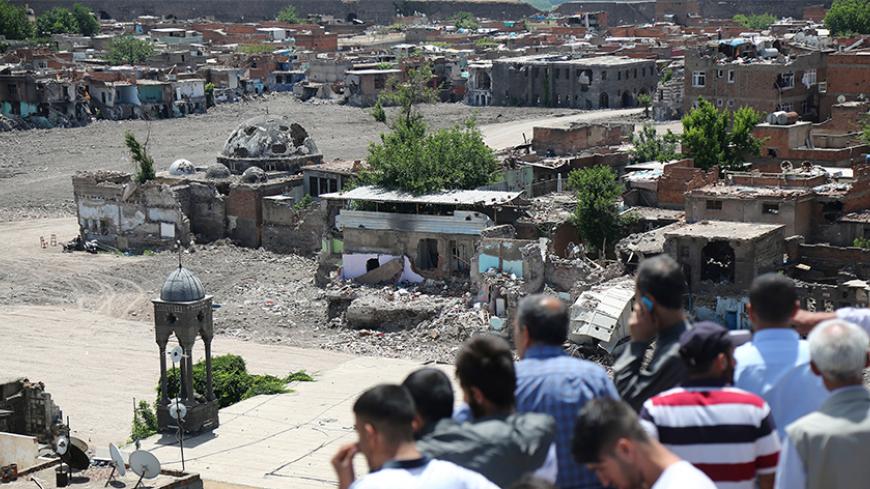
This new atmosphere, however, was short-lived. In the fall off 2015, security forces cracked down on urban militants of the Kurdistan Workers Party, who had entrenched themselves behind ditches and barricades in residential areas in Sur, the ancient heart of Diyarbakir, where the church is nestled. Only months before the clashes erupted, UNESCO had put Sur on its World Heritage list.
AL-MONITOR All-Access gives you unlimited access to all our journalism, the full Daily Briefing, exclusive interviews, premium newsletters, and live events — for less than $2/week.