



Can Israeli Shas Party Outlive Its Spiritual Leader?
No man has shaped the face of modern Israel as has the spiritual leader of the ultra-Orthodox Shas Party, the official king of Sephardic Judaism, Rabbi Ovadia Yosef.
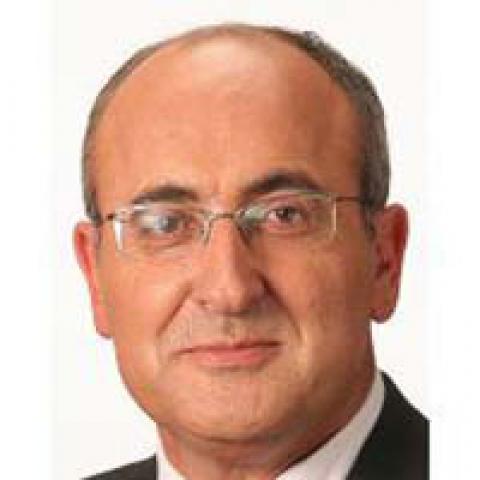

They have always made a pilgrimage to him. No other figure in Israel has been sought after by so many politicians, public figures and ordinary people. Although he lived as a recluse in his small home in Jerusalem, everyone made a pilgrimage to him, whether it was to receive his blessing or support, merit a prayer from his lips or especially enjoy the wondrous touch of his hand, whether in a caress or of course a gentle slap on the cheek.
As he got older, his power only grew. As he grew weaker, he only grew stronger. As he lost his capacity to speak, his unclear words were accepted by his many acolytes as the words of God that came down to earth. No other man has shaped the face of Israel in the last three decades like Rabbi Ovadia Yosef, 93, a man of the book and a man of contemplation who distanced himself from others, but whose very presence paved new roads in Israeli politics. With a stroke of his hand he helped build a coalition — with a similar stroke he caused its dismantling. Only a few have understood his religious-legal rulings and decisions, but everyone knew he had the last word. In religious law as well as in political rulings.
With time, he became the official king of Sephardic Judaism. Hundreds of thousands thronged after him as if he were a torch lighting their way. Religious and secular Jews of Sephardic origin saw him as the spiritual leader who would bring them out of the darkness in which they had been trapped since they immigrated to Israel. All groups and all sectors had found a place in Israeli society and politics, and only immigrants from Arab countries felt like sheep without a shepherd. For decades, they sought a leader whom they could crown as king, but they failed in their quest. Repeated elections did nothing to redeem them. Politics have always been seen as a reflection of power relations in society. The political parties of the founders of the state always defeated the parties of those who weren’t among the founders. This result had a socioeconomic as well as an ethnic connection.
And then one day several ultra-Orthodox believers of Mizrahi [Oriental] background rose up, burst into Israeli politics and changed it beyond recognition. From now on, it will no longer be the same. The Shas movement was born in 1984 because Sephardic-Oriental Torah scholars felt rejected by the Ashkenazi-Eastern European ultra-Orthodox establishment. They didn’t accept them at their institutions, they didn’t marry them, they didn’t live in their midst and they treated them as inferior. The establishment of the Shas Party was meant to use political power to correct an institutionalized discrimination and a twisted reality.


