



Syria's Kurds, Arabs find common cause in battle for language rights
As Kurdish students protest language restrictions, unexpected alliances are emerging between Syria’s Kurds and Arabs.

DARAYYA/RUKNEDDINE, Syria — Language rights have become the new battleground between Syria's Kurds and Damascus. Students in Kurdish-majority towns and cities across the northeast keep taking to the streets to protest laws that sharply curtail education in their mother tongue.
From Qamishli to Kobani, children who were taught in Kurdish during 14 years of quasi-independence are furious at an Aug. 27 ministerial decree, the first of its kind in Syria's modern history, that allows three hours a week of Kurdish as a second language. Many are boycotting classes and demanding that the old curriculum be restored and that Kurdish be enshrined in the constitution alongside Arabic.
The reversal is part of a controversial deal struck in January between Syrian Kurdish leader Mazlum Kobane and Syrian President Ahmed al-Sharaa, which ended weeks of bloody clashes between Kurdish and government forces. Kobane agreed to dismantle his Syrian Democratic Forces (SDF) and the Autonomous Administration of North and East Syria that, at the height of its power, governed more than a quarter of the country.
Critics call the US-brokered blueprint, which folds the Kurds' military and civilian structures into the state in exchange for token reforms, nothing less than capitulation to Arab dominance. Why else, they ask, is the country still officially called "the Syrian Arab Republic"?
Yet a closer look at communities across Syria reveals a more complicated picture. Shared grievances are producing a new kind of empathy that defies the accepted narrative of ancient Arab-Kurdish hostility, a narrative assiduously stoked during six decades of Baath rule.
Pity the children
The Sharbaji family lives in a narrow, four-story apartment building beside the rubble of a kindergarten. Bashar al-Assad's forces barrel-bombed it, along with much of Darayya, a Sunni opposition stronghold southwest of the capital. Fragments of murals showing smiling children exchanging gifts poke out of piles of rubbish and debris.
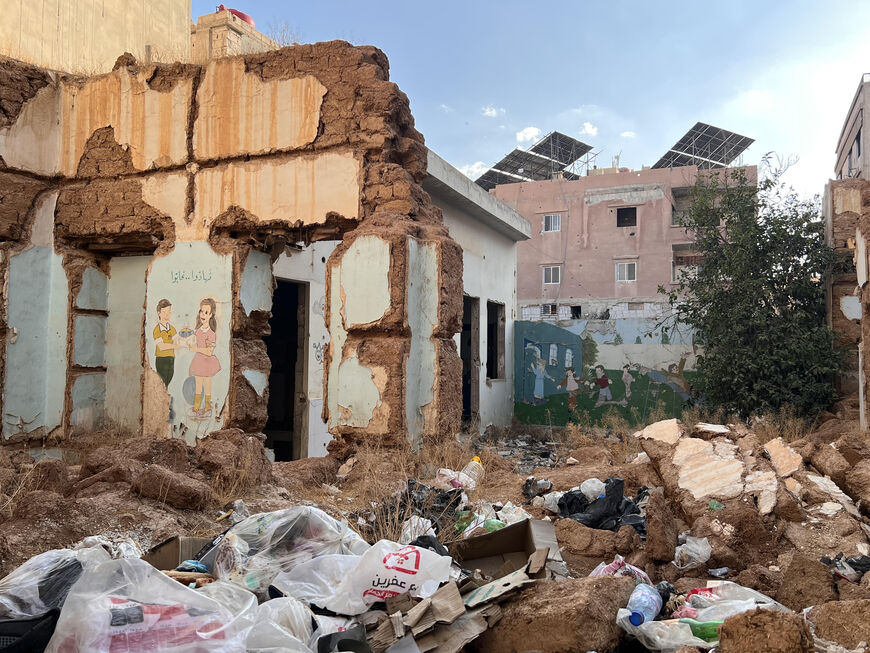
The remains of a destroyed kindergarten in Darayya, Syria, Sept. 19, 2026. (Amberin Zaman/Al-Monitor)
Summeye, her husband, Haritha, and their two sons, Abdurrahman, 11, and Zaid, 9, came home last year from Turkey, where they had sought refuge along with millions of other Syrians fleeing a civil war that claimed over half a million lives. The war ended in December 2024 with the ouster of Assad by Sunni opposition forces led by Sharaa.
In Istanbul, Summeye's boys met many of the same obstacles that now confront thousands of Kurdish children who chose to receive their education entirely in Kurmanji under the Kurdish-led administration in northeast Syria.
"I comprehend the difficulties for Kurdish children because of our own problems in Turkey," Summeye told Al-Monitor in fluent Turkish, which she learned during a decade there. Turkish authorities refused to allow any Arabic-language instruction in state schools. "Their policy was to Turkify them. They were not allowed to speak Arabic to each other. They were very strict," she recalled.
Private schools, accessible mainly to the rich, were permitted to teach Arabic, but the classes were hardly adequate to prepare children for the grades they would enter in Syria. Some parents organized Arabic courses of their own. "But in truth, we never thought we would ever return — that the [Assad] regime would ever fall," Summeye said.
Rising anti-migrant hysteria made matters worse. Syrians who spoke Arabic in public were violently attacked. Summeye's boys were bullied at school. She herself was once thrown out of a branch of the state-run Ziraat Bank in Istanbul's Esenyurt district "because our Turkish wasn't good enough for them."
Kurds in Turkey, long derided as "the ones with tails" and similarly racist labels, have endured such harassment on a scale running from the lethal to the downright petty. Even the most innocuous Kurdish-language signage, and now Arabic signage, is deemed threatening by Turkish authorities and torn down.
For all the bad memories, Summeye says she misses and loves Turkey, "especially Istanbul."
Assaults on Syrians have abated as they head back to an uncertain future in a country wrecked and impoverished by 15 years of rebellion and a five-year, US-backed, Kurdish-led campaign against the Islamic State. According to UN estimates, roughly 1.6 million had returned as of April this year, 40% of them from Turkey. Turkey is widely lauded for opening its borders to 3.7 million Syrians, making it the world's top host of refugees.
Back at school in Syria, the Sharbaji boys could not keep up with their peers. "Feelings of failure set in. It was a real ordeal for the boys. But Alhamdulillah, this year they have adjusted," Summeye said, using the Arabic phrase for "God be praised."
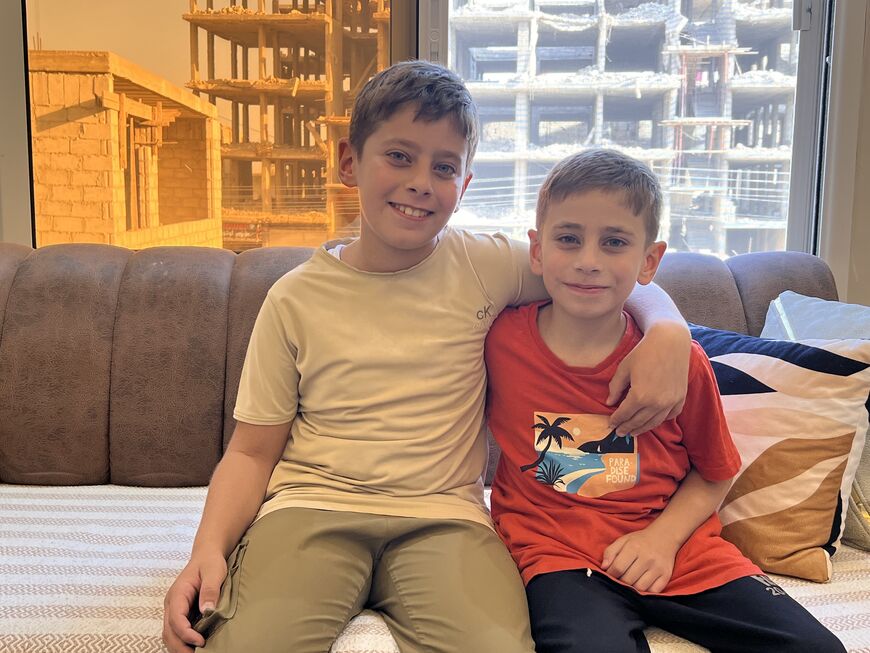
Abdurrahman and Zaid Sharbaji at their home in Darayya, Syria, Sept. 19, 2026. (Amberin Zaman/Al-Monitor)
She wishes the same success for Kurdish children. "I met a lot of Kurdish people. They are very nice. Three hours is not enough. They should have their main subjects in their mother tongue," she said. "I don't understand why they don't have their own country."
Did she really mean that? "Yes."
Under Assad, voicing such thoughts could surely have landed Summeye in the notorious Sednaya Prison. Hundreds of thousands of Kurds were not even issued official papers, let alone allowed to pursue their rights.
Nor was Summeye the only Sunni Arab to share such feelings with this reporter, even as Arab social media accounts see sporadic outbursts of xenophobia aimed at Kurdish leaders. Siham Aletr, 19, returned with her family in January from Turkey's western province of Bursa. She was in her final year at a Turkish lycee when her father decided to open a motorcycle repair shop in Darayya with a childhood friend. She cannot enroll in a local high school because she lacks a copy of the middle school diploma from her Turkish state school, which is apparently required. "I never thought I would need it, and I am unable to get it," Siham said in faultless Turkish.
She hopes to become a pediatrician, but bureaucracy and her weak grasp of the Arabic script stand in her way. Asked whether Kurds should be taught in their own language, she said they should. What about their own state? "Tabaan," she answered without the slightest hesitation, using the Arabic word for "of course." "We can have Damascus. They can have Qamishli."
She may be surprised to learn that Kobane’s group does not seek independence but rather regional autonomy.
A lost generation
Many of the returnees come back to ruined homes and few prospects of work, and their children are struggling to adapt, as the UN High Commissioner for Refugees documented in an April report. "Differences in curricula and language requirements have resulted in the placement of some returnee children in lower grades, negatively affecting their confidence and mental well-being," the agency observed.
A similar fate now awaits some 638,000 Kurdish students in the northeast. Around 100,000 of them studied in schools run by the Kurdish authorities, and roughly 40,000 of those cannot speak, read or write Arabic, according to Ahmed Mourad, a Kurdish member of Syria's new People's Assembly, as the parliament is known. "It's impossible to integrate them. We are talking about a lost generation. It's a catastrophe," Mourad told Al-Monitor in an interview in Damascus. "Children should be left out of politics."
Solutions are expected from Syria's cash-strapped Education Ministry, headed by an ethnic Kurd, Mohammed Abdul Rahman Turko. Language, according to the ministry spokesperson, Hamza Houria, is just the tip of the iceberg. In an interview at his office in the cavernous ministry building, Houria, a 27-year-old political science graduate from Idlib, ran through the figures. The Assad regime destroyed 6,000 school buildings. Forty percent of those still standing were unusable after its fall. "Doors and windows were stolen. Nothing was left," Houria said, in self-taught English. In the 22 months since seizing power, the government has repaired 3,500 of them.
To ease the language transition, special Arabic classes are being introduced in schools with returnees. "We call it program B," Houria said.
But the classes are proving grossly inadequate amid staff shortages and overcrowded classrooms. Parents with means are forced to turn to private schools, which typically cost $1,000 a year, plus $500 for transportation. That is a fortune in a country where 90% of the population lives below the poverty line.
Houria confirmed that three hours a week of Kurdish as a second language, akin to Spanish or French electives in American schools, is all the Kurds will get. Scores of teachers are being vetted to fill positions in 17 schools across Syria, including in Damascus, Aleppo and Hama, where Kurdish will be taught, Houria said. So far, 120 teachers have applied. As for Kurdish children who speak no Arabic at all, "At the moment there is no solution for this," he said.
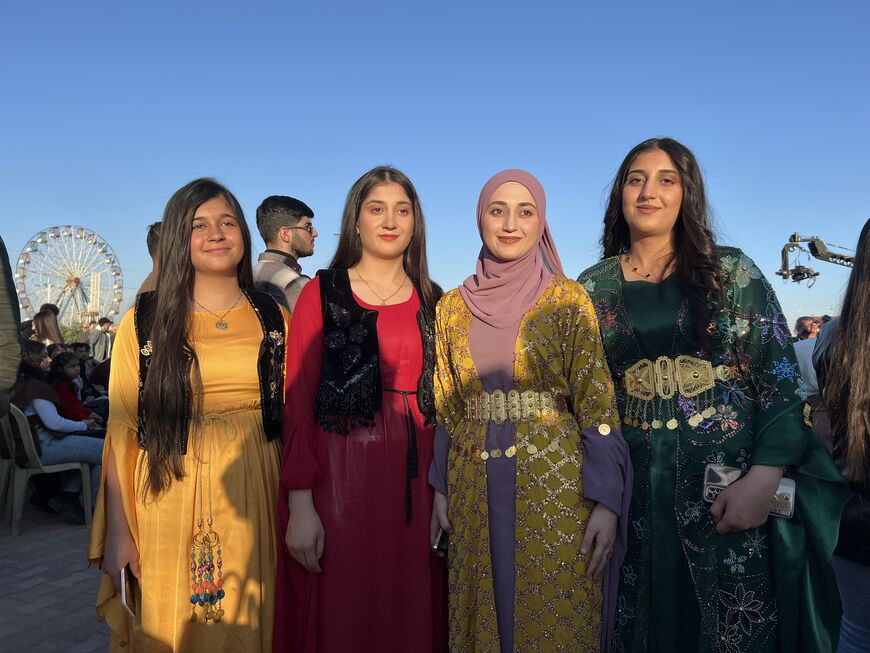
Students at the all-Kurdish Rojava University in Qamishli, Syria, Nov. 22, 2025. (Amberin Zaman/Al-Monitor)
Before becoming a lawmaker, Mourad served as the Education Ministry's point man for resolving problems with the Kurdish-led administration. Chief among them was the government's long-standing refusal to recognize the university and high school diplomas issued by the Kurdish mini-statelet, which ran a quarter of Syria's territory before losing more than 80% of it in the January showdown with government forces. He therefore knows the Kurdish-language file intimately, and he continues to make it "my business in the parliament," while also acting as an informal adviser to Turko, who was grilled at a Sept. 14 hearing before the parliament's education commission. Turko acknowledged that there were "two competing visions" for Kurdish education: that it be taught as a subject or that it be the language of instruction. But he gave no sign that the government's position would shift.
"I am here to fight for my people's legitimate language rights," Mourad declared in a separate speech that went viral.
Some accommodations have in fact been made for Kurdish students in the northeast, though only for a transitional period. For this academic year alone, ninth and 12th graders who studied in Kurdish schools may sit for exams based on the Kurdish administration's curriculum, and the ministry will recognize the results much as it has with diplomas already issued by Kurdish schools and universities after lengthy negotiations. Philosophy, history and geography will be taught in Kurdish in all grades for the same length of time.
Beyond the three weekly hours of Kurdish-language instruction, students in grades one to eight in the Kurdish-majority areas of Afrin, Kobani, Hasakah and Aleppo's Sheikh Maqsoud will receive two additional hours per week of civic education in Kurdish. Those hours, along with the other three, will last "forever," Mourad asserted with a conspiratorial glint.
Nimat Daoud, a veteran leader of the Kurdistan National Council, an umbrella group of Kurdish parties that demands federal status for the country's Kurds, is unimpressed. "They are trying to do the same thing as Turkey," he said in a recent interview.
He was alluding to a 2012 law introduced by then-Prime Minister Recep Tayyip Erdogan's government during an unsuccessful round of peace talks with the Kurdistan Workers Party (PKK). It provides for Kurdish classes twice a week in state-run middle schools and was hailed as a groundbreaking first. But there was a catch: At least 10 students had to choose the elective for the class to run. Many continue to opt for English, which students and parents alike see as a sounder investment in the future.
Alarmed that low enrollment could give the central government an excuse to cancel the Kurdish classes, as happened in Turkey, Kobane has made repeated appeals to Kurdish students to show up.
Empty or full?
When it comes to lawmaking, Sharaa is, as Daoud says, mostly in lockstep with his powerful ally Turkey. Turkey has thousands of troops parked in northern Syria and is negotiating with its own Kurdish minority, represented by imprisoned PKK chief Abdullah Ocalan. Political autonomy along ethnic lines is a no-go zone for both governments.
Yet Sharaa has in some ways already proved more flexible on the Kurds than Erdogan has in all of his 24 years in power. He decreed Kurdish a "national," if not an official, language and made the long-banned March 21 Kurdish New Year, Nowruz, an official holiday. Kobane has, albeit reluctantly, become his formal adviser for Kurdish affairs. Sipan Hemo, another SDF bigwig, was appointed deputy minister of defense on March 10, the first anniversary of the first US-brokered integration agreement signed by Sharaa and Kobane.
To Kurds in the northeast, such moves may look like window dressing. To their brethren in Damascus, they seem nothing short of miraculous. Both Kobane and Hemo served long years in the PKK, an internationally proscribed armed group, as Sharaa's own Hayat Tahrir al-Sham was until the United States rescinded its terrorist designation on Aug. 24.
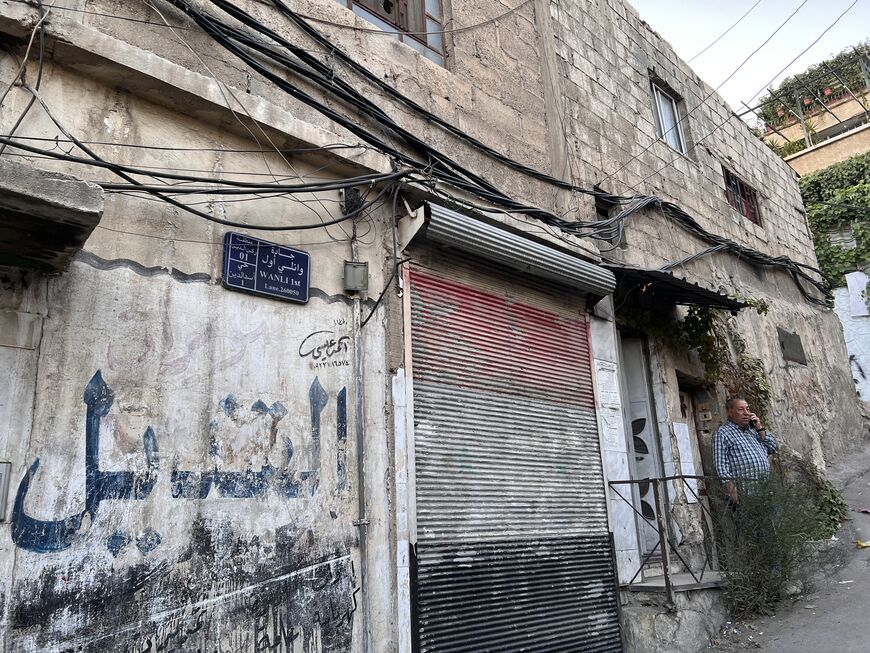
A street scene in Rukneddine, Sept. 21, 2026. (Amberin Zaman/Al-Monitor)
Rukneddine, a maze of narrow streets hugging the slopes of fabled Mount Qasioun, is home to the city's earliest Kurdish inhabitants. By locals' telling, they are descendants of Saladin, the storied Kurdish commander who founded the Ayyubid dynasty and defeated the Crusaders in a late 12th-century battle. He is believed to have died in Damascus six years later, in 1193. His tomb near the Umayyad Mosque is a pilgrimage site for Kurds in Syria and beyond.
Many residents, in fact, trace their roots to Turkey's majority-Kurdish southeast. Their ancestors fled in massive waves during a string of Kurdish uprisings in the late 19th and early 20th centuries, all brutally crushed. Quite a few came from Van province, on the Iranian border, as evidenced by the scores of residents surnamed "Vanly," which means "of Van" in Turkish, and by street signs reading "Vanly 1" and "Vanly 2."
"We came because the Ottomans were cutting us Kurds and Armenians," explained Mohammed Cherif Vanly, a community leader, holding an imaginary knife to his throat.
Traditionally known as Hayy al-Akrad, Arabic for the Kurdish quarter, the northern Damascus neighborhood has evolved into a mixed population of mostly Kurds and Arabs who have coexisted peacefully for centuries.
Unlike those in the city's other Kurdish neighborhood, Wadi al-Mashara, Rukneddine's Kurds are determinedly apolitical, or so they seem. Few, if any, speak Kurdish, which has fueled accusations that they have succumbed to assimilation by their Arab oppressors and renounced their Kurdish identity. Omar Haj Alibeg, a 23-year-old Kurdish accountant, fits the stereotype. He doesn’t speak Kurdish. He dislikes the SDF. "I don't like political questions," he snapped.
A bit of gentle probing in the privacy of people's homes, however, reveals a different Rukneddine. News that Kurdish classes will be offered is greeted with unbridled elation and disbelief.
Tongues loosen with every cup of Turkish coffee.
"We had a lot of meetings before Bashar's fall about organizing Kurdish-language classes here, but even thinking about it was like a death sentence," Vanly confided. Their "dreams" will at last come true, he said.
Informal evening classes, separate from the weekly three hours, are being organized in government-run schools to teach both the young and the old their mother tongue. Mourad, who was recently in Rukneddine to discuss the scheme, is fully on board. Another Vanly, 80-something Gawrishan, plans to enroll. Now that her nine grandchildren will learn the language at school, "They will teach me too," she cackled.
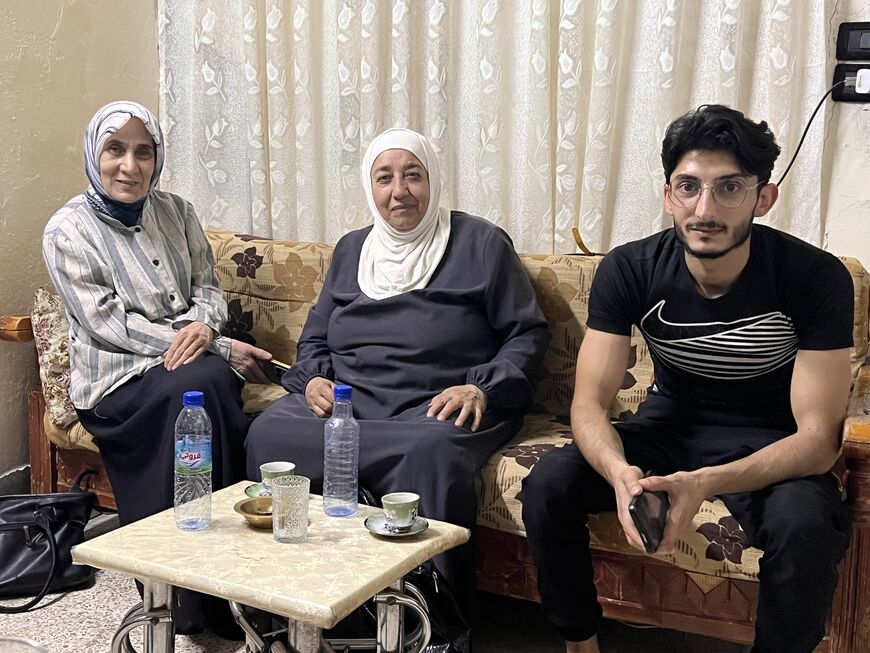
Sabaha Kahle (far left) seen with other neighbors gathered at the Vanly home in Rukneddine, Syria, Sept. 21, 2026. (Amberin Zaman/Al-Monitor)
The Vanlys' neighbor, Sabaha Kahle, said she had already taken "secret" Kurdish lessons from her late uncle, Abu Cengiz. "Under the Baath, everything was forbidden, even Kurdish dancing, you know," Kahle said, describing the previous regime's determined Arabization campaign.
Azadi, a much-beloved Kurdish folklore ensemble, was routinely denied permission to perform at Nowruz and its members detained by military intelligence on bogus charges of "stirring ethnic strife." Last month, Azadi regaled audiences with traditional Kurdish dances at the Damascus International Fair, which was launched under the slogan "Syria Shines Again."
In northeast Syria's Kurdish heartlands, the glass looks empty to many. In Rukneddine, where ethnic identity was long buried in a quiet fight for survival, it feels very much half full.
This one's on us.
The story doesn't end here.
Our correspondents are already on the next chapter. Read everything they file, from $2/week.
See Offers