



SDF chief Kobane’s Damascus visit a high wire act for Syria’s Kurds
The SDF says its integration with Damascus is complete, but major questions remain over its fighters, weapons and the future of Kurdish self-rule.
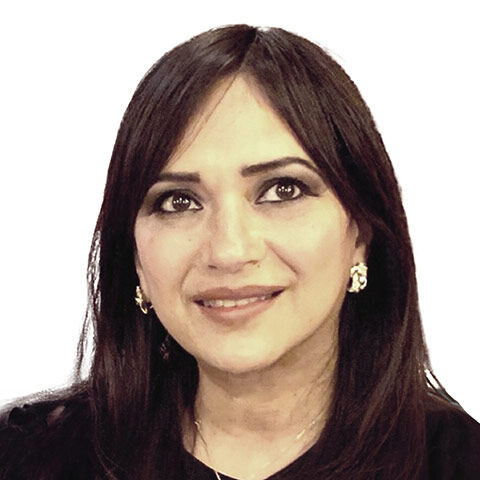

The commander-in-chief of the Kurdish-led Syrian Democratic Forces, Mazloum Kobane, arrived in Damascus on Monday for talks with Syrian Foreign Minister Asaad al-Shibani and other officials, according to SDF officials and well-placed sources.
It remains unclear whether Kobane will meet with Syrian President Ahmed al-Sharaa, whom he last met on Aug. 4 in Damascus. He is accompanied by the SDF’s top official for foreign affairs, Ilham Ahmed.
Why it matters: The visit comes on the heels of Kobane’s Aug. 20 announcement that the process of integrating the Kurdish-led autonomous entity’s security, military and administrative institutions with the central government was “complete and finished” and that a “new phase” had started. He stopped short, however, of declaring the SDF’s dissolution, which is among the key demands of Damascus and Ankara.
Kobane made the comments during a raucous event to mark the centenary of Qamishli, the autonomous Kurdish administration’s informal capital, which rapidly turned into a show of Kurdish unity. His comments were welcomed by Ahmed al-Hilali, the deputy governor of Hasakah and spokesperson for the Syrian presidential team overseeing the implementation of the Jan. 29 integration accord, which was brokered by the United States.
However, there has been little reaction from Damascus. One of the biggest outstanding issues between the sides is the fate of thousands of SDF fighters who have not been integrated into the national army and that of their weapons. Figures vary, but according to SDF officials cited by the Iraqi Kurdish news outlet Rudaw, roughly 5,000 SDF fighters have been incorporated into four separate brigades created under the terms of the Jan. 29 agreement. A further 1,000 returned to Afrin, presumably where another brigade will be established. Around 2,000 more fighters are expected to join their ranks.
However, there are at least 10,000 more SDF fighters, including members of the all-female Women’s Protection Units, whose status remains unresolved. What will they do? Who will pay their salaries? Until their future is settled, Kobane is loath to declare a formal end to the SDF.
This is deeply unsettling for Sharaa, who has been steadily negotiating integration deals with a range of armed factions, including those backed by Turkey, in a bid to cement his control.
A new Kurdish party? Just as unnerving are Kobane’s alleged plans to establish a new pro-secular party in the northeast, modeled on Turkey's pro-Kurdish DEM Party, championing liberal values and women’s rights as well as minority groups including Christians and Yazidis, as well as Arabs in the northeastern regions that the SDF governed. Kobane has invited members of civil society, as well as well-educated, Europe-based Kurds, to join his team, one of the sources said.
Sharaa wants Kobane in Damascus under his control, Syrian officials told Al-Monitor on background. However, the Kurdish commander has declined the role of an adviser with an ill-defined mandate and no real power that was offered to him earlier, according to SDF sources. The United States initially pressed for Kobane to sit on Syria’s National Security Council, but Sharaa reportedly opposed the idea, the sources said.
“Neither Damascus nor Ankara wants him to have real power,” one of the sources said. “Unless he is given a proper role, he is unlikely to give up his plans for a new party. Why should he?” the source asked.
Kobane’s recent appearances in Kurdish national garb and sharp suits have fed speculation about his transition from a military to a political role. Kobane has not, however, made any formal announcements about forming a political party, leaving the door open to further negotiations with Damascus.
Either way, a big question is what sort of resources will be placed at his disposal. Oil constituted one of the biggest sources of the Kurdish-led administration’s income. But in January, the Syrian army wrested back some 80% of the territory that the Kurds controlled, including Deir Ezzor, where much of Syria’s oil is found.
Texas-based HKN recently took over eight oil fields from the SDF near Rmeilan, and Gulf Sands Petroleum reclaimed Block 26, also close to the Turkish and Iraqi borders, after a 14-year pause in its operations. The British company had accused the SDF of “stealing” its oil.
Arab-Kurdish tensions: The horse-trading is occurring against simmering Arab-Kurdish tensions, which Damascus is trying to defuse. One of the flashpoints is Hasakah, where some Arab tribes began mobilizing in July, calling for the dissolution of the SDF and of the Kurdish-led administration and the restoration of full Syrian government authority over the area.
The hostility boiled over into violence in the city of Ras al-Ain, known as Serekaniye in Kurdish, when a convoy of some 400 Kurds displaced from the city during Turkey’s October 2019 invasion returned on Aug. 10, in keeping with the Jan. 29 accord. Armed men attacked the convoy, smashing vehicles and firing shots. The families have since been resettled, but the returns have been paused.
The resettlement of tens of thousands of displaced Kurds and education in the Kurdish language, an unequivocal Kurdish ask according to Kobane, are among a host of other issues under discussion with Damascus.
Against this backdrop, Kobane’s claim that integration is “complete” appears to be aimed at buying time before pulling the plug on all his forces, provided he ever does.
This one's on us.
The story doesn't end here.
Our correspondents are already on the next chapter. Read everything they file, from $2/week.
See Offers