As Trump admin drops Halkbank case, S-400 last big hurdle in US-Turkey ties
The move eases a key source of friction with Turkey ahead of a NATO summit in Ankara.

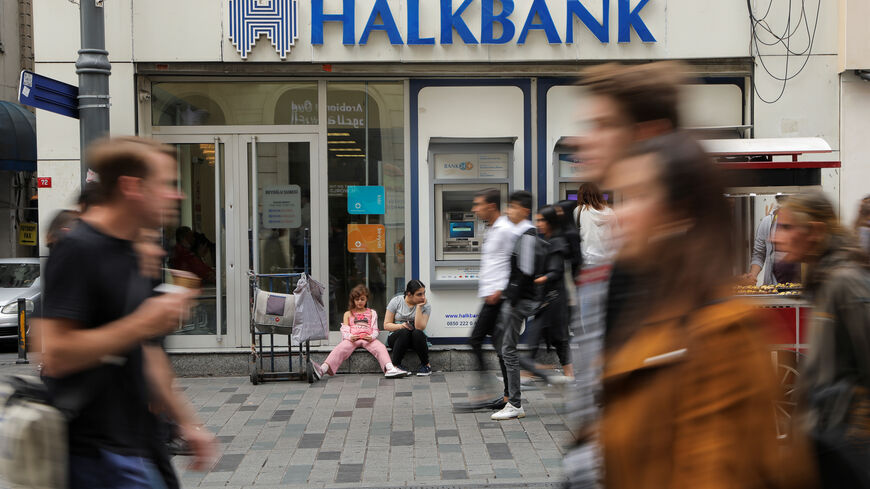
The Trump administration has moved to fulfill Turkey’s long-running demand to dismiss a criminal case against Turkish state lender Halkbank over allegations it helped Iran evade sanctions.
The bank’s share price rose nearly 4% in early trading on Thursday after the US Department of Justice asked a federal judge to dismiss the case the day prior, saying it had no intention of prosecuting the Turkish bank.
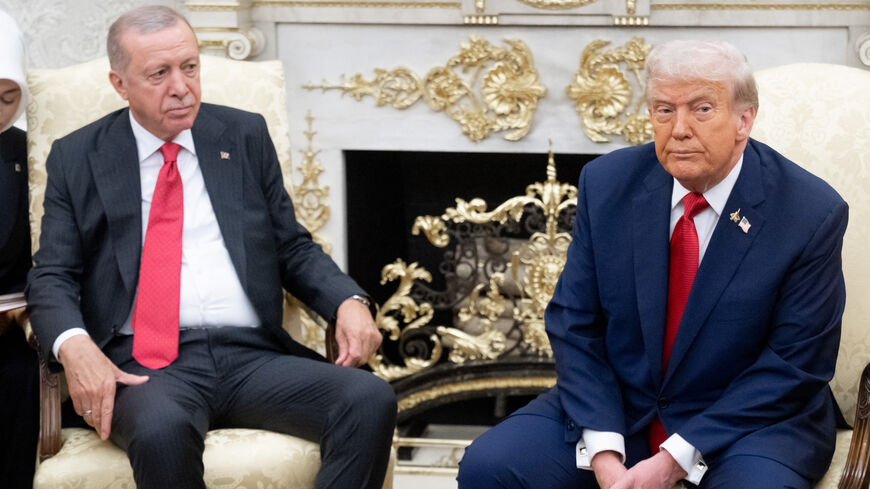
The move removes another element of friction between Turkey and the United States ahead of a critical NATO summit due to be held in Ankara next month. President Donald Trump will be attending the event.
The federal case against Halkbank was formally filed in 2019, when prosecutors in the Southern District of New York unsealed a six-count indictment against the lender, including a conspiracy to defraud the United States and money laundering. Halkbank denied the charges and argued that it was immune to prosecution in foreign courts as it is a state entity.
The case, which made international headlines for a long time, was based on a separate investigation against Turkish-Iranian businessman Reza Zarrab, a key figure in an alleged oil-for-gold scheme that helped Iran evade sanctions. Halkbank was accused of acting as a repository for billions of dollars generated through the trade.
Zarrab was arrested in the United States. He pleaded guilty to the charges and became a witness for the prosecution. Much of the evidence in the case rests on his testimony. Zarrab has since settled in Miami where he runs an elite equestrian business, according to the Organized Crime and Corruption Reporting Project.
Senior Halkbank executive Hakan Atilla ended up taking the fall. He was arrested twice in New York and freed in 2019 after serving a total of 28 months in a federal prison, then deported to Turkey.
The Justice Department said that dropping the prosecution would further US interests in stemming support for Iran. Halkbank and the US government agreed in March to end the case based on an agreement that prohibits the lender from entering any transactions that would benefit Iran.
Turkey has emerged in recent years as a strategic actor across numerous theaters, stretching from Ukraine and the Black Sea to the north, Iran and the South Caucasus to the East, and the Eastern Mediterranean and the Horn of Africa to the south. The European Union and the United States have turned down the volume over Erdogan’s dismal human rights record in tandem with that rise.
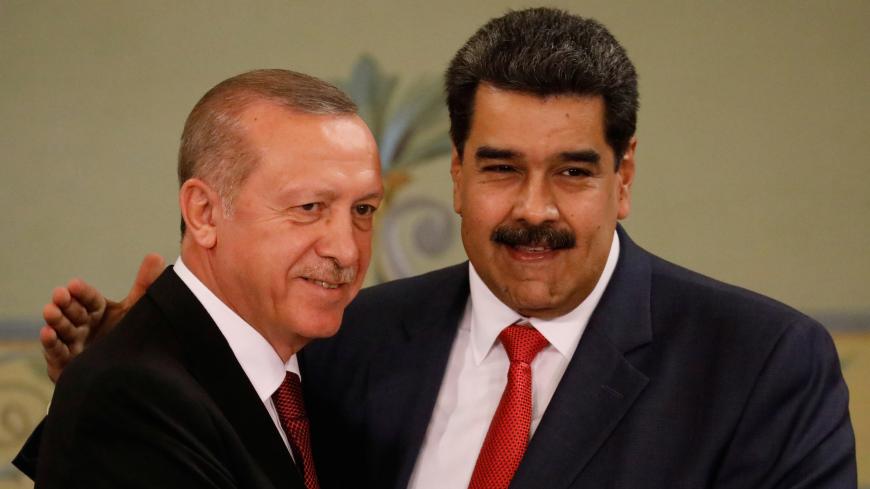
The Trump administration has never made human rights a focus of its Turkey policy. Instead, starting with his first term in 2017, Trump has aired his admiration for Turkish President Recep Tayyip Erdogan. “I like him a lot" and "he is a strong guy, a tough guy” are among Trump’s stock compliments for the Turkish leader who has ruled Turkey with an iron fist for the past 23 years.
Four down, one to go
Still, things got bumpy during the two-year detention of US pastor Andrew Brunson in western Turkey on unsubstantiated espionage charges. He was freed after Trump threatened to wreck Turkey’s economy with big tariffs and sanctions in a series of posts on X that sent the Turkish lira into a nosedive. “Don’t be a fool,” he told Erdogan.
Trump’s return to power marked a rapid thaw in relations that had plummeted over the past decade due to several factors. The Halkbank case was one. The United States’ refusal to extradite Sunni preacher Fethullah Gulen, who was accused of masterminding the failed 2016 coup to overthrow Erdogan, was another. Gulen died in October 2024 at the age of 83. The problem was fixed.
One of the biggest headaches was US support for the Kurdish-led Syrian Democratic Forces. Turkey was incensed at their partnership against the Islamic State because of the SDF’s close links to another Kurdish group, the Kurdistan Workers Party, which has been waging war on and off against the Turkish state since 1984.
That thorn was excised by the Trump administration’s pivot toward Syria’s new Turkish-supported government, led by President Ahmed al-Sharaa, and its effective scotching of the Pentagon’s alliance with the SDF. All US forces deployed to the Kurdish-run northeast region of Syria were pulled out over the spring, and the SDF is now integrating its forces with the Syrian army.
That leaves the matter of the Russian-made S-400 anti-missile defense system that Turkey purchased from Russia over the objections of successive US administrations. The main concern was that, besides being incompatible with NATO systems, the S-400's radar could gather sensitive information on NATO aircraft and the F-35 in particular. The United States booted Turkey out of the F-35 program, and Congress imposed military sanctions explicitly stating that until Ankara removes the Russian kit from its territory, they will remain in place.
Even Trump’s affection for Erdogan cannot get around the law. Secretary of State Marco Rubio made this clear in remarks to the Senate Foreign Relations Committee last week, noting that the administration lacks the authority to allow Turkey back into the F-35 program and that it was up to Congress to decide whether to lift sanctions.
Successive analyses in The New York Times, Foreign Affairs and The Economist point to a Turkish pivot back to NATO and the United States in recent years that accelerated with the fall of Syria's Assad regime in December 2024. Whether cooler ties with the Kremlin will culminate in the removal of the S-400 from Turkish soil remains an open question.