Barrack heads to Iraq as US presses Baghdad on Iran-backed militias
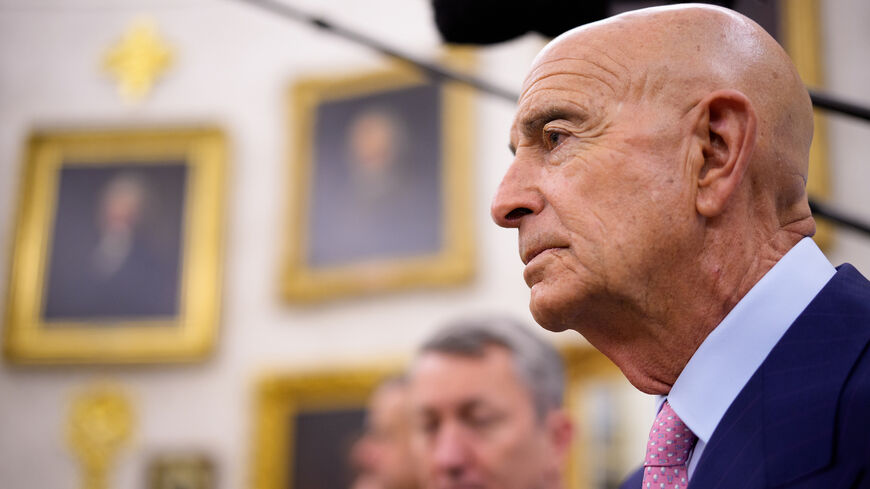
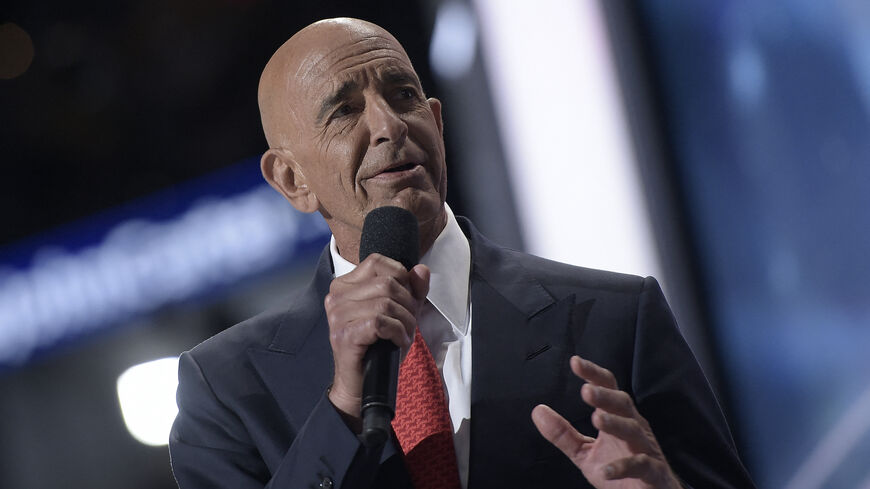
US envoy Tom Barrack is due to meet with Iraq’s new prime minister and other top officials in Baghdad, where he will likely press US demands for Iran-backed Shiite militias be dismantled and disarmed.
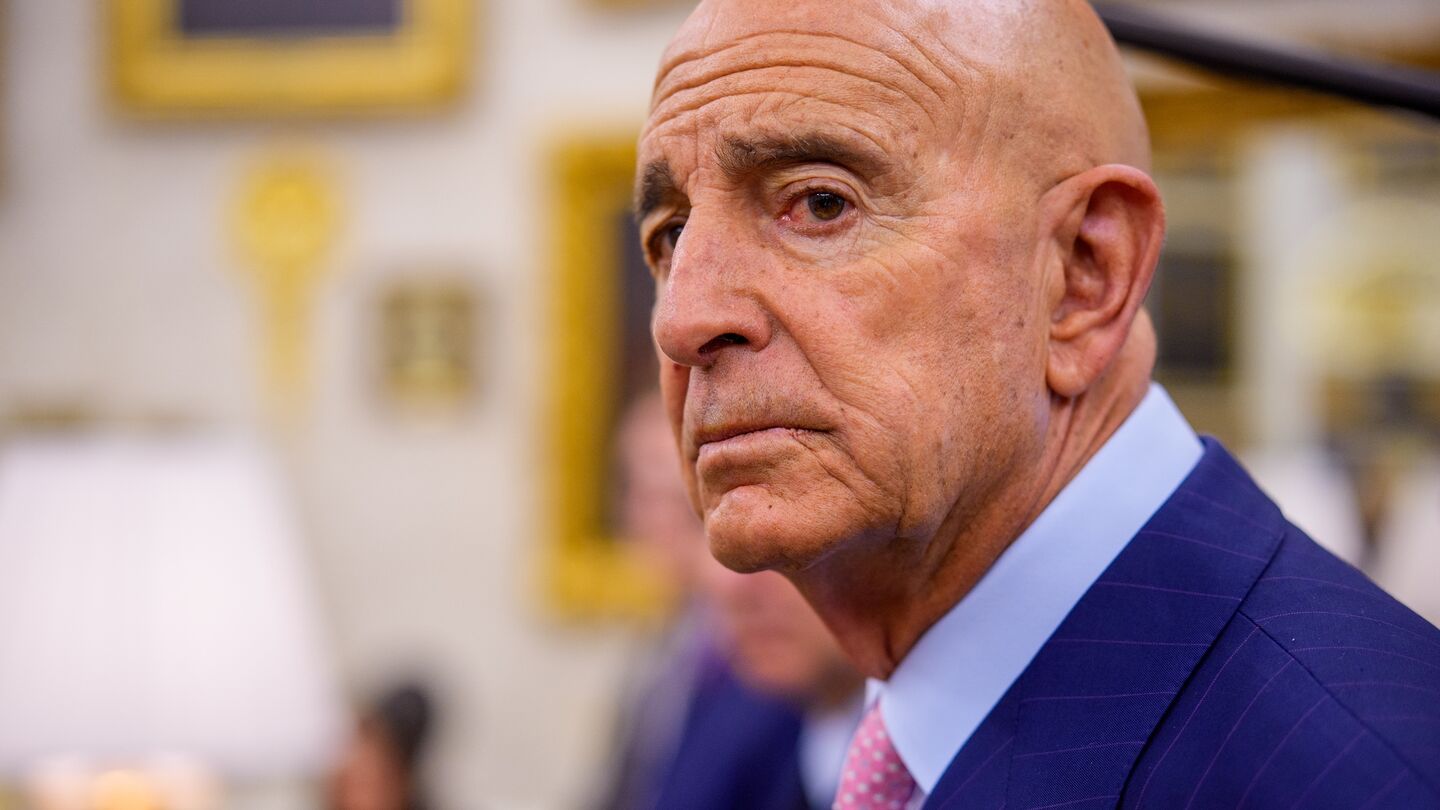
Tom Barrack, the US presidential envoy to Syria and Iraq and the US ambassador to Turkey, will travel to Iraq for separate meetings in Baghdad and Erbil, according to several officials familiar with the matter.
Barrack is due to hold meetings in Baghdad on Monday and in Erbil on Tuesday, the officials told Al-Monitor. It will mark the envoy’s first trip to Baghdad since President Donald Trump, a close personal friend, expanded Barrack’s portfolio to include Iraq.
Barrack is due to meet with Iraq’s new prime minister, Ali al-Zaidi, as well as other top officials in Baghdad, where he will likely press US demands for Iran-backed Shiite militias be dismantled and disarmed, the sources said.
In Erbil, Barrack is due to hold talks with Massoud Barzani, the president of the Kurdistan Democratic Party. The KDP is the most influential party in Iraqi Kurdistan. Barrack will also meet Barzani’s son, Masrour, who is the prime minister and Barzani’s nephew and son-in-law, Nechirvan, who is the president of the Kurdistan Region of Iraq.
Barrack will meet with Bafel Talabani, the leader of the KDP’s coalition partner and historical rival, the Patriotic Union of Kurdistan. Barrack is also expected to receive Mazlum Kobane, the commander-in-chief of the Kurdish-led Syrian Democratic Forces, in Erbil, the sources said.
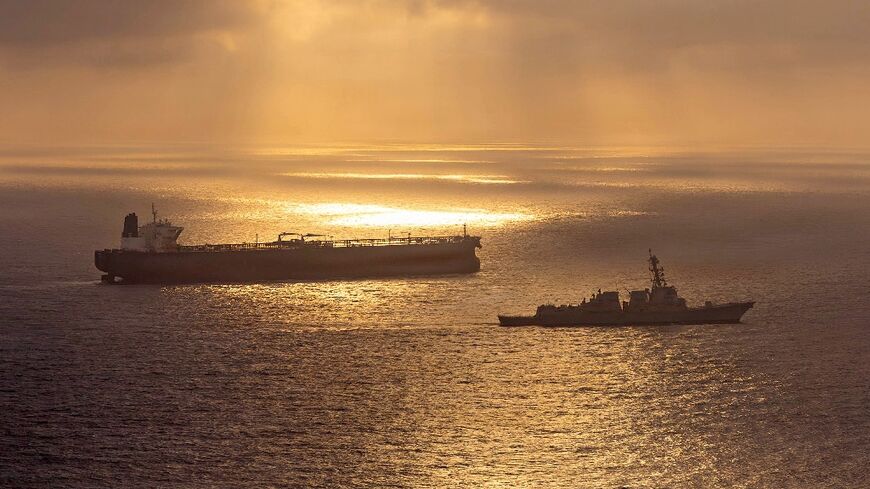
The trip comes at a particularly critical time amid ongoing talks between Iran and the Trump administration to secure a comprehensive deal that would end months of conflict. A major sticking point in those negotiations has been Iran’s nuclear program. Another is Iran’s effective lockdown of the Strait of Hormuz.
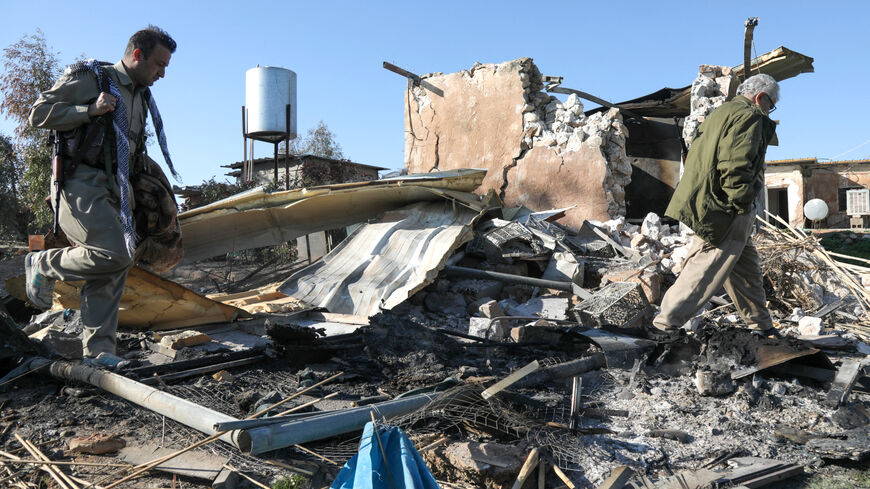
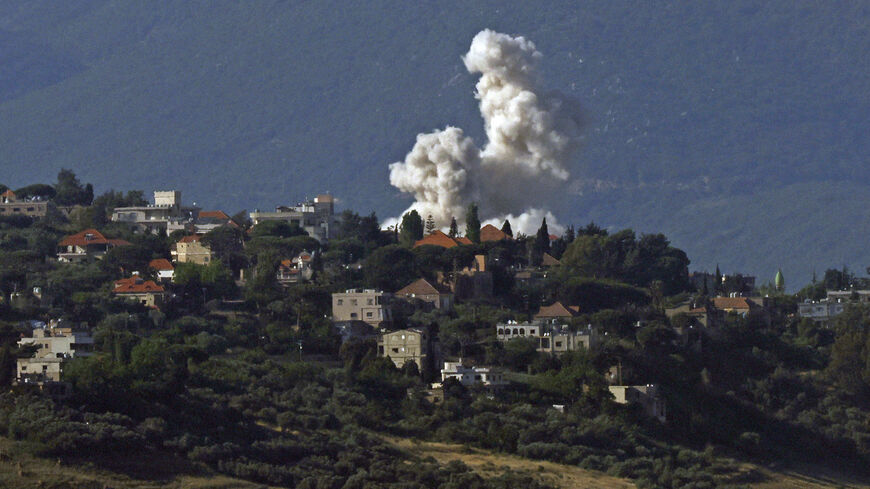
Iran has outsize influence over Shiite-majority Iraq. Its armed Shiite proxies, the Popular Mobilization Forces, have been actively supporting Iran, targeting US bases inside Iraq as well as carrying out numerous attacks against Gulf states.
Shiite militias launched the bulk of attacks on Saudi Arabia throughout the hostilities, initiated in late February against Iran by the United States and Israel, as Al-Monitor first reported.
US frustration with Baghdad at failing to curb such attacks spiraled in April, when a convoy of US diplomats narrowly averted a drone strike near Baghdad’s international airport. They were escorting US journalist Shelly Kittleson, who had just been freed by Kataib Hezbollah, a US-designated terrorist group that is counted among the most powerful among the Iran-supported militias.
Barrack is expected to adopt a more nuanced approach in dealing with Zaidi. The businessman and political novice was elected in May after months of gridlock. His lack of political baggage made him acceptable to Washington and Tehran alike.
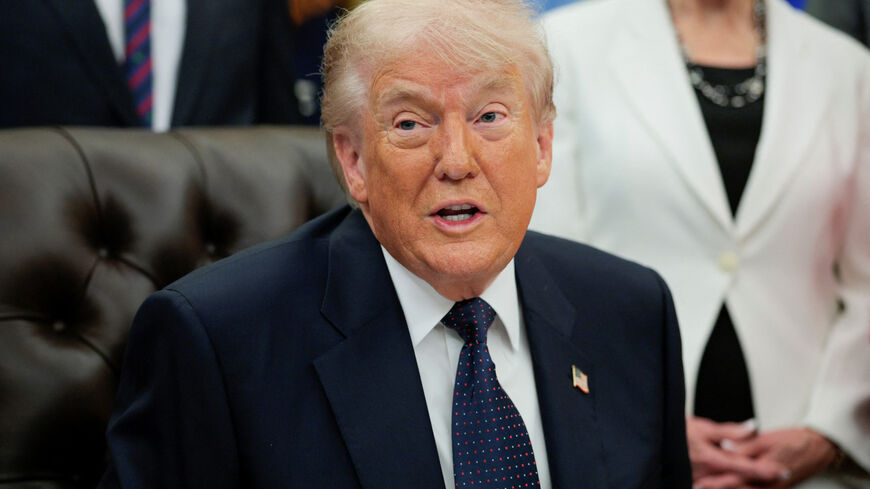
Trump called the new Iraq premier a “very good man” and invited him to the White House. Barrack is expected to take up the matter. But there will likely be some strings attached.
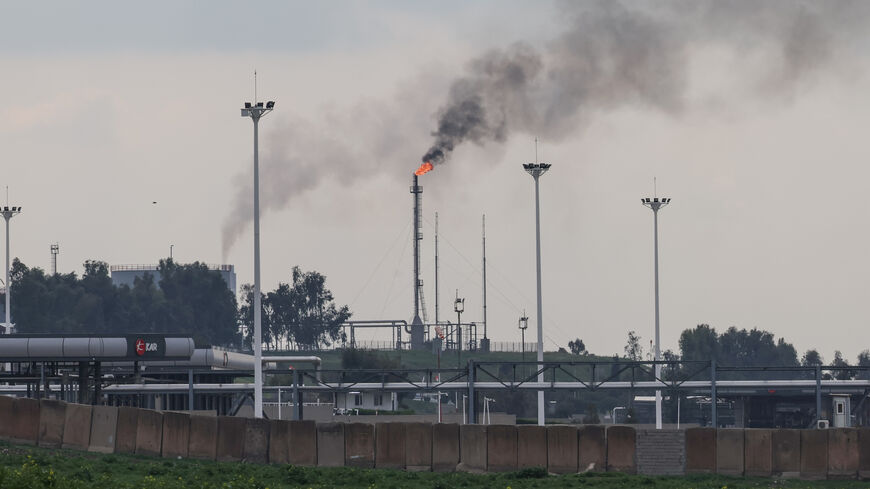
The Trump administration paused both cooperation with and funding for Iraq’s security forces and shipments to Iraq of dollars in April, to pressure Baghdad into curbing the militia’s outsize influence in politics and the economy, which is now reeling from the impact of the Iran conflict. US forces are due to fully withdraw from Iraq in September. Iraq’s oil exports used to export roughly 3.3 million barrels of crude per day, mostly through the Strait of Hormuz. Figures for March show sales plummeting to 600,000 barrels per day.
In his first speech before the Iraqi Parliament in May, Zaidi pledged to “reform the security apparatus by restricting weapons to state control and strengthening the capabilities of the security forces.” Some groups have weighed in to support him.
On May 27, Muqtada al-Sadr, the powerful Shiite cleric who is at odds with Iran, said armed elements of his movement would integrate with the state security forces. A week later, the Imam Ali Brigades and Asaib Ahl al-Haq also said they will turn in their weapons to the state. Barrack swiftly applauded the move, calling it a “principled decision” that would “contribute to the architecture of order.”
Meanwhile, PMF head Falah al Fayed has vowed to end all links between the groups under his supervision and any political groups through which the militias exert their influence. The goal was to transform the PMF “into an institution subject to a unified system and answerable to the commander-in-chief of the armed forces." The prime minister holds that title.
The statements are being greeted with a degree of skepticism. Some believe they are an Iran-inspired foil designed to give Iraq critical breathing space amid its ballooning financial woes.
Ultimately, Zaidi still has to answer to the Coordination Framework, the alliance of Shiite parties that selected him, analysts say. But he will try to expand his space to maneuver, they add.
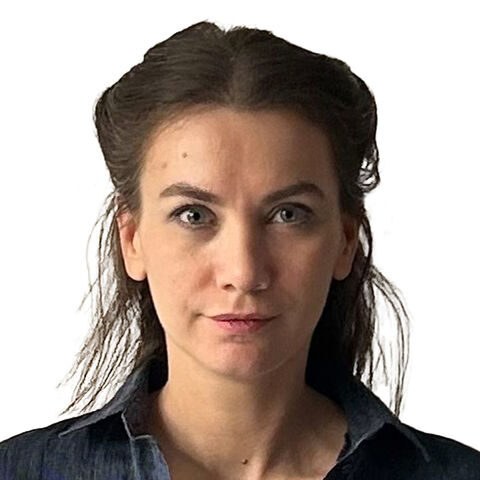
Maria Fantappie heads the Mediterranean, Middle East and Africa Program at the Istituto Affari Internazionali in Rome. “The new PM is the clear expression of a network of relations and interests tied to the Iran-backed groups. He is pragmatic, too, and, in line with the tradition of the last Iraqi PM, he will try to leave behind those ties with Iran and operate a balancing act with the US,” she told Al-Monitor.
“But US pressure, if mishandled, could also create the opposite effect: strengthen his ties with the Iran bloc and lead him to abandon that pragmatism,” Fantappie said.
Hamidreza Azizi, a leading analyst on Iran with the German Institute for International and Security Affairs, aired deeper doubts. Azizi noted to Al-Monitor that Iran was unhappy that some of the militias had decided to relinquish their weapons to the state. “But this should not be taken as a sign of a broader and more inclusive trend in Iraq,” Azizi cautioned, particularly at a time when Iran was negotiating with the United States. “If the deal happens and given the fact that Iran actually sees itself as having the upper hand, it will double down on its current efforts to revive its influence in Iraq, and that influence means increasing support, particularly for smaller militias who are more ideologically oriented towards Tehran.”
As such, Barrack is expected to engage Zaidi on more practical issues, like building energy and trade ties with Turkey and Syria, that would help loosen Iran’s grip.
Barrack met with Turkish Foreign Minister Hakan Fidan on Friday ahead of the trip. Barrack called the encounter “productive” in a post on X.