



Turkey hosts Kuwaiti FM as UAE's OAPEC exit fuels Gulf rift
Kuwait's top diplomat visited Turkey as the Gulf rift deepens following the UAE’s exit from OPEC and its affiliated alliances, forcing Ankara to balance ties between Saudi Arabia and Abu Dhabi.

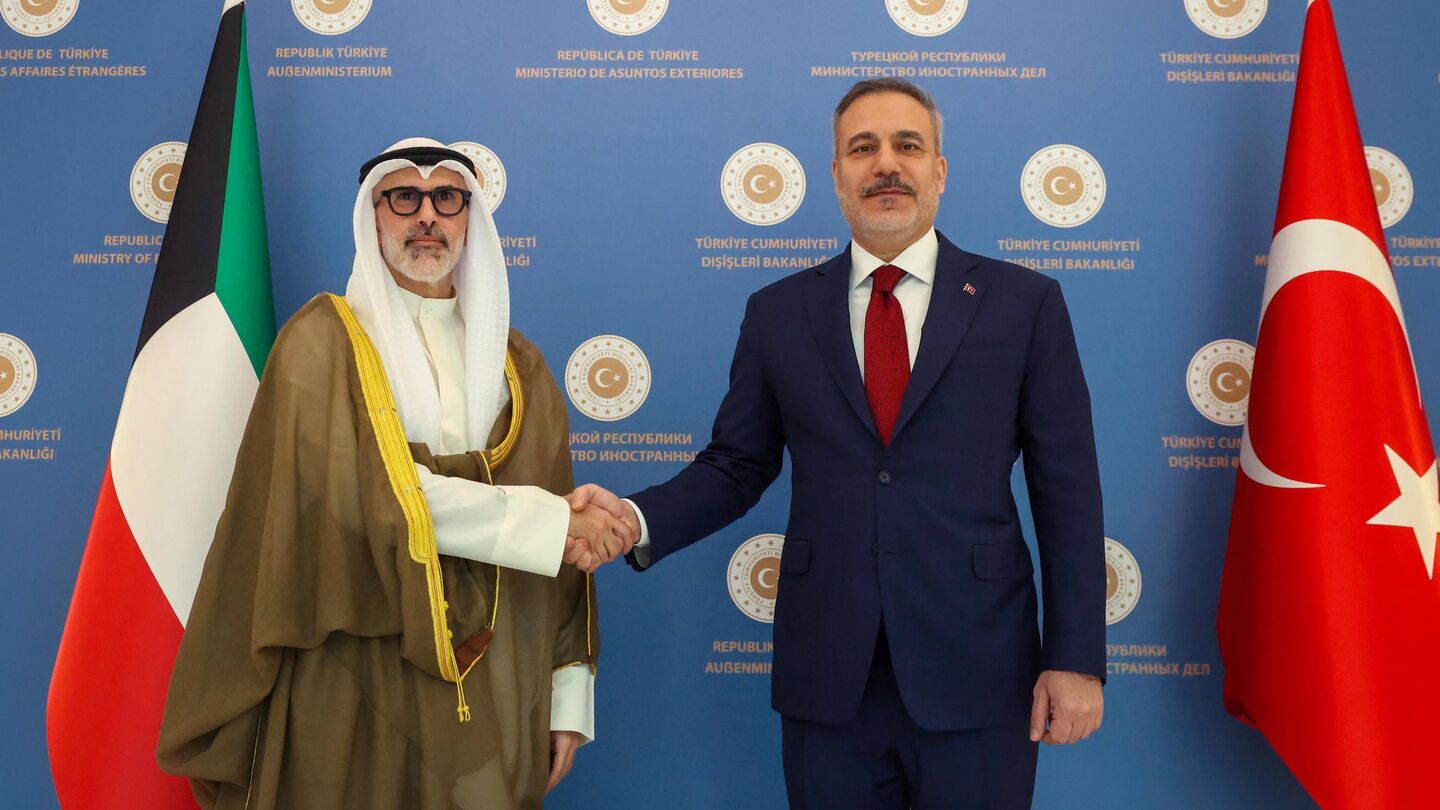
ANKARA — Turkish Foreign Minister Hakan Fidan met with his Kuwaiti counterpart, Jarrah Jaber Al-Ahmad Al-Sabah, on Monday during the latter’s visit to Turkey against a background of deepening fractures among Gulf countries.
What happened: Fidan and Al-Sabah discussed bilateral ties and regional developments, including the Iran conflict, attacks targeting Gulf countries and disruption in the Strait of Hormuz.
A Turkish diplomatic source told journalists ahead of the visit that the meeting was “expected to emphasize the importance of cooperation particularly in the fields of military, defense and connectivity” and that Fidan was expected to “point to the necessity of acting together and strengthening a sense of regional ownership in the face of increasing regional and global challenges,” in reference to Turkish-led efforts to build a regional alliance.
Background: Turkey has stepped up efforts to forge a regional alignment to hedge against instability and reduce reliance on Western-led frameworks following the Iran war.
Foreign ministers from Turkey, Egypt, Pakistan and Saudi Arabia have held three rounds of talks, most recently on April 17, to discuss a potential alliance as Ankara explores expanding the format.
Kuwait has also been seeking to broaden its cooperation with the regional countries following Iranian attacks on the kingdom. Since late February, Kuwaiti authorities say the country has been targeted by hundreds of ballistic missiles and hundreds more drones, with strikes hitting oil facilities such as Mina al-Ahmadi.
Why it matters: The visit comes as the UAE’s exit from OPEC, OPEC+ and OAPEC last week is fueling perceptions of fractures within the Gulf that could deepen policy rifts between Abu Dhabi and Riyadh over output strategy and market share. OAPEC is headquartered in Kuwait city.
The Emirati withdrawal from OAPEC, the Kuwait-headquartered forum that coordinates energy policy and cooperation among Arab oil producers, adds an institutional dimension to the fallout.
While OAPEC has less direct influence over output than OPEC+, it has historically served as a platform for aligning Arab energy strategies and joint projects.
Kuwait signaled alignment with OPEC+, with Oil Minister Tareq Al-Roumi reaffirming commitment to coordinated production and market stability on Sunday. Kuwait’s oil output stands at around 2.5-2.6 million barrels per day under OPEC+ quotas, though production has faced intermittent disruptions due to the Iran conflict and shipping constraints in the Strait of Hormuz.
For Turkey, the emerging split will require careful balancing. Ankara has been moving closer to Saudi Arabia on security and regional files, while maintaining strong economic and financial ties with the UAE.
Know more: Turkey is also emerging as a potential defense supplier for Kuwait as the Gulf country looks to diversify its security ties.
During Kuwaiti Emir Meshal Al-Ahmad Al-Jaber Al-Sabah’s last visit to Turkey in May 2024, the two countries signed agreements covering defense procurement, launching a strategic dialogue and expanding trade cooperation. Turkish President Recep Tayyip Erdogan later visited Kuwait in October that year.
The growing defense track is also tied to economic goals. Turkey and Kuwait aim to increase bilateral trade from just over $1 billion to $5 billion, with a pending Turkey-Gulf Cooperation Council free trade agreement expected to accelerate trade and investment flows.
This one's on us.
The story doesn't end here.
Our correspondents are already on the next chapter. Read everything they file, from $2/week.
See Offers