



Between heat and war, Saudi Arabia seeks incident-free Hajj
Mecca's temperature reached a high of 105 degrees Fahrenheit (40.5 degrees Celsius) on Tuesday and is expected to hit 108 degrees Fahrenheit (42 Celsius) on Wednesday.


Saudi authorities urged worshippers on Tuesday to avoid direct exposure to the sun in an effort to mitigate deaths during the Hajj pilgrimage season. The kingdom is seeking a controversy-free holy season amid the conflict with Iran and following its success in reducing deaths last year.
The temperature on Tuesday reached a high of 105 degrees Fahrenheit (40.5 Celsius) and is expected to reach 108 degrees Fahrenheit (42 Celsius) on Wednesday, according to AccuWeather.
What happened: The Hajj, an annual Muslim pilgrimage to the holy city of Mecca, began on Monday this year and will conclude on Saturday. A Saudi official said on Friday that 1,518,153 pilgrims had arrived from abroad to participate, up from 1,506,576 in 2025, Agence France-Presse reported. More than 1.6 million people attended last year, a figure similar to those in prior years.
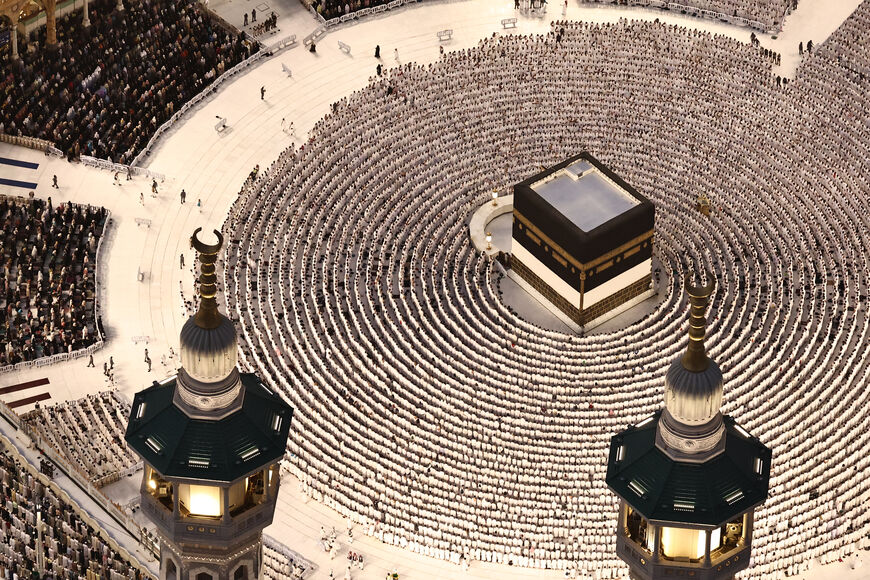
Aerial footage broadcast by Saudi news outlets on Tuesday showed hundreds of thousands of pilgrims gathered on Mount Arafat, a hill where the Prophet Muhammad is believed to have delivered his farewell sermon.
Officials told attendees on Tuesday to remain in their camps until 4:00 p.m. local time to avoid the sun, local media reported.
The National Center for Meteorology warned participants of rising temperatures on Tuesday, instructing them to avoid open areas and seek shade in designated areas.
Why it matters: Saudi Arabia is seeking to limit deaths following a disastrous Hajj season in 2024. More than 1,300 people died that year amid temperatures that surpassed 125 degrees Fahrenheit (52 degrees Celsius), with heat, old age and heart conditions listed as the primary causes of death. A number of those who died were unregistered pilgrims who lacked the proper permits to partake in the Hajj.
Participating in the Hajj at least once is a religious obligation for Muslims, and some pilgrims attempt to bypass restrictions on entry.
The number of deaths declined last year, and though official figures were not released, the toll was reportedly in the hundreds.
Hundreds of deaths are typical during the Hajj, though in 2015, more than 2,000 people were killed during a stampede.
Know more: This year’s Hajj follows the outbreak of the US-Israel-Iran war in February. Saudi Arabia has been heavily impacted by the conflict, though the holy sites have been shielded from attacks. Earlier this month, Saudi Arabia reported a drone attack on its territory from Iraq, despite the April ceasefire remaining in place. Amberin Zaman wrote for Al-Monitor last week that the majority of attacks on the kingdom during the war have been carried out by Iran-backed militias in Iraq.
The Wall Street Journal reported last week that tens of thousands of worshippers from both Iran and Iraq traveled to Saudi Arabia for the Hajj.
In a Tuesday address, Iranian Supreme Leader Ayatollah Mojtaba Khamenei said, “The nations and lands of the region will no longer serve as shields for US bases.”
Saudi Arabia hosts more than 2,000 US troops, many of them at Prince Sultan Air Base south of Riyadh.
The kingdom has carried out attacks on Iran and Iraqi militias during the war, Reuters reported earlier this month, though ties between Riyadh and Tehran remain intact. The two countries’ foreign ministers held a call earlier this month to discuss regional developments.
This one's on us.
The story doesn't end here.
Our correspondents are already on the next chapter. Read everything they file, from $2/week.
See Offers