

Analysis

Israel’s four options for retaliating against Iran

On the eve of the Jewish New Year, Prime Minister Benjamin Netanyahu must decide how to respond to the Iranian missile attack against Israel.

This picture shows the remains of an Iranian missile on the ground in the Negev desert near Arad, on October 2, 2024, in the aftermath of an Iranian missile attack on Israel. Israel vowed to make Iran "pay" for firing a barrage of missiles at its territory, with Tehran warning on October 2 it would launch an even bigger attack it is targeted. (Photo by Menahem KAHANA / AFP) (Photo by MENAHEM KAHANA/AFP via Getty Images)
This picture shows the remains of an Iranian missile on the ground in the Negev desert near Arad, on October 2, 2024, in the aftermath of an Iranian missile attack on Israel. Israel vowed to make Iran "pay" for firing a barrage of missiles at its territory, with Tehran warning on October 2 it would launch an even bigger attack it is targeted. — MENAHEM KAHANA/AFP via Getty Images

TEL AVIV — Following the largest-ever Iranian missile attack by the Islamic Republic against Israel, Prime Minister Benjamin Netanyahu finds himself between a rock and a hard place, pressed by his followers to retaliate forcefully, yet urged by the US administration to avoid an all-out regional war.

As Israel’s leadership mulls its response to Iran’s barrage of nearly 200 ballistic missiles Tuesday evening, Israelis prepare to mark the start of the new Hebrew year, Rosh Hashanah, on Wednesday evening. None are sorry to see the passing of the past year, the most tumultuous one in its history, beginning with the Oct. 7 massacre, an ensuing war with Hamas and Hezbollah, and culminating in an Iranian missile attack. 
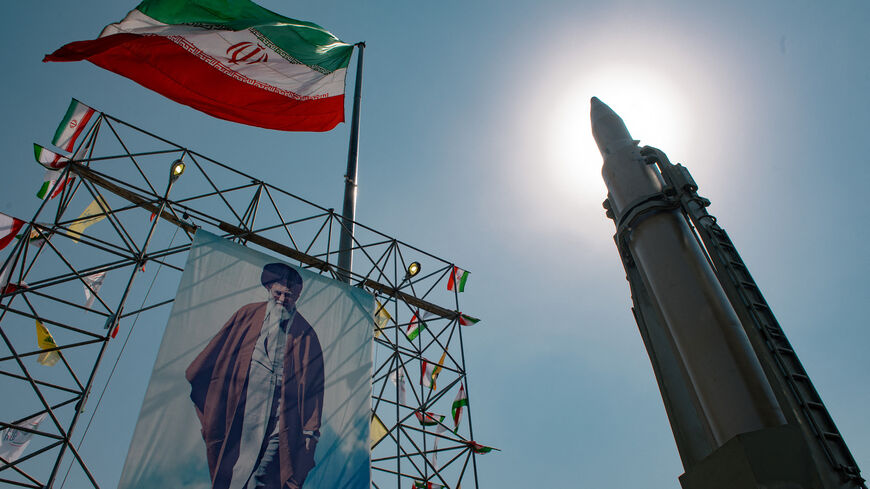
A big banner depicting Iran's Supreme Leader Ayatollah Ali Khamenei is placed next to a ballistic missile in Baharestan Square, on the sideline of an exhibition that marks the 44th anniversary of the start of the Iran-Iraq War, Tehran, Iran, Sept. 26, 2024.
A big banner depicting Iran's Supreme Leader Ayatollah Ali Khamenei is placed next to a ballistic missile in Baharestan Square, on the sidelines of an exhibition that marks the 44th anniversary of the start of the Iran-Iraq War,  in Tehran, Iran, on September 26, 2024. Photo by HOSSEIN BERIS/Middle East Images/AFP via Getty Images


Hamas, which breached Israel’s defenses and went on a rampage throughout the Gaza border area, initially appeared to be the most significant and deadly threat to Israel. Although Hezbollah was considered far more dangerous, it was relegated to a secondary role, backing Hamas with persistent cross-border attacks from Lebanon. 

SUBSCRIBER EXCLUSIVE

Continue reading this exclusive analysis

Original reporting and analysis unavailable elsewhere. Subscribe to AL-MONITOR to read this story and access everything we publish
