



Joint List isolates itself before elections
The decision by Ayman Odeh, leader of the Joint List of predominantly Arab parties, to refuse a vote-sharing deal with the leftist Zionist Meretz Party might discredit his commitment to rebuild the bridges between Jews and Arabs.
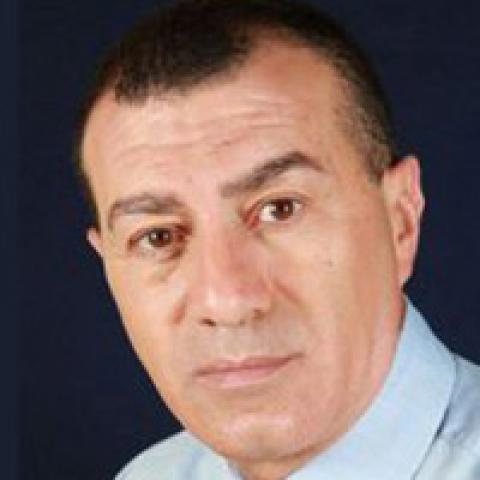

The Joint List of predominantly Arab parties has reportedly refused to sign a vote-sharing agreement with the Meretz Party, thereby undercutting efforts to close ranks between Israel’s centrist and left-wing parties. The failure of this move could cost the centrist-left bloc a seat or two in the Knesset and might very well determine who will become the next prime minister and the composition of the coalition.
According to the Israeli electoral method, vote-sharing agreements are designed to find a place for lost votes that are insufficient to form one Knesset seat. Had it not been for the refusal of the Joint List, the Zionist Camp — which recently signed a vote-sharing agreement with Meretz — would have perhaps signed an agreement with Yair Lapid’s Yesh Atid Party, while Meretz and the Joint List would have divvied up the surplus votes. Consequently, the centrist and left-wing votes would have "remained at home," namely within the bloc. But Balad and the representatives of the Islamic movement in the Joint List torpedoed the initiative, claiming that there should be no cooperation whatsoever with a Zionist movement.
To date, the unification between the Arab parties seemed to be the appropriate response to attempts by the right wing to delegitimize Arab Knesset members and pass legislation discriminating against Arab Israelis. Incitement from right-wing Israeli groups, chief among them Foreign Minister Avigdor Liberman’s Yisrael Beitenu Party — whose election slogan is “Ariel for Israel and Umm al-Fahm for Palestine” — has allegedly forced upon the Arab parties their recent unification. But despite the circumstances that prompted them to unite, there was a feeling within the Arab community that this move had a silver lining. Instead of thrusting Arab Israelis to Palestine, as some right-wing supporters hope for, they will become from now on an integral part of Israel’s political life.
Hadash and its leader, Ayman Odeh, who also heads the Joint List, have openly declared that their vision is to have full integration and cooperation with Jewish-Israeli society. The Joint List, which polls predict will be the third-largest party in the Knesset, is interested in being actively involved in the next Knesset and chairing some of its committees.


