



How death of Fethullah Gulen, Erdogan's nemesis, could impact US-Turkey ties
The death of the infamous US-based preacher will likely impact US-Turkey relations after years of extradition disputes.
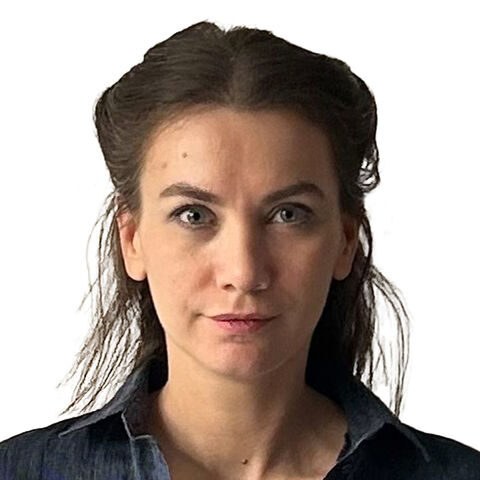

ANKARA — Fethullah Gulen, a US-based Sunni preacher who has been accused by Turkey of masterminding a 2016 coup attempt, has died, his relatives as well as Turkish officials confirmed on Monday.
Gulen’s paternal nephew, Ebuseleme Gulen, who is also based in the United States, confirmed his uncle’s death on X after a website affiliated with the preacher's movement announced Gulen's death at a US hospital on Sunday. He was 83.
Turkish Foreign Minister Hakan Fidan said on Monday that the Sunni cleric’s death was also confirmed by Turkish intelligence sources. “The leader of this dark organization has died,” Fidan said.
Gulen’s movement, a vast network with followers in many countries, was designated as a terrorist organization by Ankara in 2016. Gulen and his acolytes are accused of masterminding the 2016 coup attempt that killed hundreds of people, largely civilians who took to the streets to confront the putschists.
“The nation's determination in the fight against terrorism will continue,” Fidan added on Monday.
Ozgur Ozel, the leader of the main opposition Republican People's Party, echoed a similar line. “Everyone must remain vigilant against this insidious organization,” Ozel said. “We are talking about an armed terrorist organization that infiltrated the state’s institutions.”
Gulen’s Islamic movement was a one-time ally of Turkish President Recep Tayyip Erdogan and his ruling Justice and Development Party (AKP) against the country’s secularist establishment.
Before its fallout in the early 2010s, the alliance saw Gulenists strengthen their positions within state institutions, particularly in the police and judiciary, attaining senior positions.
Until the AKP’s reign, the Turkish army overthrew the country’s democratically elected governments almost every other decade. Claiming that there was a new coup plot underway, the de facto alliance between Gulen and the AKP targeted not only the country’s army but also activists, civil society members and journalists through multiple trials on thinly substantiated evidence. High-ranking officers of the Turkish military, journalists and other dissidents who simply raised their voices against these trials were imprisoned.
The first and major public rift in the alliance came in 2012 when a Turkish prosecutor summoned Fidan, then the head of Turkey’s Intelligence Organization, and other high-level intelligence officials for questioning, accusing them of terror ties over their roles in the peace talks with the Kurdistan Workers Party (PKK). The PKK, which has been waging an armed campaign against Turkey since 1984, is considered a terrorist organization by Ankara, Washington and a majority of European capitals.
The talks, which collapsed in 2015, had aimed to peacefully resolve the country’s 40-year-old conflict that has claimed nearly 50,000 lives. The Gulen movement is known to have been against the peace talks.
The conflict intensified after a series of corruption investigations was launched into Turkish President Recep Tayyip Erdogan and several other government officials in 2013.
The movement and its leader became Turkey's top enemy after the botched 2016 coup. Gulen denies any involvement, but a slew of evidence shows his close acolytes' roles.
The government unleashed a massive crackdown on Gulenists within the Turkish army and bureaucracy afterward, purging hundreds of thousands of people accused of being members of the group.
Ankara also raised the pressure on countries where Gulenists have a strong network of schools and charity organizations. Multiple extraordinary renditions from different countries by Turkish authorities drew strong criticism from international civic groups. Rights groups in Turkey also say that many individuals who were part of the movement solely for religious reasons and had no connection to or knowledge of the group’s illegal activities have been subjected to harsh prison sentences.
Many high-ranking members of the movement live in exile in Europe or the United States.
After the botched coup, Gulen’s extradition became a contentious issue for US-Turkey relations. Erdogan repeatedly raised it, but the US side refused to extradite the cleric, saying Turkey had not provided sufficient evidence of Gulen's involvement.
The Gulen issue “was the constant thorn in the relationship” between Turkey and the United States, Soner Cagaptay, director of the Turkish research program at the Washington Institute for Near East Policy, told Al-Monitor.
Angered by the late and weak responses from Western capitals, particularly Washington, while civilians were being killed by soldiers on the streets during the night of the coup attempt, Erdogan made his first foreign trip to Russia in August 2016.
The next year, Turkey and Russia signed a contract to purchase the Russian S-400 missile defense system. Washington ousted Turkey from the F-35 program in 2020 for its purchase of S-400s under the Countering America's Adversaries Through Sanctions Act, which Congress overwhelmingly passed in 2017 to deter significant defense transactions with Russia.
Gulen’s death could “eliminate this major thorn in the side of the relationship and allow it to move forward and perhaps flourish once again,” Cagaptay said, pointing out recent improvements in Ankara-Washington ties. “This comes at a serendipitous time in US-Turkey relations.”
In January the Biden administration greenlit the sale of new F-16s, which Ankara has been pursuing since its ouster from the F-35 program. The two capitals are also reportedly in talks for Turkey’s return to the F-35 program.
Gulen traveled to the United States in 1999 for medical reasons and never returned. That year, videos emerged of him calling on supporters during various sermons to secretly infiltrate the government’s important institutions, such as the judiciary. “It is considered premature to act until you draw all power and authority from constitutional institutions in Turkey into your own pocket,” he is heard saying in one video.
A prominent journalist who had covered those videos was discredited by a video that surfaced of him intimately engaging with a woman in an extramarital relationship in 2006. At the time, when the alliance between the AKP and the Gulen movement was strongly intact, a similar fate befell a series of opposition politicians.
Gulen, a trained imam born in Turkey’s eastern province of Erzurum in 1942, built an empire of educational institutions and charities around the world. He never married.
“I believe that Fethullah Gulen and his movement did the most harm to Turkey's democracy and in the most twisted fashion,” Cagaptay said, recalling how Gulen and his movement, including judges, prosecutors and journalists aligned with him, alleged that there was a coup plot by Turkey's "deep state" against the government.
“They used that allegation to wiretap, harass and intimidate anyone who wanted back then to keep a civil society space open,” he said.
“And in the most twisted fashion, less than a decade later, in 2016, the movement carried out its own failed coup attempt, causing the death of hundreds of Turkish civilians.”
This one's on us.
The story doesn't end here.
Our correspondents are already on the next chapter. Read everything they file, from $2/week.
See Offers