



New Mossad chief brings touch of Bond, lots of reality to the job
Yossi Cohen, the well-groomed new head of Mossad, has a challenging road ahead in adapting his agency to deal with the diverse and convoluted equations of potential threats to Israel.
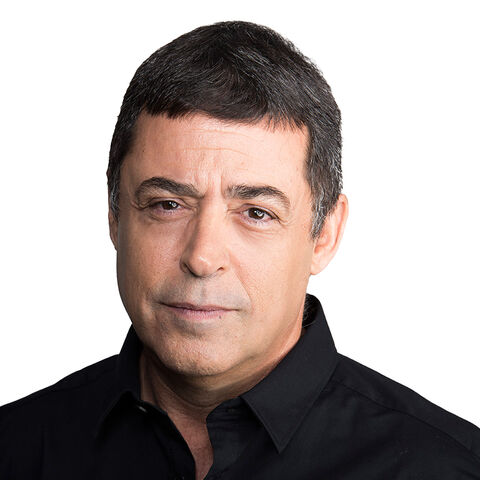

Today, after ratification of the world powers' nuclear agreement with Iran, the Iranian threat represents an even more formidable challenge. This was the essence of the statement by Yossi Cohen, Mossad's new chief, at the Jan. 6 changing-of-the-guard event to replace Tamir Pardo after the successful completion of his term. “Iran continues to call for Israel's destruction, it upgrades its military capabilities and deepens its grip in our area … via its tentacles of terror,” Cohen said. His words were interpreted as an attempt to resuscitate the mythological "Iranian threat” as his first bit of “payback” to his boss, Prime Minister Benjamin Netanyahu, who selected Cohen at the last minute over two other candidates for the job.
The main focus of Mossad's efforts in the coming years will be to penetrate Iran's military and nuclear establishments to keep close tabs on their implementation of the nuclear agreement. Netanyahu wants, more than anything else, to catch the United States red-faced over everything connected to the agreement, which he views as a historic mistake. Cohen, who for the past two years served as national security adviser, will have to invest a great deal of thought in adapting Israel's legendary spy agency to a new era of changed reality and threats far more diverse than Israel has ever known.
At the end of December, a senior Israel Defense Forces (IDF) officer told me the following on condition of anonymity. Exemplifying how dramatically things have changed, he said, “Until two years ago, the map you used to see here, opposite me, was the map of enemy countries surrounding Israel in two concentric circles, the first and second. Now look at the map you see. It is a map of splotches — large, medium and small spots. Each splotch is a separate terror organization, another tribe, another clan with a different ideology and different loyalties. Borders were erased and lines were crossed, creating a convoluted, chaotic, blurred battleground.”
The officer is a general in the IDF, which is supposed to provide a military response for the dozens of splotches scattered on the map. When trying to translate this into the reality Mossad faces, the picture worsens: Once upon a time, knowing what Egyptian President Anwar Sadat, Syrian President Hafez al-Assad and King Hussein of Jordan were thinking was enough for Israel's prime minister to sleep peacefully at night. By contrast, today's Mossad must supply tremendous amounts of intelligence from dozens of arenas and circles intertwined in a bizarre thicket of intersecting interests. The general noted, “Countries and nonstate entities viewed as your enemy from one perspective can simultaneously be your allies.”


