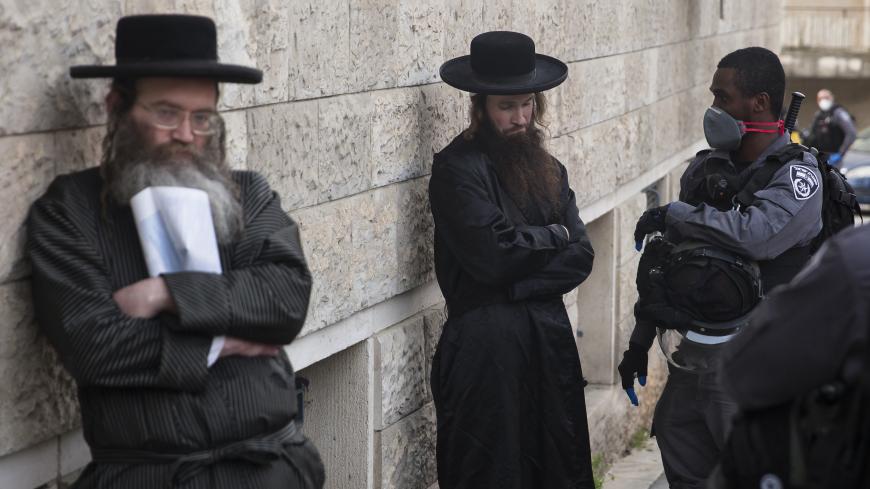
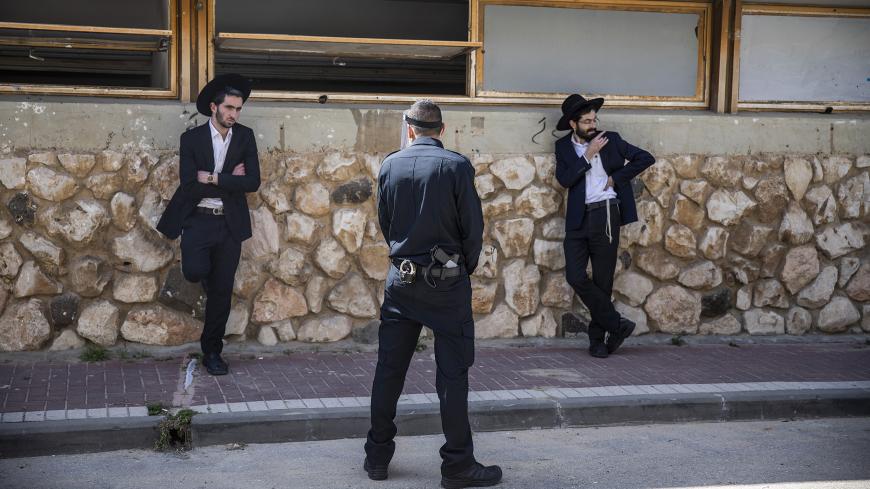
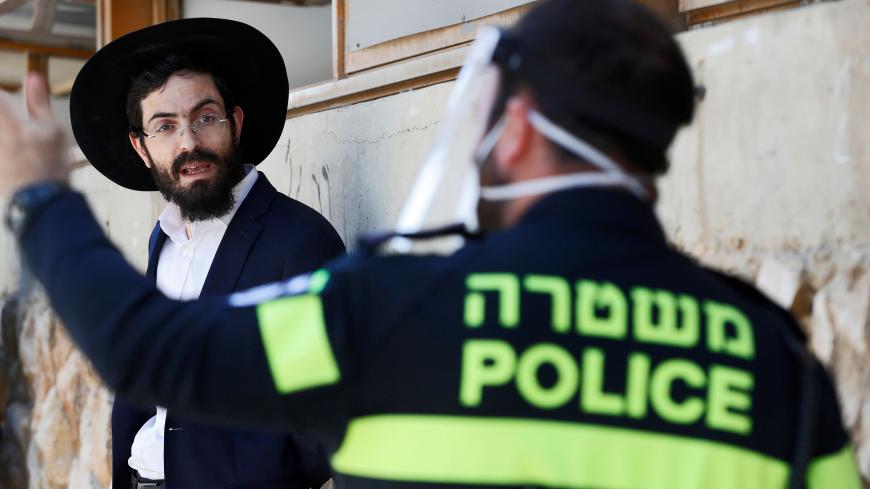
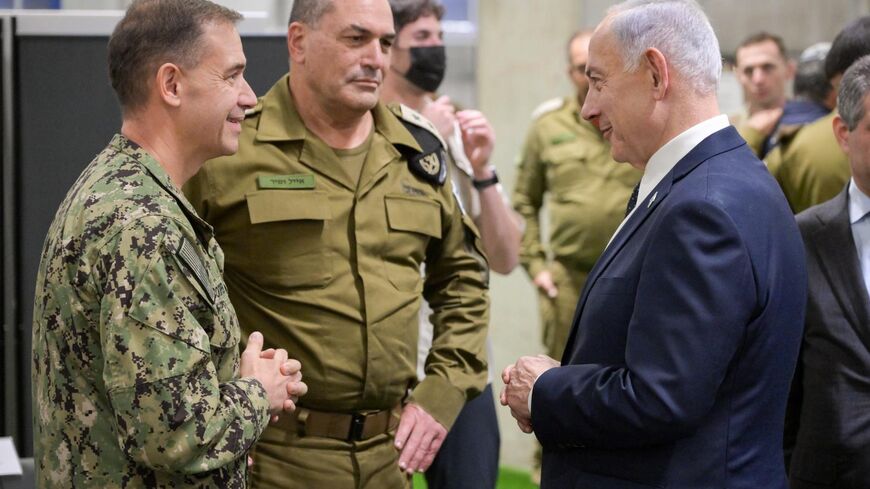
It is April 8, Wednesday morning, just hours before the Passover holiday begins. Under normal circumstances, thousands of people in the ultra-Orthodox town of Bnei Brak and the ultra-Orthodox neighborhoods of Jerusalem would gather in local parks and nearby fields to burn whatever leavened products they have left. It is in keeping with ancient Jewish law, which prohibits the eating of any grain-based products in which the dough has had a chance to rise for the entire week of Passover. On this Passover eve, however, military vehicles patrol the city and ultra-Orthodox neighborhoods instead. They are there to collect the hametz (“leavened products”) left by the residents at the entrances to their building. All around them, local residents applaud and heap praises on the troops. These soldiers will be taking the leavened products to be burned, under the guidance of an Israel Defense Forces (IDF) rabbi. In the years before the coronavirus pandemic, no one would have imagined scenes like this even in their wildest dreams.
“There is no way that Israel’s ultra-Orthodox community can go back to what it was before the coronavirus pandemic.” I’ve been hearing this bold assertion from ultra-Orthodox Jews of every type and stripe for the last few days. These include the most conservative groups, who prefer to isolate themselves from Israeli society, but also groups and individuals more involved in Israeli life. The most significant change revolves around their attitudes toward government institutions, with an emphasis on the IDF and its troops. This can be traced to the enormous sense of crisis, given the high percentage of ultra-Orthodox Jews infected with the virus compared with other sectors of Israeli society. The pandemic has challenged old attitudes and beliefs of this self-isolating society.
Many of its rabbis are to blame for this, too. At the beginning of the crisis, they instructed their followers to ignore Health Ministry guidelines and continue to worship in large groups. The best known of these rulings came from Rabbi Chaim Kanievsky, generally regarded as the greatest religious authority in the ultra-Orthodox world. He ruled that nothing should interfere with Torah study, even though this contradicted the explicit directives of the Ministry of Health, which ordered that all study in groups should be stopped, regardless of the forum.
Under normal circumstances, internal criticism of the rabbinic leadership is hardly ever heard in ultra-Orthodox society. This time was different. Not only was it heard but it was leaked, mainly by ultra-Orthodox journalists. So, for example, journalist Yisrael Frey had sharp words to say about Kanievsky and his family about that controversial ruling, but also about the fact that they are selling “indulgences.” For the price of a financial contribution to the rabbi’s yeshiva, people were promised health and healing, and granted an assurance of protection from infection. It wasn’t too long ago that such scathing attacks would have provoked an angry response from the ultra-Orthodox community. Today, the responses are largely supportive.
AL-MONITOR All-Access gives you unlimited access to all our journalism, the full Daily Briefing, exclusive interviews, premium newsletters, and live events — for less than $2/week.