



Iraqi political blocs struggle to meet deadline to replace outgoing PM
As the constitutional deadline arrives, Iraqi political parties seem unable to select a new prime minister.

The constitutional deadline for nominating a new prime minister arrived Dec. 15 with no consensus candidate in view, even though a spokesman for Iraqi President Barham Salih said Dec. 12 that the president was committed to coming up with a candidate within the constitutional time frame.
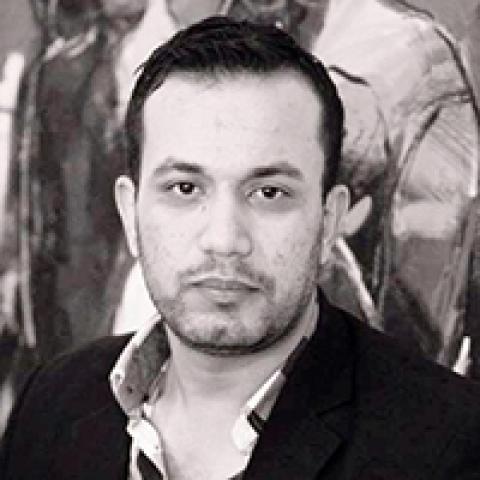
Former Human Rights Minister Mohammed Shia al-Sudani threw his hat in the ring Dec. 13, announcing on his Twitter account that he has resigned from the Islamic Dawa party to become a candidate for the premiership. Sudani has not been nominated by any bloc in the parliament, although he is believed to be backed by Fatah bloc, which is the political front of the Iran-backed Popular Mobilization Units and former Prime Minister Nouri al-Maliki’s State of Law coalition, which together could form the largest bloc in parliament. However, the president sent a request on Dec. 15 to the parliament, asking to determine the largest bloc, in order to nominate a candidate for the premiership position, which indicates that Fatah was not able to form the largest bloc and Sudani candidacy was not successful. In fact, one of the main criticism against the parliament and government formed after the 2018 election is that the whole process of forming the government had not followed the constitution guideline which obliged the parliament to determine the largest bloc officially, which did not happen.
Moreover, the protesters had rejected Sudani previously. His photo, among those of other five possible candidates, can be seen in Tahrir Square with a big red X across it, indicating that the protesters do not accept any of the names. The other names are Minister of Higher Education and Scientific Research Qusai al-Suhail, Basra Gov. Asaad al-Eidani, former Minister of Youth and Sports Abdul-Hussein Abtan, former Oil Minister Ibrahim Bahr al-Ulum and veteran politician Izzat al-Shahbandar.
The protesters had previously said that they want a new face without any affiliation with the current political class to lead the caretaker government and prepare for fair early elections, on the condition that the caretaker prime minister not run for office in the upcoming contest. Shiite cleric Muqtada al-Sadr, who has the largest parliamentary bloc with 54 seats, also has rejected Sudani. Sadr has said the protesters must nominate the new prime minister.


