



Can Hamas spin itself out of crisis?
Recent remarks by Hamas Gaza leader Yahya Sinwar about Iran assisting the movement to grow stronger are intended to sideline criticism within the Gaza Strip against it, and to pressure Israel into accepting a long-term cease-fire.
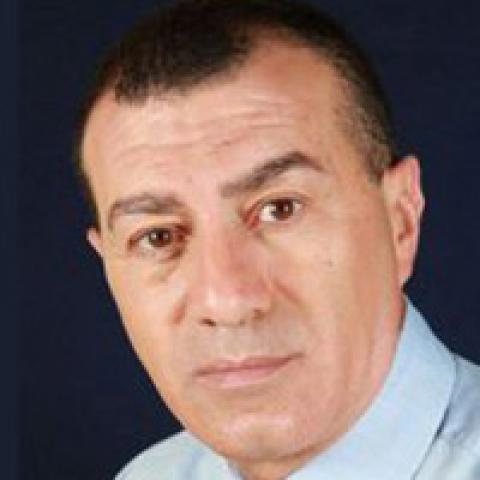

Yahya Sinwar, Hamas' leader in Gaza, recently gave interviews to Al Jazeera and Lebanon's Al-Mayadeen TV, which is close to Hezbollah, to boast about his movement’s achievements in the wake of the recent border fence demonstrations and the Great Return March. In the interviews, on May 16 and 21, respectively, Sinwar also threatened that if Hamas is forced into another round of fighting with Israel, its Izz ad-Din al-Qassam Brigades will have a few surprises in store for the “Zionist enemy.” To add substance to his bellicosity, Sinwar said that Iran had provided Hamas with weapons, large sums of money and advanced technologies, and that as a result, the movement had significantly improved its military capabilities. He boasted that the relationship between Hamas and Iran is closer today than it has ever been and that he is in daily contact with both Hezbollah and Tehran.
Sinwar's decision to disclose the close relationship with Iran at this particular point in time is surprising. First, Hamas wants to convince Egypt to expand its easing of the closure of Gaza. The movement’s leaders take pride in the fact that one of the most important results of the events along the border fence was the opening of the Rafah border crossing into Egypt during the holy month of Ramadan and perhaps beyond that. Sinwar’s statement that Iranian arms are flowing into Gaza — apparently through Egypt, since there is no other route — is exactly what the Egyptians do not care to hear right now from the Hamas leadership in Gaza, who are begging them for additional relief.
Second, the leaders of Hamas, chief among them Sinwar, have not given up on the possibility of reaching a reconciliation agreement with Palestinian President Mahmoud Abbas and Fatah. The head of the movement’s political bureau, Ismail Haniyeh, made reconciliation a top priority when on May 18 he declared that events along the border fence had, supposedly, been a great victory for the movement. Haniyeh announced that reconciliation with the Palestinian Authority (PA) is important to Hamas and that he is willing to work to achieve it. That said, talk about Iran and claims that the military wing of Hamas is stronger than ever are exactly what Abbas is afraid of, thus preventing him from moving forward with the reconciliation process.
A PA security source speaking on the condition of anonymity told Al-Monitor that Sinwar’s statements do not reflect the reality on the ground and that they were essentially made in response to internal Palestinian politics. That is, they were intended to downplay criticism of Hamas in Gaza for having sent civilians to the border fence to be wounded and killed instead of sending its military wing on missions to lift the closure. This is also why another senior member of Hamas, Salah Bardawil, was so quick to make the surprising announcement that 50 out of the 62 people killed along the fence were members of the organization. Bardawil’s statement conflicted with international coverage of an allegedly nonviolent civilian demonstration, which Israel met with a disproportionate response, but it managed to tone down some of the criticism of Hamas in Gaza.


