


Turkey turns up pressure over integration of Kurdish-led forces in Syria
Ankara is pressing for faster implementation of a deal to fold the Kurdish-led Syrian Democratic Forces into state institutions.
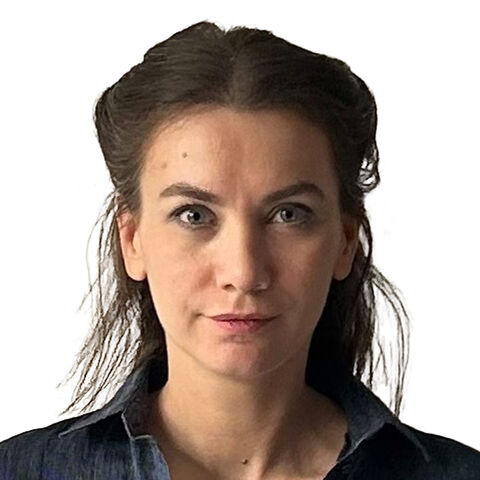

ANKARA — Turkish Foreign Minister Hakan Fidan met US envoy Tom Barrack on Wednesday as Ankara stepped up its Syria diplomacy amid concerns that the integration of the Kurdish-led Syrian Democratic Forces into Syrian state institutions is lagging.
What happened: Fidan met with Barrack, the US ambassador to Turkey and special presidential envoy for Syria and Iraq, in Ankara, the Turkish Foreign Ministry said.
Neither side disclosed what was discussed, but the meeting followed a visit to Ankara on Tuesday by Syrian Foreign Minister Asaad al-Shibani and Defense Minister Murhaf Abu Qasra. The pair met with Fidan and Turkish Defense Minister Yasar Guler on Tuesday, with Shibani also holding talks with Barrack.
The stepped-up Syria diplomacy comes amid Ankara’s concerns that progress on an integration deal between the SDF and Damascus is lagging, given that it views the Kurdish-led force as a threat to its national security. “Progress on the ground is falling short of expectations,” Turkey’s UN ambassador, Ahmet Yildiz, told the UN Security Council on Monday.
Fidan echoed that message at a joint press conference with Shibani on Tuesday, saying the integration process in northeastern Syria should be completed on the basis of “one state, one army.”
Background: Damascus and the SDF reached a US-brokered integration deal on Jan. 29 amid pressure from Ankara, which views the SDF as an extension of the Kurdistan Workers Party (PKK). The PKK fought Turkey for Kurdish self-rule for four decades before declaring a unilateral ceasefire in March 2025. Ankara, Washington and a majority of European capitals consider the group a terror outfit.
The integration deal foresees gradually bringing the SDF’s military and security forces under state control and folding civilian institutions of the Kurdish-led autonomous administration in northern Syria into the Syrian government. It would also allow the Kurdish-led police force to continue policing Kurdish-majority cities under the Syrian Interior Ministry.
Under the deal, roughly 6,000 former SDF fighters have so far joined four Syrian army brigades formed for integration, according to an October 2026 report by the EU Agency for Asylum. The brigades are based in ethnically mixed Hasakah, predominantly Kurdish Qamishli and Derik in northeastern Syria, and predominantly Kurdish Kobani on the Turkish border in northern Aleppo province.
Syrian interim President Ahmed al-Sharaa also named former SDF commander Mazloum Kobane as an adviser in August 2026. Senior Kurdish commander Sipan Hemo, meanwhile, became deputy defense minister for eastern Syria in March 2026.
Sticking points: Despite some progress, key questions remain over where former SDF fighters will serve, who will command them, and how Damascus will address Kurdish demands for political and language rights.
In a statement on Nov. 8, the Democratic Union Party (PYD), a Syrian Kurdish political party closely aligned with the SDF, reiterated its demands for constitutional guarantees for Kurdish rights, greater Kurdish representation in Syrian state institutions, and a decentralized system of government that would give local authorities more say in how the northeast is governed.
The PYD also seeks to have schools teach in Kurdish, beyond the three Kurdish-language lessons a week approved by Damascus.
While Syria’s interim constitution, which took effect in March 2025, guarantees cultural and linguistic rights for all Syrians, it fails to spell out specific protections for Kurdish rights.
Another sticking point is the future of the Women’s Protection Units (YPJ), a roughly 1,500-strong all-female Kurdish force that fought as part of the SDF.
YPJ spokesperson Roksan Mohammed told the Syrian Observatory for Human Rights on Nov. 7 that the group had reached an agreement to bring 800 fighters into two Interior Ministry battalions. The fate of hundreds of others remains unresolved.
Why it matters: The unresolved disputes, in turn, have fueled concern in Ankara that integration is falling short of its expectations. Ankara’s priority in the integration process is to ensure that former SDF fighters, including the YPJ, come under Damascus’ effective command.
“Integration must be genuine and go beyond changes in names and uniforms,” Yildiz told the Security Council.
For Turkey, the success of integration is key to the outcome of separate peace talks Ankara launched with the PKK in 2024.
The PKK announced in May 2025 that it would disarm and disband. In turn, the Turkish parliament passed a law in August introducing a conditional amnesty for people accused or convicted of establishing or leading the PKK, membership in the group, assisting it, spreading its propaganda, financing terrorism or committing other offenses as part of PKK activities.
Still, the law conditions the amnesty measures on the PKK and all affiliated organizations, including the SDF, ending their activities and dissolving their organizational structures, surrendering all weapons and ammunition under their control, and having Turkish security institutions formally verify that those conditions have been met.
An AL-MONITOR subscriber gifted you this article. Gifted by an AL-MONITOR subscriber.
A gift worth sharing.
This one's on us. Subscribe for unlimited access to everything we publish, plus gift articles for your inner circle. As low as $2/week. This one's on us. Get unlimited access, plus gift articles for your inner circle, from $2 a week.
Already a subscriber? Sign in