From Amaliqa to Houthis, here are main armed groups fighting in Yemen
The Saudi-backed government is supported by several armed groups with varied histories, while the Iran-backed Houthis are largely unified under one command.

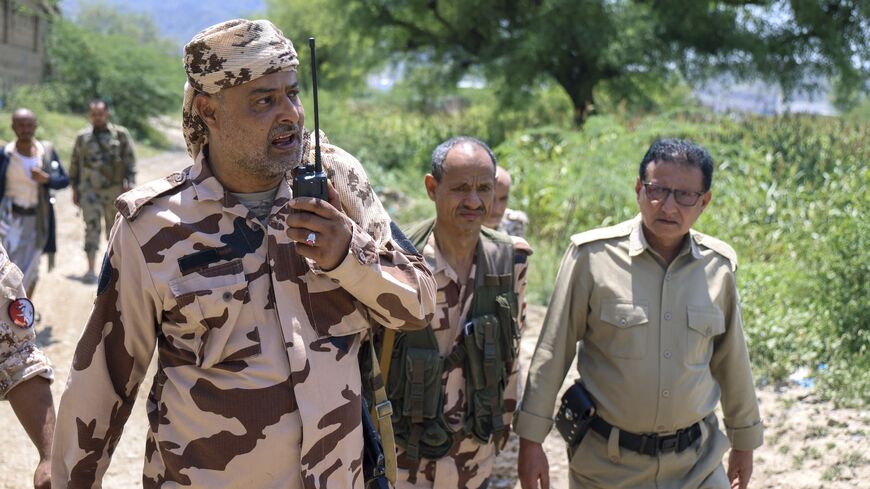
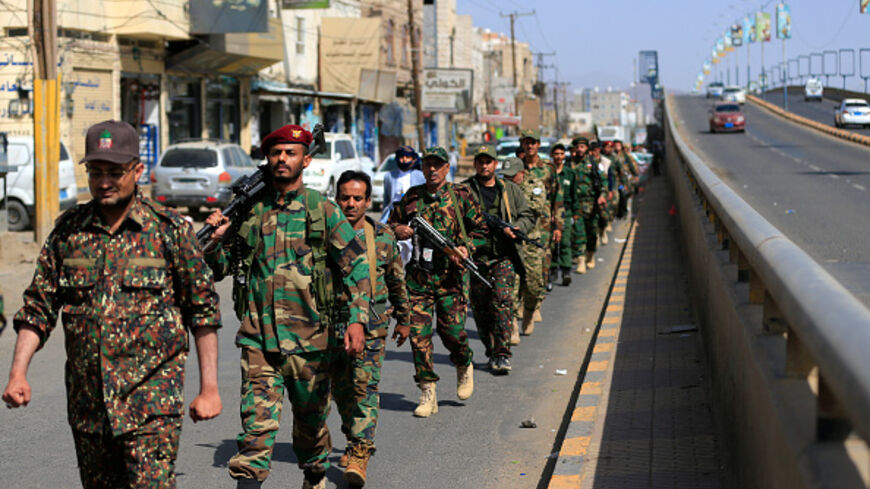
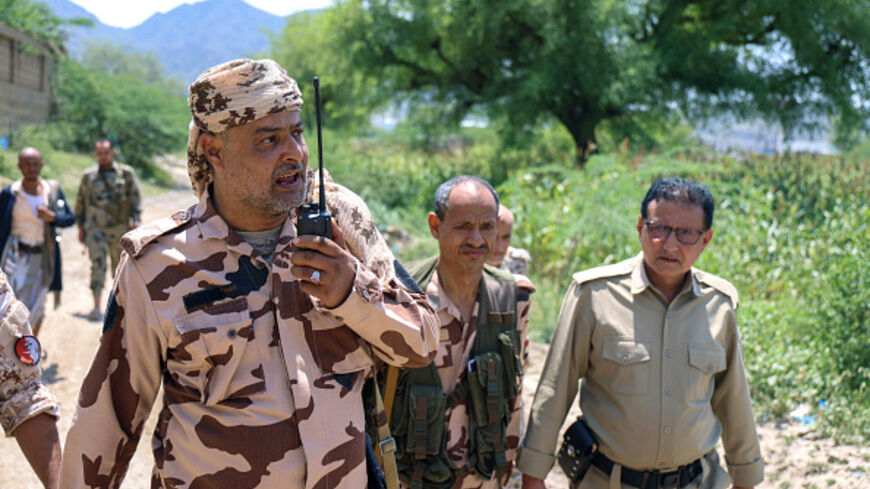
In its effort to roll back Houthi gains around the Red Sea coast, the Saudi-backed Yemeni government is drawing on support from southern groups, former affiliates of the United Arab Emirates, Islamists and others to regain control of the full country.
The government announced on Sunday a major offensive aimed at retaking areas the Houthis seized along the Red Sea coast last month as well as the capital Sanaa, and said on Monday that it had retaken the Red Sea port city of Mokha as well as the area surrounding the Bab el-Mandeb strait, though the Houthis denied they had lost territory.
The Houthis remain in control of most of western Yemen, including Red Sea coastal areas and the capital Sanaa, while government forces control the rest of the country. Fighting has been largely concentrated in the central Marib province and the southwestern Taiz province in recent weeks. The Associated Press reported on Monday that the Houthis are moving closer to encircling the government-held Taiz city.
The government coalition is primarily understood to be a Saudi-backed conglomeration of groups created by the Presidential Leadership Council, various southern-based actors, affiliates of the pre-civil war government and fighters who lack a formal designation.
National Shield Forces — The National Shield Forces were established in 2023 and report directly to Rashad Alimi, the head of the Yemeni Presidential Council that leads the government.
The forces are deployed throughout Yemen and remain heavily involved in the recent battles, taking part in this week’s government offensive on the Red Sea port city of Mokha, according to the Yemeni government.
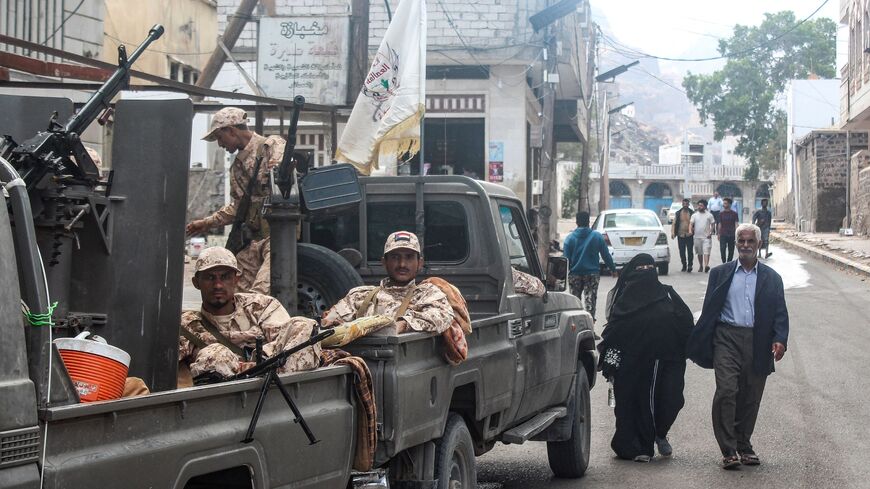
Southern Giants Brigades — The Southern Giants Brigades were formed in 2016 and were originally backed by the United Arab Emirates, but are now cooperating with the Saudi-backed government.
The Brigades, known in Arabic as "Alwiyat al-Amaliqa al-Janubia," reported this week that they are participating in battles in Dhubab north of the Bab el-Mandeb area, as well as the southwestern Taiz and Lahij provinces.
فيديو يوثق سيطرة قوات العمالقة الجنوبية، في مناطق تقدمها يوم أمس بمديرية ذوباب ، على مواقع وثكنات مليشيات الحوثي، وما خلفته المليشيات من عتاد عسكري وأسرى. pic.twitter.com/H90DHBOPkH
— المركز الإعلامي ل ألوية العمالقة الجنوبية (@alamalikah) October 6, 2026
Mohammed al-Basha, founder of the US-based risk advisory Basha Report, told Al-Monitor that the Southern Giants Brigades are the “most powerful” pro-government force in southern Yemen, operating from the central Marib province down to the coastal areas along the Gulf of Aden.
Yemen National Army — The Yemen National Army refers to members of the armed forces who remained loyal to the government after the Houthi takeover of Sanaa in 2014 and 2015. The Houthis assumed control of large swaths of the military when they seized the capital, and were at the time cooperating with former President Ali Abdullah Saleh, who was ousted in early 2012 following the Arab Spring protests but retained support within the military.
Basha said the Yemen National Army and the National Shield Forces are the most prominent government actors in northern Yemen.
Yemen Emergency Forces — The Yemen Emergency Forces were established in late 2025 by the government and operate along the border with Saudi Arabia.
National Resistance Forces — Led by Saleh’s nephew, Tareq Saleh, the National Resistance Forces lost significant territory to the Houthis when the Iran-backed group captured large swaths of Yemen’s Red Sea coast in September.
ضمن ما تقوم به من إسناد للجبهات غرب وجنوب تعز، دمرت المقاومة الوطنية طقمًا مسلحًا لمليشيا الحوثي الإرهابية، بصاروخ موجه، ما أسفر عن مصرع من كانوا على متنه.
— المقاومة الوطنية (@nrfyemen) October 3, 2026
وأفاد الإعلام العسكري للمقاومة الوطنية بأن الوحدات المشاركة من المقاومة الوطنية في إسناد القوات المسلحة والقبائل بجبهة… pic.twitter.com/x10qrqKWPJ
The group, founded in 2017, is currently “regrouping” east of the Bab el-Mandeb strait, Basha said, and has reported it is participating in battles in Taiz this week.
Southern separatists — Forces previously affiliated with the Southern Transitional Council (STC) remain active in Yemen, albeit on a smaller scale. The STC, which formed in 2017 and supports independence for south Yemen, suffered a major blow in December 2025 and January 2026 when government forces captured the territory it held.
A southern Yemeni source told Al-Monitor that the council’s forces "have gradually come under the command” of the PLC since then. STC loyalists are particularly present in the al-Dhale province, the source said.
The UAE supported the STC since its inception, but announced a withdrawal from Yemen in late December amid the Saudi-backed offensive to take back territory from the separatists.
Shabwa Defense Force — The force operates in the eponymous province in southern Yemen. The southern Yemeni news outlet South 24 reported that the group has been active in Harib, close to Marib, this week.
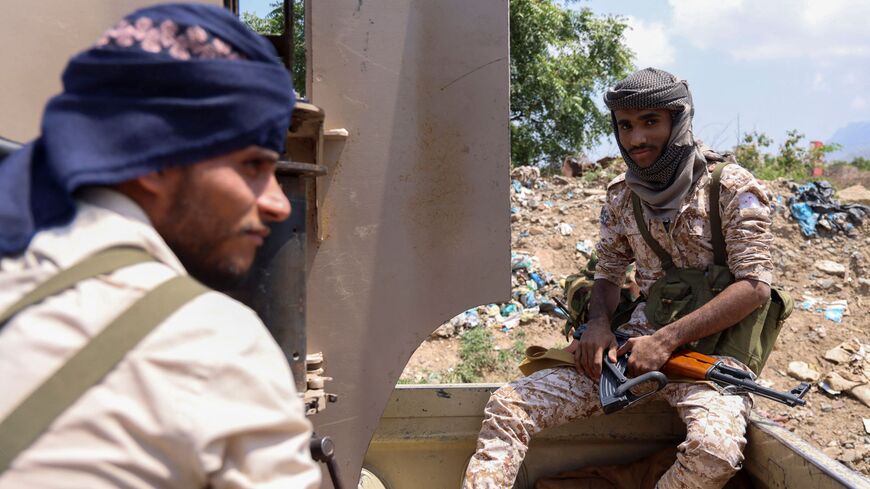
Unaffiliated groups — A number of Yemeni fighters describe themselves as the “popular resistance” and are not necessarily formal parts of any established armed group. The Yemeni military said on Monday that “popular resistance” fighters took part in the battle for Mokha on Monday.
The Washington-based Middle East Institute noted in a February report that a number of armed factions affiliated with tribes are part of the Saudi-backed government camp, including from the large Subaiha tribe.
The groups in the pro-government camp are not necessarily divided by ideology, and Basha said that Salafi Muslims are present in the Southern Giants Brigades, the National Shield Forces and the Yemen Emergency Forces.
“It’s a way to recruit fighters,” he said of the ideology.
Salafism is a conservative school of thought within Sunni Islam that seeks a return to the practices of early Muslims.
Yemen’s Islah Party, which is often linked to the Muslim Brotherhood Islamist movement, is influential within the Yemen National Army, said Basha, who described the party as “conservative” rather than a formal Brotherhood affiliate.
The total size of the government’s forces is not known, but Reuters reported last week that more than 100,000 troops could be mobilized for the offensive.
The Houthis — The Houthis are also known as Ansar Allah, though they call themselves the "Yemeni armed forces." In comparison to the government camp, the Houthis have a relatively singular command structure under leader Abdul-Malik al-Houthi, though Basha noted some divisions have a degree of autonomy regarding procurement and deployments. They took over the capital Sanaa in 2014.
The Houthis have around 350,000 troops, according to a 2024 United Nations estimate.
Al-Qaeda in the Arabian Peninsula (AQAP) — is the most prominent al-Qaeda affiliate at present, and is primarily based in Yemen. The group has only about 2,000 fighters in Yemen, however, mostly between the Abyan and Shabwa provinces. AQAP is taking a “wait and see” approach and regrouping amid the conflict in the country, the conflict monitor ACLED said in a September report.
The Islamic State does not have a strong presence in Yemen at present, and a 2024 UN Security Council report noted it only has about 150 fighters in the country.
An AL-MONITOR subscriber gifted you this article. Gifted by an AL-MONITOR subscriber.
A gift worth sharing.
This one's on us. Subscribe for unlimited access to everything we publish, plus gift articles for your inner circle. As low as $2/week. This one's on us. Get unlimited access, plus gift articles for your inner circle, from $2 a week.
See OffersAlready a subscriber? Sign in