As pro-Palestinian candidates gain ground, will AIPAC's influence wane?
The American Israel Public Affairs Committee’s influence has weakened in the Democratic Party and may also be at risk among Republicans.


The influence of the American Israel Public Affairs Committee on US politics has been significantly diminished as pro-Palestinian progressives win key Democratic primary elections, experts told Al-Monitor, though the pro-Israel group still has the ability to impact races, especially on the Republican side.
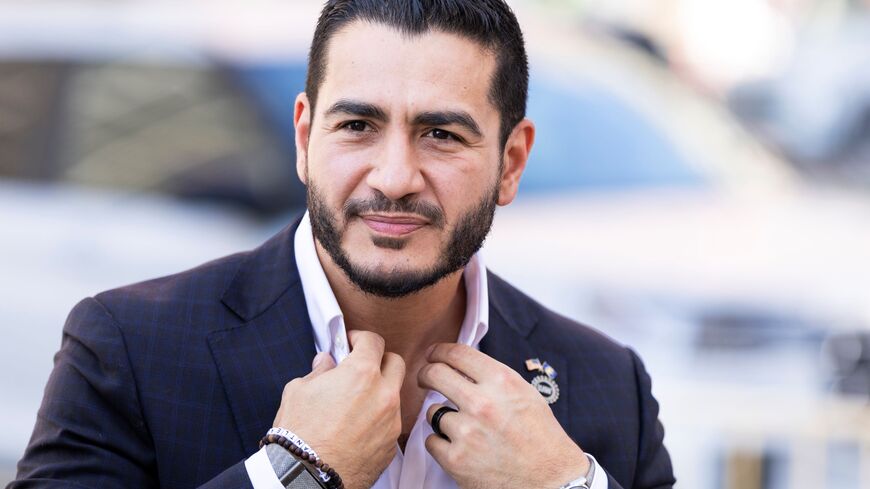
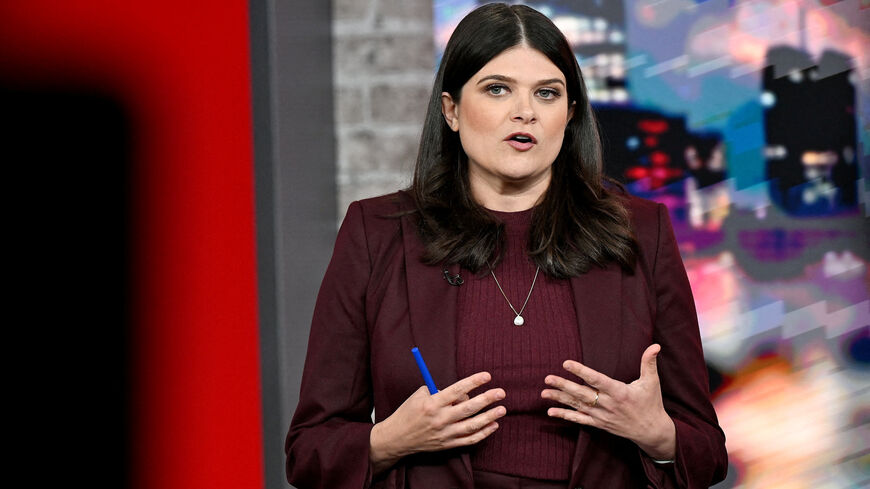
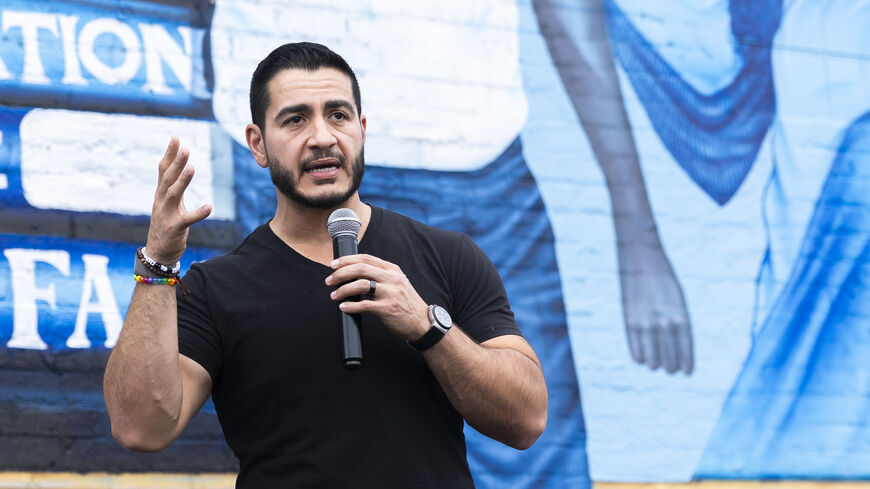
Public health professional Abdul El-Sayed became the latest critic of Israel to win a major primary when he defeated AIPAC-backed Rep. Haley Stevens in the Democratic Senate primary in Michigan on Tuesday. El-Sayed has called for ending all US aid to Israel and criticized AIPAC on the campaign trail, saying at a July debate, “Our foreign policy has been handed to us by the likes of the state of Israel and AIPAC.”
El-Sayed, the son of Egyptian immigrants who is seeking to become the first Muslim US senator, is one of several pro-Palestinian progressive candidates to win Democratic congressional primaries this cycle. But AIPAC has notched victories of its own, backing candidates who prevailed in both Democratic and Republican primaries, including Democratic Rep. Wesley Bell in Missouri on Tuesday.
'Paying way more for much less'
Matt Duss, the executive vice president of the Center for International Policy in Washington and former foreign policy adviser to Sen. Bernie Sanders (I-Vt.), said that the results in Michigan demonstrate AIPAC’s waning ability to sway elections.
“It hasn't completely diminished, but it has been significantly diminished,” Duss told Al-Monitor. “What we saw in El-Sayed’s victory in Michigan is that it’s a minus now for candidates who accept that support.”
El-Sayed criticized Stevens throughout the campaign over the AIPAC support. “If you want your politics dictated to you by AIPAC or Chuck Schumer, then I'm not your guy,” he said at a July debate, referring to the Democratic minority leader in the Senate.
Duss said of AIPAC’s expenditures, “They are paying way, way more for much, much less, and I think that's that's going to continue.”
The Associated Press reported that AIPAC spent around $30 million boosting Stevens, who ended up losing the election to El-Sayed by only around 15,000 votes. Around $80 million was reportedly spent on the race as a whole, making it one of the most expensive in the country, according to CBS.
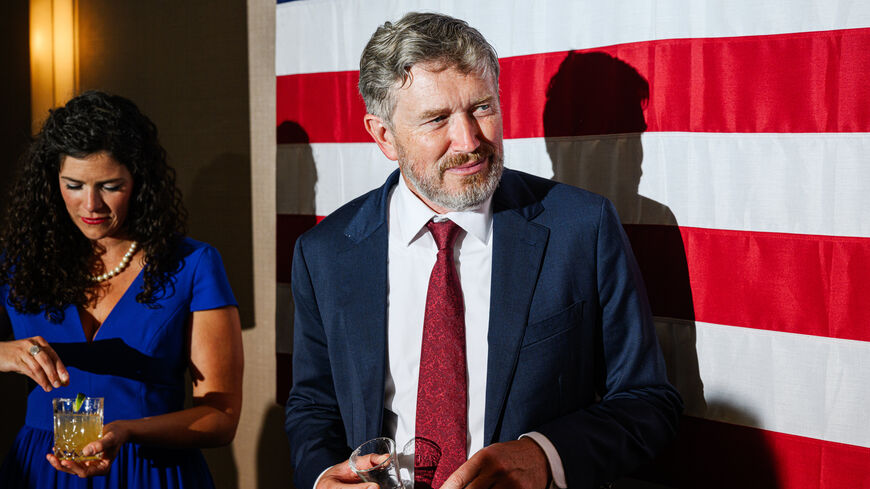
Duss said that an organization that “can call on as much money and resources as AIPAC” will still retain relevance in US politics. He called the organization “basically a Republican group,” pointing to its expected support of El-Sayed’s opponent, former Republican Rep. Mike Rogers, in the general election.
The New York Times reported on Wednesday that AIPAC has been urged by some major backers to support Rogers. AIPAC has supported both Republican and Democratic candidates.
Duss said there is “still considerable support for Israel and AIPAC’s agenda on the Republican side,” but pointed to polls that indicate such support is declining among younger Republicans.
A July poll from the Pew Research Center found that just 16% of Democrats and 51% of Republicans had a positive view of the Israeli government. In 2022, the figures were 35% and 65%, respectively. A number of key figures in the conservative movement have become virulent critics of Israel in recent years, most notably former Fox News host Tucker Carlson.
AIPAC successfully backed Ed Gallrein in the Republican primary for Kentucky’s 4th Congressional District in May against Rep. Thomas Massie, a libertarian who opposed all aid to Israel.
Dov Waxman, the Israel studies chair at the University of California, Los Angeles, acknowledged the erosion of AIPAC’s influence among Democrats but noted that it could provide an opportunity for more liberal pro-Israel groups to gain ground.
“Its brand of kind of uncritical, unconditional support for Israel is something that is now unpopular among Democratic voters,” Waxman told Al-Monitor. “That doesn't necessarily extend to other pro-Israel groups. If you take J Street, I don't see a decline as of yet.”
J Street defines itself as “pro-Israel, pro-peace” and supports a two-state solution while often criticizing the government of Prime Minister Benjamin Netanyahu. The lobbying group said in 2024 that it backs 60% of Democrats in the Senate and House.
Waxman said the wars in Gaza and with Iran have been “particularly detrimental to AIPAC,” adding that relative peace in the region could allow the group to regain some ground down the line. One risk of the growing criticism of AIPAC among Democrats is “alienating Jewish voters,” including those who may not support the group, he said.
“There's a concern about whether the very heavy focus on AIPAC could bring with it a kind of invoking of various anti-Semitic ideas or stirring of anti-Semitic sentiment,” he said, referencing rising antisemitism in the US. The Anti-Defamation League recorded 6,274 antisemitic acts throughout the country in 2025, the third most since the organization began its work in 1979.
Foreign policy ramifications?
Waxman said US support for Israel in its current form is unlikely to continue, given the changes in domestic politics.
“The continuation of US military aid to Israel is endangered,” he said. "I don't think we're going to get to another kind of multi-billion-dollar 10-year memorandum of understanding when the current one expires.”
In 2016, President Barack Obama signed an MoU with Israel to provide the country with $3.3 billion annually in security assistance from fiscal year 2019 through 2028.
Waxman added that though recent election results indicate there will be more criticism from Congress over US support for Israel, the exact policy changes will “depend upon who's going to be in the White House” after President Donald Trump’s term ends in 2029.
The list of predicted candidates for the Democratic presidential nomination in 2028 includes California Governor Gavin Newsom and New York Rep. Alexandria Ocasio-Cortez, both of whom are critical of US support to Israel. Potential candidates on the Republican side include Vice President JD Vance, who has himself voiced criticism of Israel, and Secretary of State Marco Rubio, who adheres to more traditional Republican foreign policy issues.
Duss said that Democrats retaking control of the House and Senate in November would result in a lot more lawmakers voicing their opposition to “unconditional support” of Israel.