What Zaidi's Washington visit means for US investment in Iraq
Iraq could greatly benefit from US investment in gas capture, which could help reduce the country's dependence on neighboring Iran.


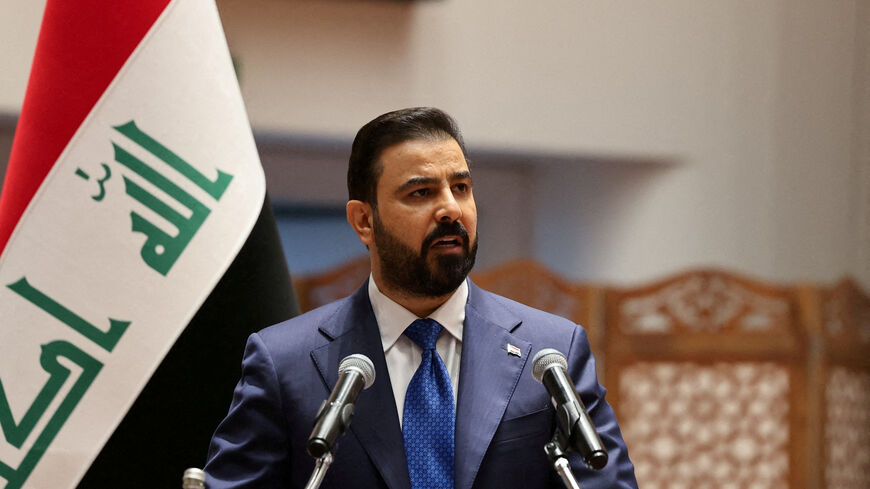
Prime Minister Ali al-Zaidi wrapped up his first official visit to Washington on Friday with a flurry of energy agreements and talks with potential investors, pitching Iraq as a destination for US capital as the Trump administration seeks to deepen ties with Baghdad and reduce Iraq's dependence on Iran.
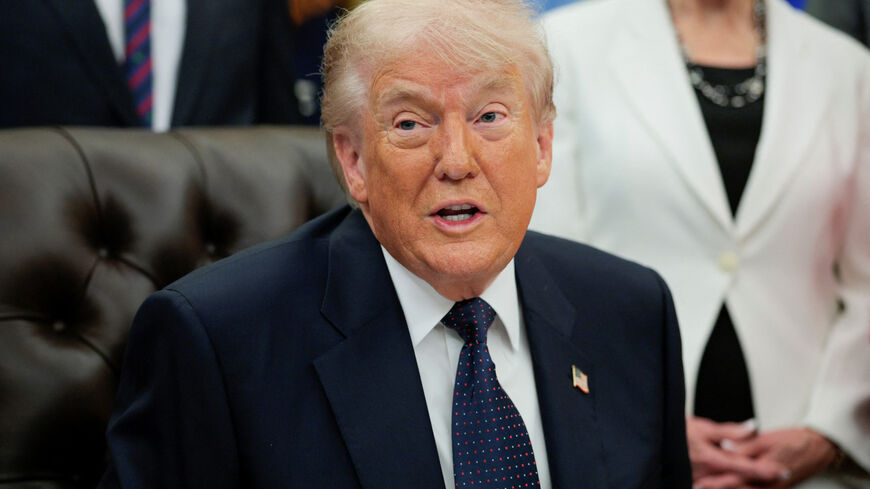
Zaidi met with President Donald Trump at the White House on Tuesday and members of Congress on Capitol Hill on Wednesday before traveling to Houston, where he held talks Thursday with executives from Halliburton, Shell, Baker Hughes and ExxonMobil, among others. On Friday, he participated in a forum hosted by the US Chamber of Commerce and will depart for Baghdad on Saturday.
The visit has already produced tangible results. ConocoPhillips announced on Friday that it had agreed to acquire a 42% stake in the BP Energy Company of Kirkuk Limited as part of a project to develop oil fields in northern Iraq. Bloomberg reported on Thursday that Chevron also expects to sign agreements with Baghdad to invest in oil fields and pipeline infrastructure that would allow Iraqi crude exports to bypass the Strait of Hormuz.
Whereas previous meetings between American and Iraqi leaders since the 2003 US-led invasion centered largely on security cooperation, Zaidi has framed his trip as an economic mission. In a July 13 post on X, Zaidi's office said the visit is aimed at strengthening economic US-Iraqi ties, attracting investment and expanding the role of US companies in infrastructure projects.
In a separate post on X the same day, Zaidi said Iraq is seeking greater cooperation with the United States in energy, finance, infrastructure, technology and the digital economy.
.@POTUS meets with Iraqi Prime Minister Ali al-Zaidi in the Oval Office: "We have a tremendous chemistry together... he won an election that a lot of people didn't anticipate... it was very important to me to have somebody get in there that can do the job and do it well." pic.twitter.com/nBSrbIVd8T
— Rapid Response 47 (@RapidResponse47) July 14, 2026
Trade in goods between the United States and Iraq totaled only $7.9 billion in 2025, according to the Office of the US Trade Representative. US exports to Iraq fell that year by 0.5%, to $1.7 billion, while Iraqi exports to the United States declined 16.8%, to $6.3 billion. By comparison, the Chinese Foreign Ministry reported $54.2 billion in bilateral trade with Iraq in 2024.
China is Iraq’s largest trading partner, but US companies, including Chevron and ExxonMobil, maintain a presence in Iraq's energy sector.
Energy focus
David Schenker, a senior fellow at the Washington Institute for Near East Policy, told Al-Monitor that Zaidi is primarily interested in attracting strategic US investment to expand Iraq’s oil production capacity.
“Energy is critical because the Iraqi oil sector is antiquated,” said Schenker, a former assistant secretary of state for Near Eastern Affairs. “The state is running significant budget deficits and wants to increase production.”
Zaidi told Sky News in June that he wants to increase oil production to 7 million barrels per day within the next three years, up from the current capacity of around 4.9 million bpd. Iraq's actual production has fallen considerably this year due to disruptions in the Strait of Hormuz — a major transit point for Iraqi oil exports — plunging 61%, from 4.2 million bpd in February to 1.6 million bpd in March, after the start of the Iran war. Production has since recovered somewhat, reaching 1.97 million bpd in June, according to OPEC statistics.
Oil accounts for the vast majority of Iraqi exports and generates around 90% of the more than $150 billion federal budget.
Schenker said Zaidi is also seeking US investment to help curb chronic gas flaring.
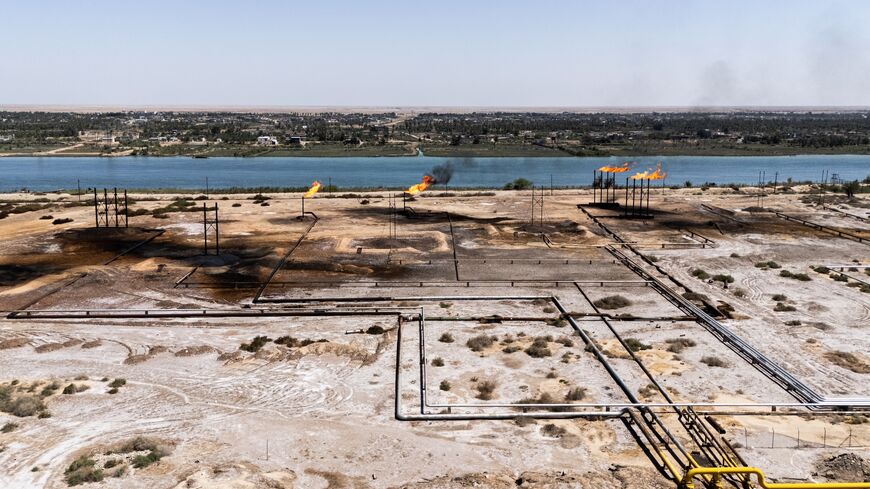
Despite holding some of the world's largest proven natural gas reserves — estimated at 131 trillion cubic feet in 2023 — Iraq continues to flare much of the gas produced alongside oil extraction due to inadequate processing and transport infrastructure, according to the US Energy Information Administration. According to World Bank data, Iraq ranked the third highest among countries flaring gas between 2021 and 2025, behind only Russia and Iran.
Unable to fully utilize its own gas resources, Iraq depends on Iran for about one-third of its fuel and electricity needs. In March 2025, the Trump administration ended a waiver in place since 2018 that had allowed Baghdad to import Iranian electricity. As a result, Iraqis experience regular power outages, particularly during the summer months, due to fuel shortages as well as to mismanagement and war-related damage to the electricity grid.
Tamer Badawi, an associate fellow at the London-based Royal United Services Institute, said increasing oil production is “the only way Iraq can continue to pay salaries,” noting that US investment could facilitate additional exploration and extraction from existing fields while also advancing efforts to reduce gas flaring.
“Apart from the economic benefits, bringing [in US companies] is about buying protection and making Trump happy. This is the other part of bringing them to Iraq,” Badawi told Al-Monitor.
Security, corruption challenges
The United States, a major security partner of Iraq, maintains some 2,000 troops in the country as part of the global coalition against the Islamic State, or ISIS. The US military provided a significant amount of air support to its Iraqi counterparts in operations against the extremist group beginning in 2014, when the group swept through northern and western Iraq. US support continued after the territorial defeat of ISIS in 2017, but under a 2024 drawdown agreement, these forces are scheduled to depart in September.
Concerns about the continued presence of Iran-backed militias remain the biggest obstacle to attracting greater US investment, according to Schenker.
“In general, it’s difficult to do business in Iraq,” Schenker said. “The state is not modernized, but security is probably the main concern.”
Zaidi pledged to bring all weapons under state control after taking office in May. So far, three groups — Asaib Ahl al-Haq, Kataib Imam Ali and Saraya al-Salam — have pledged to turn over their weapons and integrate into the state security forces, a process that remains ongoing. Others, including the heavily Iran-backed Kataib Hezbollah, have not agreed to Zaidi's demands.
Iran-backed militias have carried out dozens of attacks inside Iraq during the recent US-Israel-Iran conflict, including strikes against energy facilities as well as US forces. The Khor Mor gas field in the Kurdistan Region was also hit in March.
Schenker described the disarmament process as still being in the “preliminary stages.”
Corruption also continues to deter foreign investors. Last month, S&P Global Ratings assessed that "high levels of perceived corruption also hamper political and economic development."
In June, Zaidi launched a major campaign targeting government corruption that has resulted in dozens of arrests. Iraqi authorities said on Monday that more than $52,000 and 820 pounds of gold had been seized as part of a corruption case involving Adnan al-Jumaili, a senior Oil Ministry official arrested in May and accused of siphoning funds from oil refineries.
Badawi said the anti-corruption campaign is “affecting specific political networks,” largely opponents of former Prime Minister Nouri al-Maliki, a leading figure in Iraq’s Shiite-led Coordination Framework. The framework, which constitutes the largest bloc in parliament, nominated Zaidi to become prime minister in May, after months of disagreement over Maliki, the original nominee, who the Trump administration opposed.
“The question is how long the campaign will continue and whether it will target everyone,” said Badawi, referring to figures other than Maliki opponents.
US interests
Schenker said the Trump administration sees increased American investment in Iraq as a way to reduce Iran's influence in the country.
“The goal is to end Iranian domination of the state,” he said. “If you tie Iraq closer to the West and Washington and facilitate energy independence, then the theory is that this will help Iraq wean itself off Iran.”
Schenker added that expanding Iraq's gas capture capabilities is central to that effort. “Investment in gas capture is something Iran opposes because it does not want an independent Iraq,” he said.