Saudi-UAE payment blocks could imperil billions in trade: What to know
Delayed bank transfers from Saudi Arabia to accounts in the United Arab Emirates could suggest the rivalry between the region's largest economies is entering a new financial phase.


As the US-Iran conflict continues to squeeze oil and gas flows through the Strait of Hormuz, another simmering Gulf rivalry could soon snarl regional trade even further.
On July 7, news surfaced that bank transfers from Saudi Arabia to accounts in the United Arab Emirates had been delayed, blocked or returned without explanation, per reports from Bloomberg and the Financial Times that cited unnamed company executives.
While the scale of the issue remains unclear — and Saudi Arabia's central bank has said there are no restrictions targeting specific countries — the unusual payment obstacles raise fresh questions about whether the region's largest economies are entering a more disruptive phase of a rift that will increasingly spill into commercial arteries.
The incidents emerge after months of worsening tensions between the two Gulf powers, which have clashed over increasingly divergent geopolitical priorities in Yemen, Sudan and elsewhere. Amid growing Saudi-UAE frictions, these financial disruptions could be important, though it’s hard to know how extensive and long-lasting they will be, according to Tim Callen, a visiting fellow at the Arab Gulf States Institute and former International Monetary Fund mission chief for Saudi Arabia.
“If there is uncertainty and delay in payments, it makes it much harder to do business and ultimately this is going to reduce trade flows between the two countries,” Callen told Al-Monitor.
Even if limited in scope, the reported payment problems chip away at the predictability that has long underpinned commerce between these oil-rich Gulf states. Bilateral trade has swelled to roughly $40 billion in recent years, the bulk of it Emirati exports to Saudi Arabia.
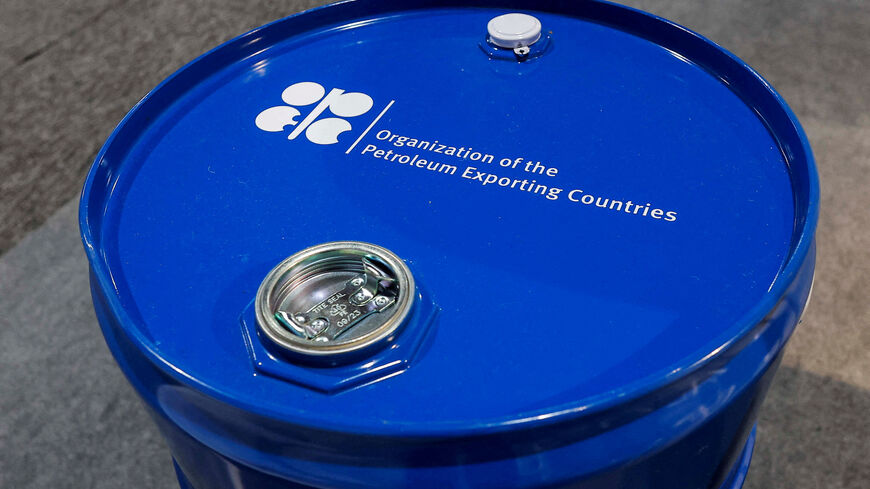
The timing is hard to miss. The payment issues began emerging in mid-May, according to the Financial Times, just days after the UAE formally departed from the Organization of the Petroleum Exporting Countries, dealing a blow to the Saudi-led organization at a moment of crisis among Gulf energy exporters.
Rivalry evolves
Economic competition is hardly new between Saudi Arabia and the UAE, which were close allies for decades before geopolitical tensions surfaced in recent years. Under Crown Prince Mohammed bin Salman, the kingdom has sought to transform itself into the Middle East's leading investment and business hub through Vision 2030, placing it in direct competition with the UAE, where Dubai has long served as the region's premier commercial gateway.
As Callen notes, growing friction has been inevitable because Saudi Arabia is expanding into many sectors that have long anchored the UAE's economy, including financial services, logistics, tourism, aviation and entertainment. “The region tries to portray competition between them as good, but in reality there is a limited pie to divide up and now Saudi wants a larger piece,” he said.
Perhaps the clearest example of this contest is Saudi Arabia's Regional Headquarters Program, which required multinational companies to establish a regional base in the country by 2024 in order to be eligible to access lucrative government contracts.
Hundreds of companies have established regional offices in Riyadh in response, most recently Deutsche Bank, which announced a regional headquarters license on July 8. Still, Emirati hubs haven’t lost their global appeal and Saudi Arabia has been scaling back spending on megaprojects since last year amid growing budget pressures.
New pressure points?
If payment disruptions persist, they would represent a slightly different tactic than the regional headquarters strategy. Rather than simply pushing companies to relocate top executives to the Saudi capital, blocking bank transfers could hinder the ability of firms already operating across both markets to conduct routine business.
For instance, an executive with a Dubai-based healthcare firm told the Financial Times that three payments from a Saudi client had been blocked and returned by their Saudi banks since mid-May. The executive said the funds were “typically held for about a week with no query raised to sender or beneficiary" before being sent back.
Some companies have rerouted payments through other jurisdictions, including Bahrain, that appear unaffected or turned to more expensive alternatives simply to complete transactions, including PayPal, per the reports by Bloomberg and the Financial Times.
Industry watchers caution that companies don’t need to panic as a result of this development, but it is a potential challenge to the regional business model many firms have used for years.
“I think companies will continue to be able to do business in both markets and should continue to do business in both markets, but I think they will need to be careful when making big strategic announcements in either market that could signal to either country that they're choosing or prioritizing the other,” a Gulf business strategist told Al-Monitor on condition of anonymity. That includes exercising caution in strategic sectors like artificial intelligence and data centers.
Meanwhile, competition has also been broadening across sectors. Aviation is an emerging battleground to watch, as Callen points to Riyadh Air, Saudi Arabia's new national carrier that began commercial flights in June. The long-haul airline is positioned to compete directly with Emirates and Etihad Airways as Saudi Arabia seeks to attract more passengers flying through the kingdom rather than Dubai.
Risk factors
Saudi Arabia and the UAE remain among each other's most important economic partners despite their growing rift, which could imperil businesses on both sides of the border.
The UAE is the biggest destination for Saudi Arabia’s non-oil exports and the second-largest source of its imports after China. Meanwhile, Saudi exports to UAE largely reflect re-exports and have grown strongly as the kingdom has developed its logistics sector. "Blocked payments could affect both sides of the bilateral trade here," Callen said.
A range of industries could be impacted. Gold, food and re-exported products such as consumer electronics are among the top Emirati exports to Saudi Arabia, while petroleum oils, food products, clothes and mineral and petrochemical products head the other way. Investment ties also run deep, with billions of dollars flowing in both directions.
Cross-border payment disruptions may prove to be a short-lived banking issue, but they have emerged as the stakes are getting higher after the UAE’s OPEC exit. For years, Abu Dhabi hinted it could leave the cartel as it clashed with Saudi Arabia over production policy before finally following through. Now freed from production quotas, the UAE can raise output as producers compete for market share in the aftermath of the Iran conflict, potentially creating more friction with Saudi Arabia.
In the past, Riyadh has raised the prospect of punitive measures: In 2023, the Wall Street Journal reported that the crown prince threatened to take steps similar to the diplomatic blockade used against Qatar in 2017 if the UAE didn’t cooperate amid growing disagreements over the Yemen conflict and OPEC production limits.
A similar blockade directed at the UAE would be a severe escalation, but both Riyadh and Abu Dhabi have strong incentives to avoid such a scenario, which would wreak havoc in a region grappling with fallout from the US-Israel-Iran war.
The UAE’s OPEC departure, however, has inevitably raised questions about where this simmering rivalry could head next. Blocked payments could just simply be another warning shot — or a sign that economic competition is entering a new phase that could reshape regional trade.