Analysis

On first foreign trip, Iraqi PM Zaidi woos Trump but Iran casts long shadow

Iraq's new prime minister is in Washington promising business deals and closer ties with the United States, but convincing the Trump administration he can rein in Iran-backed militias may prove his toughest challenge.

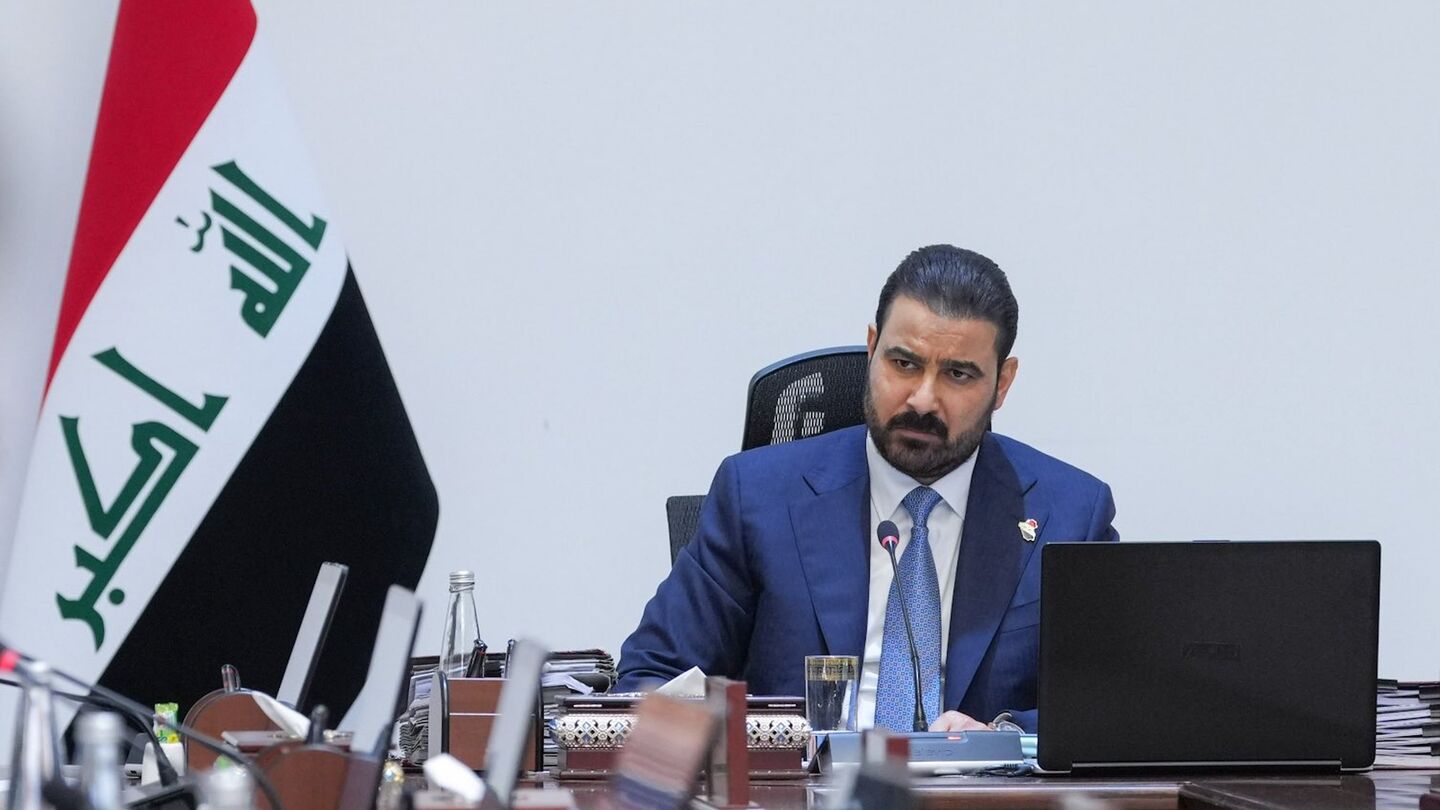
Iraqi Prime Minister Ali al-Zaidi at a Council of Ministers meeting in Baghdad on July 11, 2026.
Iraqi Prime Minister Ali al-Zaidi attends a Council of Ministers meeting in Baghdad on July 11, 2026. — Iraqi Prime Minister's Office

Iraq’s new prime minister, Ali al-Zaidi, is due to meet with President Donald Trump in Washington on Tuesday, marking his first official trip abroad in a concerted bid to recalibrate relations with the United States.

Zaidi, a former entrepreneur, is expected to announce a host of deals, many of them linked to energy, as part of a business-first agenda meant to diversify US-Iraqi ties beyond their primarily security-driven focus, administration sources speaking on background told Al-Monitor. Syrian Foreign Minister Asaad al-Shibani was expected to be present for the announcement of one of the most substantial agreements — to restore and revive a pipeline running from the oil fields of Iraq’s Kirkuk province to the Syrian port of Baniyas. However, the sources confirmed to Al-Monitor that he had canceled the trip. They declined to elaborate.

Another Syrian official may participate in the signing of what the sources described as a declaration of intent rather than an actual contract for the Kirkuk-Baniyas pipeline. A consortium including Chevron, Capital TI and Qatar’s UCC won Iraqi approval last week to carry out a technical and feasibility study for the pipeline.

Zaidi arrived in Washington on Monday morning and is set to meet later this week with Secretary of State Marco Rubio, Defense Secretary Pete Hegseth and other officials before traveling to Houston for meetings with energy sector executives, sources told Al-Monitor.

Defanging militias, decoupling from Iran

Security, however, remains the Trump administration’s top priority with Baghdad, above all the disarming and disbanding of Iran-backed militias. The groups, which were formed in 2014 initially to fight the Islamic State, repeatedly attacked US military installations inside Iraq as well as targets across the Gulf during the latest Iran conflict. Most of the attacks on Saudi Arabia originated from militias in Iraq, as Al-Monitor first reported.

Defanging the militias is part of the Trump administration’s broader goal of diminishing Iranian influence in Iraq. In April, it matched its threats to retaliate with real and painful action by halting dollar shipments to the country. Iraq’s oil revenues are deposited at the Federal Reserve Bank of New York. The arrangement, which began following the 2003 US occupation of Iraq, gives the United States significant leverage over the country.

The closure of the Strait of Hormuz has had a devastating impact on Iraq’s fragile economy, which relies heavily on oil exports. More than 90% of Iraq’s oil is shipped through the southern port of Basra and then through the strait, according to the US Energy Information Administration. Those sales collapsed by more than 80%, making Iraq one of the countries hardest hit by the closure.

The shaky nature of the ceasefire between Iran and the United States, with the sides continuing to exchange fire, suggests that the risks are far from mitigated. "Both sides are alternating between diplomacy and deterrence. They don’t want to go back to war, as it’s a lose-lose," a senior diplomat based in the Gulf told Al-Monitor. However, war cannot be ruled out, especially after the congressional midterm elections due to be held in November. "Trump will have far less to lose," said the official, who spoke on condition of anonymity.

Against this backdrop, Zaidi is understandably determined to prove that unlike a string of predecessors who made similar promises, he is serious about loosening Iran’s grip as much as he reasonably can.

The administration appeared to give him advance credit, with phone calls from Trump and Hegseth shortly after the premier's nomination in late April, as well as positive comments from the Special Presidential Envoy for Iraq and Syria, Tom Barrack, who is believed to have established a friendly rapport with the new Iraqi leader. Barrack is currently in Washington for the visit.

Zaidi, in turn, spearheaded a wave of arrests in late June that saw more than 47 individuals accused of corruption put behind bars. They included several prominent figures in the Oil Ministry. Breathless media coverage of raids on suspects’ homes showed stacks of Iraqi dinars, expensive watches and gold bars. Images of a jewel-encrusted gold brassiere and matching underpants went viral on social media.

Three top militia groups — Asaib Ahl al-Haq, Kataib Imam Ali and Saraya al-Salam, which is linked to the powerful independent Shiite cleric Moqtada al-Sadr — have offered to disarm before the Sept. 30 deadline set by Zaidi for all such groups to do so. Sept. 30 is also the nominal deadline for the remaining US forces to depart Iraq.

In June, Baghdad tapped Krikor Der-Hagopian as Iraq’s new ambassador to Washington, making the ethnic Armenian the first Christian in decades to assume the post.

Sisyphean task

Yet despite an undeniably positive start, Zaidi faces a Sisyphean task.

"He is, politically speaking, clearing the deck, and corruption is the lowest-hanging fruit," a veteran analyst of Iraqi politics based in the country told Al-Monitor on condition of anonymity. "Zaidi has shown his teeth, but the next step is to reform the system itself, to change the rules of the game and establish that this is not just putting lipstick on the pig."

Corruption is so deeply entrenched that it has permeated the very institutions established to combat it. Most critically, the vast smuggling and other criminal networks, particularly those linked to oil and its derivatives, are dominated by the militias and their patrons in Iran. Besides, Zaidi emerged as the consensus candidate of the Coordination Framework, an alliance of Shiite parties whose leaders have close ties to Iran and continue to dominate Iraqi politics, limiting his room to maneuver.

The most hawkish militias — notably Kataib Hezbollah, Harakat Hezbollah al-Nujaba and Kataib Sayyid al-Shuhada — have made it clear that they have no intention of relinquishing their arms and are vowing to continue fighting the United States and other enemies.

Hence, unsurprisingly, US companies operating in Iraq are requesting security guarantees from Iraq’s new leader, industry sources told Al-Monitor. The Sarsang oil field, operated by Texas-based HKN in Kurdish-controlled northern Iraq, was struck in March by drones believed to have been launched by Kataib Hezbollah. International oil companies operating in Iraqi Kurdistan are also demanding that Baghdad reimburse them for sales made between September 2025 and June 2026, when the Iraqi government imposed a blanket price of $16 per barrel. A government review recently concluded that the price should have been higher, industry sources briefed Al-Monitor.

Kurdish concerns

Iraq’s Kurds, who are beset by their own internal feuds — the two leading parties have yet to agree on a new government since the October 2024 parliamentary elections — are hoping for Washington’s support as well. Bayan Sami Abdul Rahman, a top adviser to Kurdistan Regional Government Prime Minister Masrour Barzani, is part of Zaidi’s delegation.

One of the Kurds’ biggest fears is that, after more than two decades of close alliance, the United States is tilting toward Baghdad. Adding to those concerns, the US Consulate in Erbil has remained closed since the start of the Iran conflict for security reasons. Kurdish officials privately worry that it will not reopen and that several hundred US troops stationed at a base near Erbil will be permanently withdrawn as part of a nationwide pullout. Administration sources deny that the consulate will stay closed. Baghdad's own challenges will have cascading effects across Iraq.

Zaidi "faces a new and difficult reality in Washington: an administration that is prepared to walk away from the relationship if it is not satisfied that it delivers for the United States," Victoria Taylor, a former deputy assistant secretary for Iraq at the State Department and director of the Iraq Initiative at the Atlantic Council, warned in a policy brief. "Years of military involvement and billions of dollars in investment have contributed to Iraq fatigue in Washington and have pushed Iraq off the top of the policy agenda," she added.

Can Zaidi reverse that trend? The Trump administration is betting that he can, for now.

Related Topics