



Amnesty accuses Israel of 'ethnic cleansing' of West Bank Bedouins


Amnesty International accused Israel on Wednesday of an "ethnic cleansing" campaign against Bedouin and herding communities in the occupied West Bank," charges that Israel dismissed as "false and baseless".
A new report by the rights group found that the campaign was aimed at accelerating the annexation of the Palestinian territory, with these rural communities bearing the brunt of Israeli settler violence and forced displacement.
"Israeli authorities are accelerating annexation through a state-driven campaign of ethnic cleansing targeting Palestinian Bedouin and herding communities" of the West Bank, said the report.
Amnesty said its research showed that 27 Bedouin and herding communities comprising hundreds of Palestinians were forcibly displaced between 2023 and 2025 or were at risk of displacement in the West Bank's Area C, which encompasses 60 percent of the territory and is under full Israeli control under the 1990s Oslo agreements.
In the report titled "Erasing anything Palestinian: Israel's ethnic cleansing of West Bank Bedouin and herding communities", Amnesty accused Prime Minister Benjamin Netanyahu's government, one of Israel's most right-wing to date, of catering to the settler movement's religious nationalist agenda.
"It has accelerated settlement expansion and land grabs, increased financial and logistical support to settlements, and it has armed settlers, thereby enabling a brutal state-sanctioned campaign of settler violence," the report said.
Israel rejected the report.
"Amnesty International has long since become a delusional fringe political organisation whose anti-Israel agenda has eclipsed any commitment to facts, objectivity, or the genuine defence of human rights," the foreign ministry said in a statement to AFP.
"This report is nothing more than another attempt to advance that agenda through false and baseless allegations that have no connection to reality whatsoever."
Amnesty pointed to "explicit calls by Israeli officials for settlement expansion" and "measures aimed at minimising Palestinian presence in Area C".
The "ethnic cleansing campaign is state-led, and state-sponsored, not driven by rogue settlers or so-called extremist ministers", the report concluded.
- 'Unlawful deportation' -
Far-right Finance Minister Bezalel Smotrich, who himself lives in a settlement, is a vocal proponent of annexing the West Bank to Israel and on Tuesday was banned from France for actively promoting the idea.
In May 2026, the UN rights office also decried indications of "ethnic cleansing" in Gaza and the West Bank.
Amnesty pointed to Israel's legal responsibilities as an occupying power in the West Bank, and its violations of international humanitarian law.
"These violations include the war crime of unlawful deportation and transfer and the crime against humanity of deportation or forcible transfer of population," the report said.
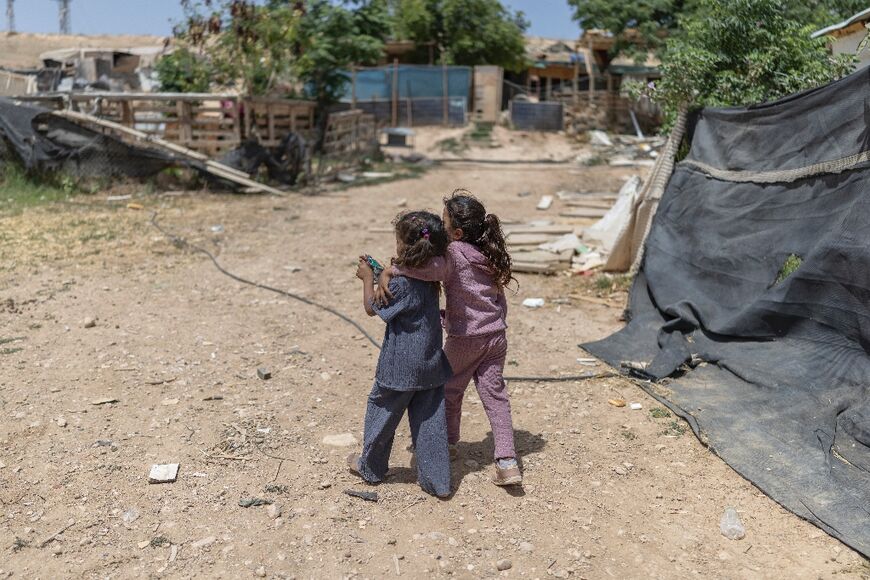
Bedouin and herder communities, often isolated and without security services, are particularly vulnerable to the threat of violence or displacement.
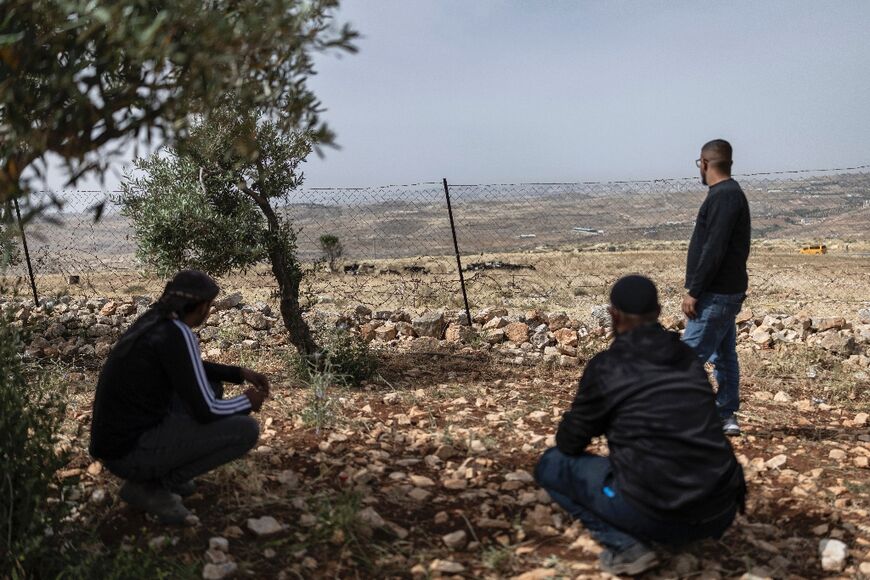
Since 2023, AFP reporters have witnessed the departure of several Bedouin communities of the West Bank under pressure from settler groups, including the community of Ras Ein al-Auja in early 2026.
"What is happening today is the complete collapse of the community as a result of the settlers' continuous and repeated attacks," Farhan Jahaleen, a Bedouin from the village, told AFP in January.
- 'Symbolic' sanctions -
Amnesty's Secretary General Agnes Callamard launched the report in Berlin, saying that Germany and other European countries had "enabled Israel's policy of ethnic cleansing".
She said that while targeted sanctions against individuals were important symbolically, they have "no impact on the rate of settlement expansion" or on "the scale of settlers' violence".
"The EU in particular, must leverage its influence by expediting the long-overdue suspension of its association agreement with Israel," Callamard told reporters.
Since Netanyahu's government came to power in late 2022, it has approved the creation of 102 settlements in the West Bank, according to settlement watchdog Peace Now.
Excluding east Jerusalem, more than 500,000 Israelis live in settlements in the West Bank, which Israel has occupied since 1967, among some three million Palestinians.
All Israeli settlements are illegal under international law.
Some settlers have engaged in arson, vandalism and theft of private property in Palestinian communities, as well as physical assaults and sometimes murder, according to rights groups.
This one's on us.
The story doesn't end here.
Our correspondents are already on the next chapter. Read everything they file, from $2/week.
See Offers