How Russia stands to win, lose as Iran war squeezes Gulf oil exports
As crude prices surpassed $100 per barrel with the Strait of Hormuz shut, Russia is reaping benefits amid new US sanctions flexibility — but experts say Moscow faces challenges capitalizing on this new market opening.
As fighting between Iran, the United States and Israel rattles global energy markets, most countries are bracing for economic fallout. Yet one major producer is being labeled an early winner in the headlines: Russia.
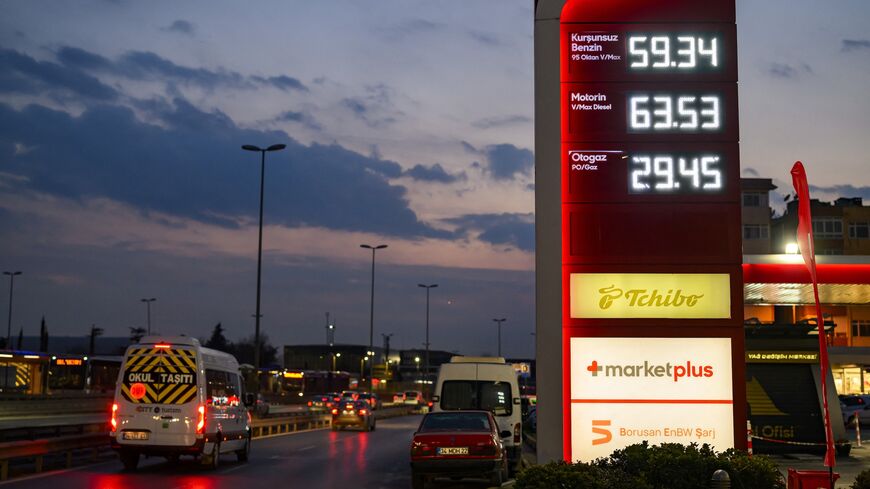
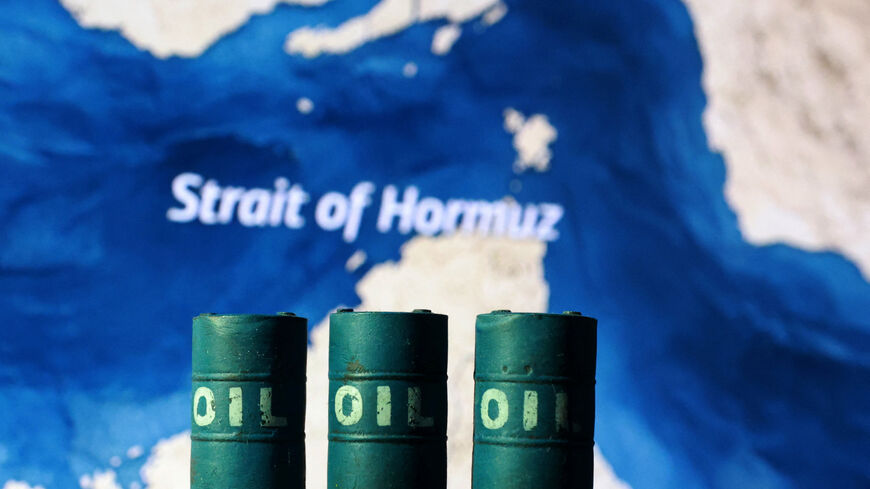
With the Strait of Hormuz closed — trapping roughly 20% of global oil shipments — crude prices have surged above $100 per barrel amid a scramble to secure alternative supplies. The market shock quickly strengthened Russia’s position in global energy markets despite years of Western sanctions tied to the Ukraine war.
Tatiana Mitrova, a research fellow at Columbia University's Center on Global Energy Policy, told Al-Monitor, “Russia is clearly benefiting in the short term from the Gulf crisis through higher realized prices, stronger demand for its barrels and narrower discounts.”
Key to Russia’s opening is the Trump administration now demonstrating sanctions flexibility amid efforts to rein in prices. This shift offers Moscow a financial reprieve at a moment when slowing growth, military spending and sanctions have been increasingly straining its economy.
The windfall, however, may also prove temporary based on the war’s duration and experts caution that Russia’s resurgence has limits. Petras Katinas, a research fellow at the Royal United Services Institute, told Al-Monitor, “The idea that Russia is the clear winner is too simplistic, because the current crisis is not only about prices but also about logistics, shipping capacity and broader economic effects.”
Yet the Gulf crisis could fuel lasting shifts. According to Henning Gloystein, Eurasia Group’s managing director for energy, industry and resources, there is a high likelihood that India and China will see Russian oil and gas imports as a way to “mitigate long-term Strait of Hormuz exposure.”
Shifting fortunes
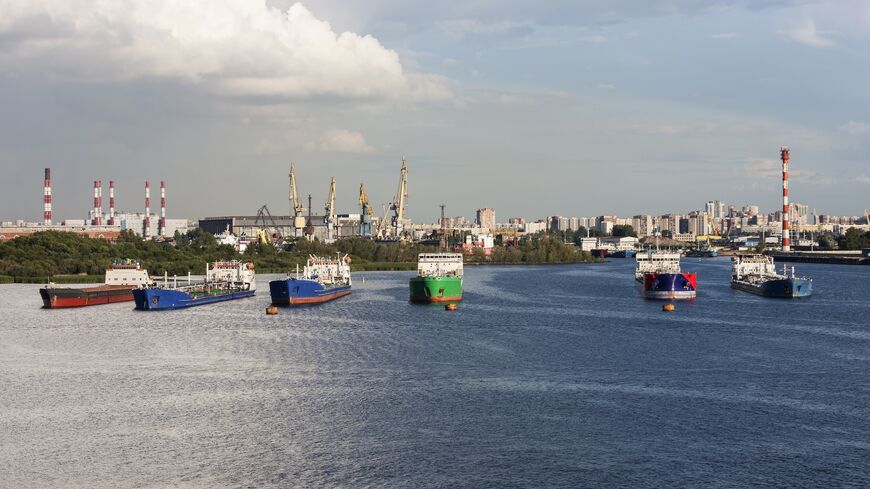
Russia remains the world’s second-largest oil exporter despite sweeping Western sanctions that have forced the country’s crude to trade at discounts.
For now, some constraints have eased as the Trump administration has sought to keep oil prices stable. On March 12, the United States issued a 30-day waiver allowing countries to buy sanctioned Russian oil currently stranded at sea. The move came a week after a similar US decision gave Indian refiners a temporary authorization to purchase Russian seaborne crude. Following that decision, Indian buyers bought roughly 30 million barrels of Russian crude on the spot market, Bloomberg reported.
For the Kremlin, this could have an outsized fiscal impact. According to the Wall Street Journal, the Russian economy gains roughly 0.7% in output for every $10 increase in oil prices, while the federal budget balances at about $59 per barrel. Russian Urals crude, which traded below $60 per barrel for much of last year, surged above $100 amid the recent turmoil.
The crisis may also offer diplomatic leverage. The bigger opportunity for Moscow, according to Mitrova, is political, offering a window to argue that Russian supply is part of the solution to a global energy shock, strengthening its case for further US sanctions relief or softer enforcement.
Market reset
The conflict is already reshaping oil flows across Asia, particularly for India, which imports roughly 90% of its crude oil and relies on Middle Eastern supplies.
Going forward, New Delhi may want to keep Russian shipments flowing. “India will be unwilling to drop its long-standing strategic energy partnership with Russia, especially in oil,” said Gloystein. In the months leading up to the war, the Trump administration had been pressuring New Delhi to stop importing Russian crude with a 25% tariff, but Washington’s thinking shifted as prices soared.
China, the world’s largest crude importer, must also respond to the Hormuz crisis. According to Gloystein, China will now likely seek more shipments from Siberia’s Arctic 2 LNG project. Gulf disruptions could also boost motivation to build the Power of Siberia 2 gas pipeline linking Russia and China.
The Iran war creates conundrums in Europe as well. Although the European Union has been working to phase out remaining Russian energy imports by 2027, this effort could now face new headwinds as the conflict halts Qatari liquefied natural gas exports.
“There's also a possibility that some right-wing European parties and movements which have gained momentum over the last two years call for a resumption of Russian oil and gas imports, pointing to the unreliability of Middle East supply,” said Gloystein.
Structural limits
Despite surging prices, Russia faces challenges in capitalizing on this newfound demand. “After four years of underinvestment, sanctions and delayed upstream development, Russia cannot quickly ramp production in a meaningful way,” Mitrova commented. At most, she said, the country could increase output by a few hundred thousand barrels per day, rather than a major surge. “So the near-term gain is more about better pricing and improved negotiating conditions than about a large increase in physical volumes.”
Katinas agrees, noting that Russia’s production has fallen in early 2026. “This decline raises questions about the reasons behind it, whether it was caused by drone attacks or because previous price levels were not profitable, forcing companies to reduce production,” he said, alluding to ongoing Ukrainian attacks on Russia’s oil infrastructure.
Russia also faces logistical constraints. Since losing much of the European market, Russian crude must travel longer distances to Asia and increasingly relies on a so-called shadow tanker fleet, he noted.
Shipping costs have also surged. According to Reuters, chartering tankers to move Russian crude from Baltic ports to India recently climbed above $20 million per voyage, cutting into producer margins.
Crisis calculus
Beyond economics, the conflict carries geopolitical risks for Moscow, as Iran has long been one of Russia’s closest allies in the Middle East. Gloystein points to an unlikely but possible scenario: Should the United and Israel achieve their goal of total regime change in Tehran, a new government could drop regional threats in exchange for sanctions relief. “That would also mean Russia loses another long-term partner,” he said.
Russia’s global influence has already faced setbacks. Syria slipped from Moscow’s close orbit following the collapse of the Assad government in late 2024, while Venezuela, another partner, has come under Washington’s sway in 2026.
Pointing to risks linked to China, Mitrova said, “I would also be cautious about the idea that Russia is the clear long-term winner,” adding, “In the longer run, repeated hydrocarbon shocks can also accelerate China’s push toward electrification, strategic stockpiling and lower oil dependence.”
Big picture
Despite early benefits, the Iran war may only offer a temporary edge for Moscow. In Mitrova’s view, the Gulf crisis gives Russia a tactical but not necessarily strategic advantage. “It can improve fiscal flow for a while and potentially strengthen Moscow’s hand in sanctions talks with Washington,” she said, but structural constraints remain. Russia, she noted, still faces a narrower group of buyers, limited production flexibility and growing dependence on the Chinese market — which may itself become less oil-intensive over time.
Ultimately, the scale of Russia’s windfall will depend on how long the conflict disrupts Gulf exports. A prolonged crisis would keep prices elevated and deliver billions in additional revenue to the Kremlin.
The broader market reaction to the Iran conflict has also been more muted than previous shocks. During the 2022 crisis triggered by Russia’s invasion of Ukraine, Brent crude surged past $130 per barrel and stayed above $100 for months. In contrast, prices during the current conflict have only briefly crossed the $100 mark so far.
Meanwhile, a prolonged Gulf crisis and high prices could weaken global oil demand and undermine economic activity, particularly in emerging markets that are sensitive to fuel costs. “If global growth slows, oil demand may soften, which would limit how long elevated prices can last and therefore cap the potential gains for Russia,” said Katinas.