Despite warnings from Israel's defense elite, Netanyahu pushes for Iran strike
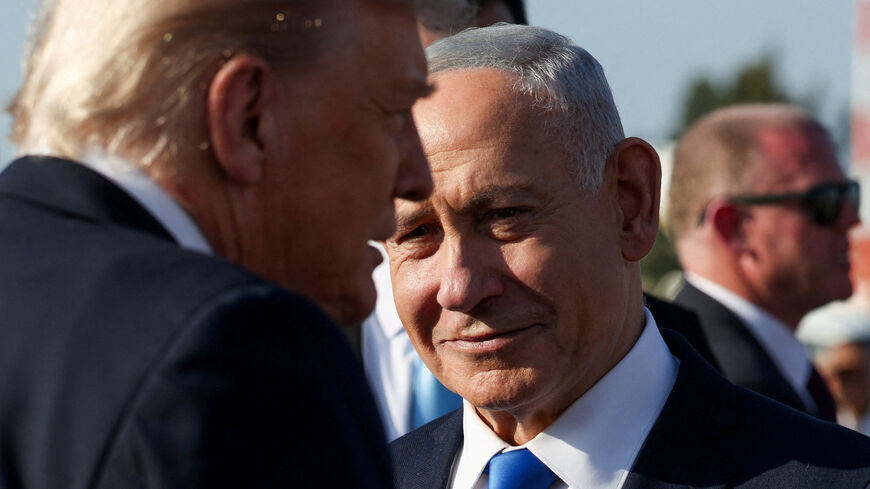
Although Israeli advisers warn against appearing to drag the US into war, Prime Minister Benjamin Netanyahu has not hidden his desire to help topple the Islamic Republic.
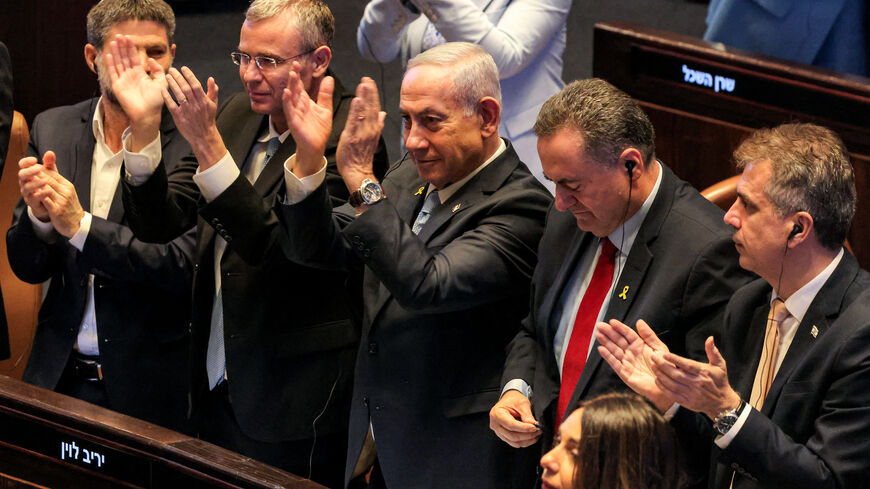
TEL AVIV — Israeli defense officials are warning Prime Minister Benjamin Netanyahu against campaigning for a US strike on Iran, perhaps with Israeli participation, arguing that such a position not only risks attacks on Israel but also casts it as dragging the United States into a senseless war.
To many observers, Netanyahu’s clear advocacy for a US attack is reminiscent of events leading to the 2003 US-led invasion of Iraq. Having lost in the 2000 elections, Netanyahu — then out of office but still a prominent security voice in Israel — traveled to Washington in September 2002 in his capacity as a "concerned citizen" to convince US lawmakers that an invasion of Iraq was necessary to bring down President Saddam Hussein. Addressing Congress in expert testimony, he argued that the overthrow of Hussein’s repressive government would also serve as a signal to leaders in Tehran, thereby bringing an era of stability and peace to the region. The pitch worked.
Congress authorized the invasion launched in March 2003 that quickly toppled Hussein, but in the long term, it entangled American troops in a bloody war and unleashed a period of prolonged instability in Iraq. Not only did the Iraq war fail to restrain Iran, it in fact did the opposite — upsetting longstanding mutual deterrence between Iran and Iraq and expanding Tehran’s influence throughout the region and beyond through the consolidation of a pro-Iran axis of rulers and militias in Iraq, Syria, Lebanon, and Yemen.
The Israeli quest for US leadership in the campaign against Hussein in Iraq reflects a fundamental tenet that has also underpinned Israel’s 30-year struggle against Iran's mullahs and their nuclear ambitions: any major move to rein in hostile regional forces must be led by the United States and its Western allies rather than by Israel itself.
Trump in the driver's seat
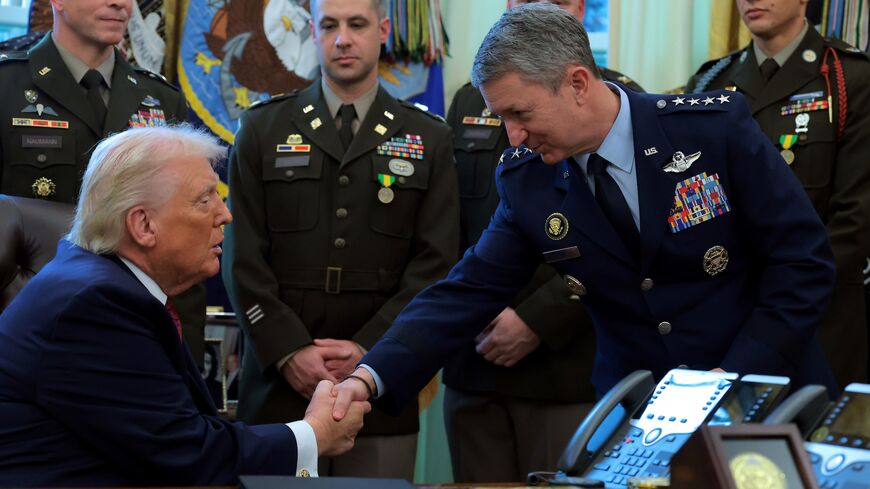
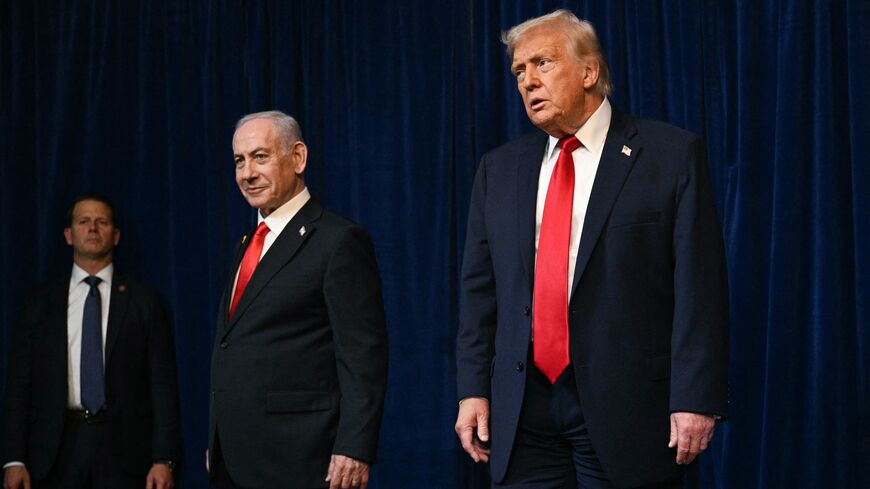
President Donald Trump, without going to Congress, is taking the lead against Iran. Israel, contrary to long-standing policy, now insists on assuming a frontline position. Defense officials have warned Netanyahu against this, citing two reasons: the risk of an attack on Iran turning into a prolonged, complex war of attrition with Iranian counterattacks striking Israeli territory and Israel being blamed for dragging the United States into a needless war. Netanyahu has chosen to ignore their advice, wanting instead to take part in any action designed to bring down the government in Tehran, which has for decades threatened Israel and supported terrorism against Israelis and Jews around the world.
Speaking to Al-Monitor on condition of anonymity about a possible US attack, a senior Israeli security source said, "It will affect the entire region at a level not seen in the past 100 years. Iran is the cornerstone of the spread of terror and instability, and the disappearance of the murderous Iranian regime will have a strategic impact on the Middle East, on the entire world."
The collapse of Iran's government is, however, far from certain as the result of a US attack, with or without Israeli participation. To launch an attack, Trump would choose a plan proposed by the Pentagon. According to Israeli political sources, Netanyahu's cabinet is hoping that Trump will opt for a concerted campaign to topple the Islamic Republic, by sparking —if the regime is weakened— a renewal of the mass anti-government protests that began in late December and were brutally crushed by Tehran the following month, but this time perhaps including mass defections from the Iranian army. Mossad and the CIA as well as other Western intelligence organizations would theoretically play a major and decisive role in such a scenario.
Concerns about Trump’s thinking
Given the potential of a region-altering US attack, Trump's speech on Thursday to his newly launched Board of Peace worries some senior Israeli diplomatic officials.
"The president didn't talk about ballistic missiles at all," one senior Israeli diplomatic official told Al-Monitor, speaking on condition of anonymity. "It raises questions about whether he has decided to target only the nuclear project and aspires to reach a quick agreement with Iran or whether this is all just a maneuver designed to bring about Iranian concessions in negotiations."
American and Iranian representatives held a second round of talks in Geneva last Tuesday, after a first round in Oman on Feb. 6. The two sides said some progress has been made, but significant gaps remain.
Israeli senior diplomatic officials are also wondering about Trump's statement on Thursday that the world would know “what is happening” within 10 days. Is that his way of buying additional time for negotiations, or is it a deception like the one the White House employed in June of last year, aimed at lulling the Iranian leadership before Israel launched its attack.
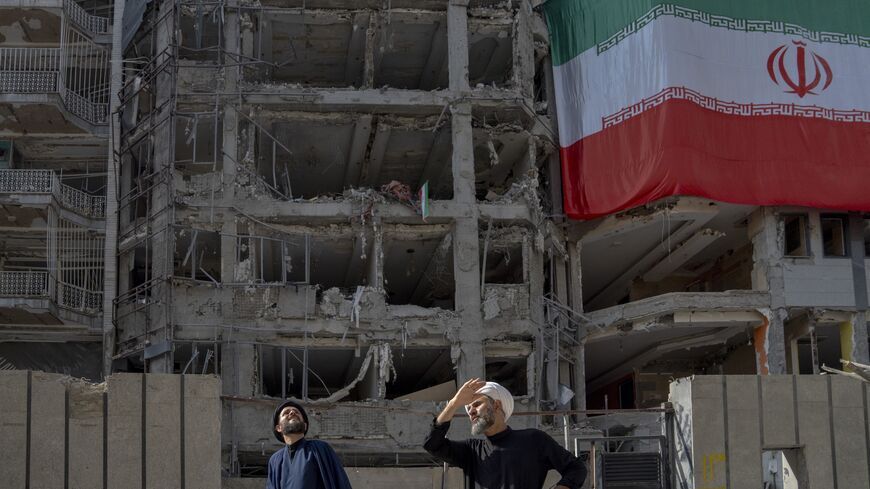
According to intelligence assessments, Iran is engaged in a massive effort to rehabilitate and expand the ballistic missile arsenals that Israel destroyed in attacks over the past two years.
"The Iranians understood that their ballistic missiles were the only significant threat to Israel," another senior Israeli diplomatic official told Al-Monitor, on condition of anonymity. Before the Gaza war sparked by Hamas' invasion of southern Israel in October 2023, the source added, Israeli intelligence estimated that Iran aspired to obtain 10,000 heavy ballistic missiles capable of reaching Israel. “This number is no less serious than nuclear weapons," he said.
Israeli attacks have damaged Iran's stockpile of missiles and launchers as well as its means of production, but rebuilding the arsenal has proceeded much faster than initially estimated. According to Israeli media reports, Iran could at the current rate have about 5,000 missiles by the end of next year. "This would be an intolerable situation," the senior Israeli diplomatic official said.
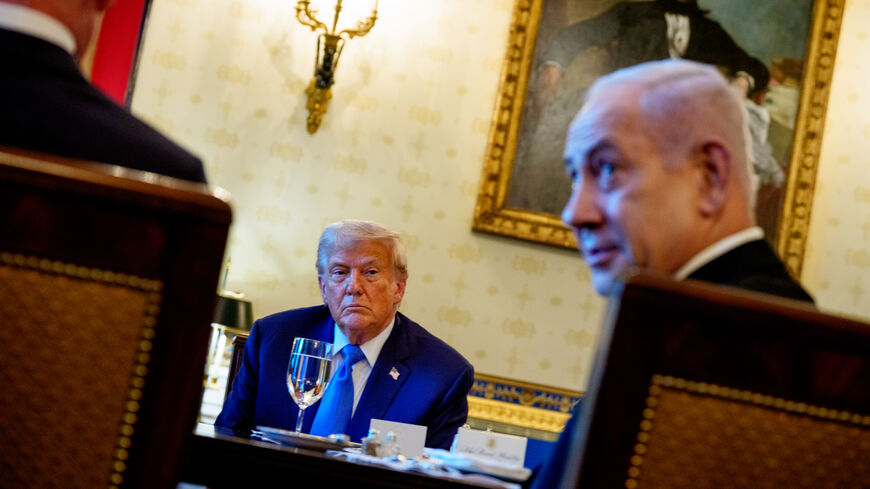
Because Israel would be committed to any agreement that Trump signs with Iran, it would find itself in a national security bind if the United States negotiated an agreement that rolls back Tehran's nuclear program for an extended period of time but fails to limit its ballistic missile program.
Tense times
Meanwhile, Israelis are on edge as the US military buildup continues in the region amid persistent speculation about an imminent strike. For older Israelis, it feels reminiscent of the months before the 1967 war, when the government was debating whether to launch a preemptive strike against Egypt and Syria. The tense wait ended when Prime Minister Levi Eshkol gave the order to attack, transforming Israel from a besieged nation into a regional power. Nearly 60 years on, Netanyahu is waiting for Trump to give the order and put an end to the anxiety and speculation.
Netanyahu’s considerations stem not only from a national security perspective, but also personal concern. His political future became tenuous after Hamas' 2023 attack and the sentiment in Israel that his government was responsible for the political and military failures that enabled the assault. A US attack on Iran could greatly improve his chances of continued political survival in elections scheduled for later this year. A survey published Friday by Maariv has the Likud party gaining strength — winning 26 Knesset seats compared to the 25 it polled in January — if elections were held today.
Netanyahu’s preferred plan for electoral and personal advantage calls for a US attack on Iran with Israeli involvement, achieving a historic victory under his leadership that would also allow him to capitalize by advancing elections from their scheduled date in October to the end of June. The Israeli premier has enjoyed a long run of good luck that has kept him in office despite the disastrous invasion by Hamas. The same cannot be said for Israel, which under Netanyahu's leadership has suffered the greatest disasters since its founding in 1948.